
About Nicolaus Vetter
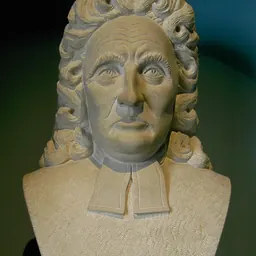
Lived 1666 – 1734 (aged 67). Nicolaus Vetter was a German composer and organist.
Andreas Nicolaus Vetter (; c. 1666 – 13 June 1734) was a German organist and composer.
Biography He was born in Herschdorf, in present-day Thuringia. In his Zur Geschichte des Orgelspiels (1884), August Gottfried Ritter gives 30, Oct. 1660 as birth date, and "nach 1740" as time of death.
Vetter first studied music with Georg Caspar Wecker in Nuremberg and was a student at the Rudolstadt Gymnasium from 1683 to 1688. He then moved to Erfurt to study with Johann Pachelbel, succeeding him as organist of the Predigerkirche when he left for Stuttgart in 1690; during this time, he may have attended the University of Erfurt. He was succeeded by J.H. Buttstedt in July 1691, when he went to Rudolstadt to take up a position as castle organist; he was later honoured with the appointments of Government Advocate, Church Procurator and Master Over The Page Boys.
His surviving compositions are now few, since World War II led to the destruction of all his free organ compositions and a work for chorus and orchestra entitled Zum frohen Empfang Grossherzogs Carl Fürsten Primas. The manuscript Mus.40035 of the Deutsche Staatsbibliothek, Berlin, gave his name as the composer of variations three and eight of the organ partita on "Allein Gott in der Höh sei Ehr", BWV 771, formerly attributed to J. S. Bach; he may most probably have been the composer of all seventeen verses.
His other surviving organ works, which are chorale settings in the tradition of the South German school, appear in the modern editions Orgelchoräle um Joh. Seb. Bach, ed. G. Frotscher (Leipzig, 1937), and Andreas Nicolaus Vetter (1666–1734): Koraalbewerkingen, ed. E. Kooiman (Hilversum, 1989). The manuscripts of many of these works were lost or destroyed in World War II.
Selected works Chorale preludes settings for organ on the following hymns: Ach Gott und Herr Ach Gott, vom Himmel sieh darein Allein Gott in der Höh sei Ehr (2 verses & fughetta) Allein Gott in der Höh sei Ehr (Choral-Partita), 17 variations; formerly attributed to J. S. Bach as BWV 771. Christ lag in Todesbanden (prelude & fughetta) Jesus Christus, unser Heiland, der den Tod überwand Jesu, meine Freude Komm, Heiliger Geist, Herre Gott Lobt Gott, ihr Christen allzugleich Nun komm, der Heiden Heiland Vater unser im Himmelreich
Don’t just read it —
keep it.
Full-length biographies made to live with: read them, listen on the way to work, watch them tonight.
- E-book
- Audio
- Video
Instant download · yours to keep · every purchase keeps this site free
Important facts
People in Nicolaus Vetter's life
Named in this biography and alive at the same time


Related people
Same field, nearest in time

Contemporaries
People whose lives overlapped Nicolaus Vetter's




Frequently asked questions
Who was Nicolaus Vetter?
German organist and composer (1666-1734)
When was Nicolaus Vetter born?
Nicolaus Vetter was born on 1 October 1666 in Herschdorf.
When did Nicolaus Vetter die?
Nicolaus Vetter died on 13 June 1734 in Rudolstadt.
What was Nicolaus Vetter's occupation?
Nicolaus Vetter was a composer and organist.
What nationality was Nicolaus Vetter?
Nicolaus Vetter was German.
Sources & further reading
Cite this page
APA: Biography.guide. (2026). Nicolaus Vetter. https://biography.guide/nicolaus-vetter/
MLA: "Nicolaus Vetter." Biography.guide, https://biography.guide/nicolaus-vetter/.
Chicago: "Nicolaus Vetter." Biography.guide. https://biography.guide/nicolaus-vetter/.
Data last updated: 2026-09-20 · Spot an error? Report a correction.
Page generated 2026-09-27 05:02 UTC