
About Nicolae Picu
Lived 1789 – 1864 (aged 74–75). Nicolae Picu was an Austrian musician, lăutar and violinist.
Nicolae Picu (Romanian pronunciation: [ nikoˈla.e ˈpiku]; also known as ; 1789, Suceava – 2 October 1864, Suceava) was a Romanian lăutar violinist from the Duchy of Bukovina then part of the Austrian Empire.
He played a significant role in bringing traditional folk melodies to professional musicians of international stature, such as Franz Liszt and Karol Mikuli, thereby introducing Romanian lăutărească music to the academic musical world of his time.
Biography Picu was born in 1789 into a family of Romanian peasants of Greek Catholic faith from the vicinity of Suceava. In 1801, he began travelling through villages in search of engagements, primarily for weddings. By 1803, he was invited to perform at the courts of boyars, and gained particular recognition in the Hurmuzachi family.
From 1820 onward, he began performing each summer in , a spa resort near Berehomet that served as a popular gathering place for the Bukovinian aristocracy. The Bukovinian lawyer, musician, and politician recalled a trip made with his parents in the summer of 1851 or 1852 to Lăpușna (as cited by Poslușnicu):To the heartfelt delight of the visitors, as in every year, there played there the lăutari band under the leadership of the violinist and bandleader Neculai Picu, also known as Moș Neculai. In Lăpușna, this taraf was composed of twelve men, among whom were a nai player, one or two cobza players, a cellist, and the remainder violinists – perhaps also a viola.
…This taraf played rather harmoniously, and their program chiefly included Romanian songs, horas, doinas, and laments. Moș Neculai, a man of medium height and sturdy build, fair-haired, dressed in the old Moldavian fashion – with , , waist sash, and on his head a flattened fez with a blue tassel – was a true artist of the violin, from which he drew, with skill, a tone full, powerful, and brimming with feeling. Most soulfully did he play the mournful doina and the laments, bringing tears to the eyes of listeners.
He likewise played the dance tunes of all nations, and performed solo pieces with genuine virtuosity – among them a Turkish piece with a long tremolo…
I cherish a fond memory of Moș Neculai through a hora I learned from him – the Hora in G minor, which is found in the collection of Karol Mikuli under the title Douze (48) airs nationaux roumains, No. III…
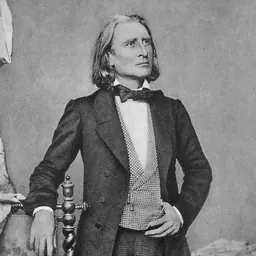
In May 1847, Franz Liszt visited Czernowitz at the invitation of Eudoxiu Hurmuzachi, where he gave two concerts at the Hôtel de Moldavie. At the Hurmuzachi family residence, Liszt listened to Nicolae Picu’s taraf perform. Following this encounter, Liszt began work on his Romanian Rhapsody for Piano (1848), which, in addition to themes he had earlier heard in Iași from , incorporated melodies from Picu’s repertoire, including Corăbeasca.
In 1849, Bukovinian composer Karol Mikuli, a pupil of Frédéric Chopin, compiled a folklore collection consisting of four notebooks of piano transcriptions. It was later published in France as Douze airs nationaux roumains. The collection was based on Nicolae Picu’s repertoire: among the best-known pieces are Hora cea cu flori la pălărie, Hora în ghe mol, Arcanul, Buciumul, and others. The initiative once again came from the Hurmuzachi family. Eudoxiu’s son, Constantin Hurmuzachi, wrote in a letter dated 14 November 1851 to the Romanian writer and politician Gheorghe Bariț:Until now, this rare talent [Karol Mikuli], under the direct guidance and encouragement of myself and my sister Săftica, has transcribed, based on the performances of the finest lăutari whom I have brought from various regions, more than thirty-six folk songs – among the most beautiful. They shall soon be sent to Lipsca.In the early 1850s, Picu became the teacher of the violinist-lăutar .
He died on 2 October 1864 in Suceava, at the age of 75.
Legacy In 1899, Nicolae Picu was named the most distinguished Bukovinian lăutar in the 24-volume illustrated encyclopedia of all lands of the Austrian Empire, The Austro-Hungarian Monarchy in Word and Picture, also known as the Kronprinzenwerk. A gouache painting of Nicolae Picu, created for the Bukovina volume of the encyclopedia, is kept at the Austrian National Library.
Nicolae Picu’s repertoire has been revived by the taraf Zicălașii from Suceava.
Don’t just read it —
keep it.
Full-length biographies made to live with: read them, listen on the way to work, watch them tonight.
- E-book
- Audio
- Video
Instant download · yours to keep · every purchase keeps this site free
Important facts
People in Nicolae Picu's life
Named in this biography and alive at the same time


Related people
Same field, nearest in time



Contemporaries
People whose lives overlapped Nicolae Picu's



Frequently asked questions
Who was Nicolae Picu?
Romanian lăutar violinist
When was Nicolae Picu born?
Nicolae Picu was born in 1789 in Suceava.
When did Nicolae Picu die?
Nicolae Picu died on 2 October 1864 in Suceava.
What was Nicolae Picu's occupation?
Nicolae Picu was a musician, lăutar and violinist.
What nationality was Nicolae Picu?
Nicolae Picu was Austrian.
Sources & further reading
Cite this page
APA: Biography.guide. (2026). Nicolae Picu. https://biography.guide/nicolae-picu/
MLA: "Nicolae Picu." Biography.guide, https://biography.guide/nicolae-picu/.
Chicago: "Nicolae Picu." Biography.guide. https://biography.guide/nicolae-picu/.
Data last updated: 2026-09-26 · Spot an error? Report a correction.
Page generated 2026-09-27 05:14 UTC