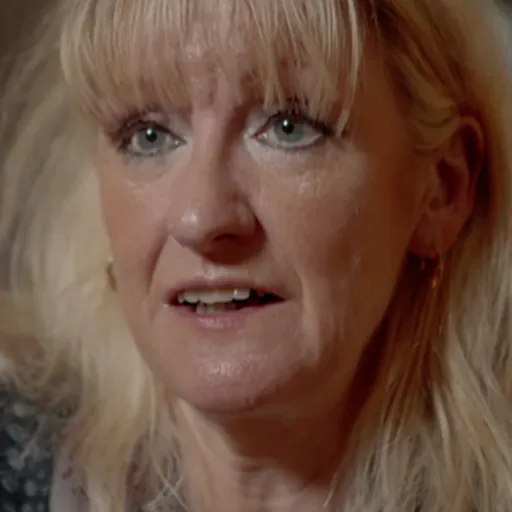
Nicola Clayton
British professor of comparative cognition
About Nicola Clayton
Born 1962. Nicola Clayton is a British neuroscientist, psychologist, zoologist and researcher.
Nicola Susan Clayton (born 22 November 1962 ) is a British psychologist. She is Professor of Comparative Cognition at the University of Cambridge, Scientist in Residence at Rambert Dance Company, co-founder of 'The Captured Thought', a fellow of Clare College, Cambridge, where she is Director of Studies in Psychology, and a fellow of the Royal Society since 2010. Clayton was made Honorary Director of Studies and advisor to the 'China UK Development Centre'(CUDC) in 2018. She has been awarded professorships by Nanjing University, Institute of Technology, China, Beijing University of Language and Culture, China (2019), and Hangzhou Diangi University, China (2019). in 2020. A position she held until 2023. Since 2024, Clayton is deputy chair of the steering committee for the future researcher initiative at UniHive.
Early life and education Clayton graduated with a Bachelor of Arts with Honours in zoology from the University of Oxford in 1984, before gaining a PhD from the University of St Andrews in 1987.
Career
University of Cambridge Clayton has made major contributions in the study of animal cognition as well as cognitive development in human children, with significant impact in the neurobiology of memory and overall cognitive development. Her expertise in the study of comparative cognition integrates a knowledge of both biology and psychology in providing new methods of thinking about the evolution and development of intelligence in non-verbal animals and pre-verbal children. Clayton studies cognition not only in humans but also in members of the crow family (including jackdaws, rooks and jays). This work has challenged many assumptions that only humans can reminisce about the past and plan for the future, and that only humans can understand other times as well as other minds. Her work has also led to a re-evaluation of the cognitive capacities of animals, specifically birds, and resulted in a theory that intelligence evolved independently in at least two groups, the apes and the crows, and most recently cephalopods. This has also had scientific impact in changing the Animal Welfare (Sentience) Bill. Nicky presented an edition of Between the Ears entitled 'Year of the Covids' on BBC Radio 3 on 3 April 2023.
Nicky Clayton being interviewed for the Dutch TV-show The Mind of the Universe.
Rambert Dance Company Since 2009, Clayton has worked with the Rambert Dance Company as science collaborator, then scientific adviser, and now scientist-in-residence. As a dancer, specializing in tango and salsa, she draws evidence from both the arts and science in her collaborations. In 2009, Clayton experienced her first collaboration by becoming involved in a dance piece called The Comedy of Change, which was inspired by Charles Darwin's ideas of natural and sexual selection. She met the choreographer and Artistic Director of Rambert Dance Company, Mark Baldwin, and gave input about science that could inform the piece.
The Captured Thought Clayton on the theory of mind. What is thinking? How do people and animals think? Another of Clayton's collaborations is with the artist and author Clive Wilkins, who has been Artist in Resident in the psychology department at the University of Cambridge since 2012, a position created especially for Wilkins. Their collaboration arose out of a mutual interest in mental time travel and resulted in Clayton and Wilkins co-founding "The Captured Thought~ an arts/science collaboration." Important aspects of The Captured Thought's work have been highlighted in articles in 'The Guardian' newspaper in 2019 and in 'Die Zeit' magazine in 2020. The Captured Thought were invited speakers at The University of Vienna's CogSciHub inauguration 2019 and India's National Brain Research Centre 16th Foundation Day. Clayton and Wilkins continue to present their work in lectures to universities and conferences across the globe~ including UK, Europe, USA, Asia, China and Australasia. Their work together featured in the New Scientist Special Christmas and New Year issue 2022.
Published works 1998: Episodic-like memory during cache recovery by scrub jays 2001: Effects of experience and social context on prospective caching strategies in scrub jays 2004: The mentality of crows. Convergent evolution of intelligence in corvids and apes 2006: Food-caching western scrubjays keep track of who was watching when 2007: Planning for the future by Western Scrub-Jays 2009: Western scrub-jays conceal auditory information when competitors can hear but cannot see 2009: Episodic future thinking in 3- to 5- year-old-children: The ability to think of what will be needed from a different point of view 2009: Chimpanzees solve the trap problem when the confound of tool-use is removed 2012: Eurasian jays (Garrulus glandarius) overcome their current desires to anticipate two distinct future needs and plan for them appropriately 2013: Careful cachers and prying pilferers: Eurasian jays (Garrulus glandarius) limit auditory information available to competitors 2013: Evidence suggesting that desire-state attribution may govern food sharing in Eurasian jays 2014: EPS Mid Career Award Lecture. Ways of Thinking: From Crows to Children and Back Again 2014: Of babies and birds: complex tool behaviours are not sufficient for the evolution of the ability to create a novel causal intervention 2014: Pilfering Eurasian jays use visual and acoustic information to locate caches 2014: The Evolution of Self Control 2015: Thinking ahead about where something is needed: New insights about episodic foresight in preschoolers 2019: Mind Tricks. Magic and mysticism reveal cognitive shortcuts with implications beyond entertainment 2019: Reflections on the Spoon Test. Neuropsychologia 2020: An unexpected audience. Science 2021: Exploring the perceptual inabilities of Eurasian jays (Garrulus glandarius) using magic effects. PNAS 2021: Schnell, A.K., Clayton, N.S., Hanlon, R.T. & Jozet-Alves, C.. Episodic-like memory is preserved with age in cuttlefish. Proceedings of the Royal Society, 288, 20211052 2021: Schnell, A. K., Loconsole, M., Garcia-Pelegrin, E., Wilkins, C. & Clayton, N. S.. Jays are sensitive to cognitive illusions. Royal Society Open Science, 8, 202358 2021: Garcia-Pelegrin, E., Wilkins, C. & Clayton, N. S.. The ape that lived to tell the tale. The evolution of the art of storytelling and its relationship to Mental Time Travel and Theory of Mind. Frontiers in Psychology 12, 755–783 2022: Garcia-Pelegrin, E., Schnell, A. K., Wilkins, C. & Clayton, N. S.. Could it be Protomagic? Deceptive tactics in non-human animals resemble magician’s misdirection. Psychology of Consciousness: Theory, Research and Practice, in press 2022: Garcia-Pelegrin, E., Wilkins, C. & Clayton, N. S.. Are magicians specialists at identifying deceptive motion? The role of expertise in being fooled by sleight of hand. Scientific Reports, in press 2023: Goldberg J, Wilkins, C. A. P. & Clayton, N. S. (2023). Sleight of Wing. The Linking Ring, in press 2023: Garcia-Pelegrin, E., Miller, R. A., Wilkins, C. A. P. & Clayton, N. S. (2023). Manual action expectation and biomechanical ability in three species of New World monkey. Current Biology, 33, 1-6. 2024: Garcia-Pelegrin, E., Schnell, A. K., Wilkins, C. & Clayton, N. S. (2024). Beyond the Tricks: The Science and Comparative Cognition of Magic. Annual Review of Psychology 75, 289–293 2025: Ajuwon, V., Monteiro, T. Schnell, A. K. & Clayton, N. S. (2025). To Know or Not to Know. Curiousity and the value of prospective information in animals. Learning and Behavior 53, 114-127 2025: Cornero, F. C., Lane, W. & Clayton. N. S. (2025). Can an old rook learn new tricks? Vocal command and obedience in rooks. Animal Cognition, in Press. 2025: Veit, W., Browning, H., Garcia-Pelegrin, E., Davies, J. R., DuBois, J. G. & Clayton, N. S. (2025). Dimensions of Corvid Consciousness. Animal Cognition, 28(1), 1-17. 2026: Pendleton, Pritchard, Wilkinson, Wilkins, Clayton (2026) From plausibility in climate-risk scenarios: a cognitive framework for decision-making under deep uncertainty
Awards 1997: Best Teachers in America Award 1999: American Psychological Association's Frank Beach Award 2003: Klaus Immelmann Award in Animal Behavior 2010: Jean-Marie Delwart Award in Comparative and Evolutionary Neuroscience, Belgium Academy of Sciences 2010: Elected Fellow of the Royal Society 2012: Experimental Psychology Society Mid-Career Award 2013: Fellow of the American Ornithological Society 2019: President of the British Science Association Psychology Section 2021: ASAB Tinbergen Lecturer award 2022: Association for the Study of Animal Behaviour (ASAB) Medal 2024: Comparative Cognition Research Award and special issue of the journal Learning and Behavior and associated podcast.
Don’t just read it —
keep it.
Full-length biographies made to live with: read them, listen on the way to work, watch them tonight.
- E-book
- Audio
- Video
Instant download · yours to keep · every purchase keeps this site free
Important facts
People in Nicola Clayton's life
Named in this biography and alive at the same time



Related people
Same field, nearest in time




Contemporaries
People whose lives overlapped Nicola Clayton's





Frequently asked questions
Who is Nicola Clayton?
British professor of comparative cognition
When was Nicola Clayton born?
Nicola Clayton was born on 22 November 1962.
What is Nicola Clayton's occupation?
Nicola Clayton is a neuroscientist, psychologist, zoologist and researcher.
What nationality is Nicola Clayton?
Nicola Clayton is British.
Sources & further reading
Cite this page
APA: Biography.guide. (2026). Nicola Clayton. https://biography.guide/nicola-clayton/
MLA: "Nicola Clayton." Biography.guide, https://biography.guide/nicola-clayton/.
Chicago: "Nicola Clayton." Biography.guide. https://biography.guide/nicola-clayton/.
Data last updated: 2026-09-20 · Spot an error? Report a correction.
Page generated 2026-09-27 05:09 UTC