
About Nicola Cabibbo
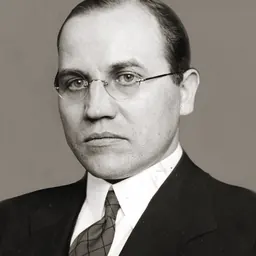
Lived 1935 – 2010 (aged 75). Nicola Cabibbo was an Italian theoretical physicist, university teacher, physicist and nuclear physicist, known for Cabibbo angle.
Nicola Cabibbo (10 April 1935 – 16 August 2010) was an Italian physicist best known for his work on the weak interaction, particularly his introduction of the Cabibbo angle. Interested in science from a young age, he studied physics at the Sapienza University of Rome, graduating in 1958 with a thesis completed under Bruno Touschek.
Early life and education Nicola Cabibbo was born on 10 April 1935 in Rome, Italy to Silician parents; his father, Emanuele, was a lawyer and his mother was a housewife. He was interested in mathematics, physics and astronomy from an early age, and built his own radios. Despite growing up during World War II, his elementary school education ran uninterrupted, and he subsequently attended the Liceo Torquato Tasso. His thesis, which focused on weak interactions and muon decay, was completed under the supervision of Bruno Touschek and was done in collaboration with fellow students Francesco Calogero and Paolo Guidoni. In 2004, Cabibbo spent a year at CERN as guest professor, joining the NA48/2 collaboration.
Research The Cabibbo angle represents the rotation of the mass eigenstate vector space formed by the mass eigenstates into the weak eigenstate vector space formed by the weak eigenstates . The rotation angle is .
Cabibbo's major work on the weak interaction originated from a need to explain two observed phenomena:
The transitions between up and down quarks, between electrons and electron neutrinos, and between muons and muon neutrinos had similar likelihood of occurring (similar amplitudes); and The transitions with change in strangeness had amplitudes equal to one fourth of those with no change in strangeness.
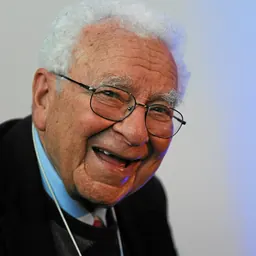
Cabibbo addressed these issues, following Murray Gell-Mann and Maurice Lévy, by postulating weak universality, which involves a similarity in the weak interaction coupling strength between different generations of particles. He addressed the second issue with a mixing angle θC (now called the Cabibbo angle), between the down and strange quarks. Modern measurements show that .
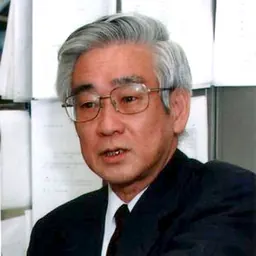
He was awarded the High Energy Particle Physics Prize of the European Physical Society in 1991, "for the theory of weak interactions leading to the concept of quark mixing". Before the discovery of the third generation of quarks, this work was extended by Makoto Kobayashi and Toshihide Maskawa to the Cabibbo–Kobayashi–Maskawa matrix. In 2008, Kobayashi and Maskawa shared one half of the Nobel Prize in Physics for their work. Some physicists had bitter feelings that the Nobel Prize committee failed to reward Cabibbo for his vital part. Asked for a reaction on the prize, Cabibbo preferred to give no comment. According to sources close to him, however, he was embittered.
Later, Cabibbo researched applications of supercomputers to address problems in modern physics with the experiments APE 100 and APE 1000.
Cabibbo supported attempts to rehabilitate executed Italian philosopher Giordano Bruno, citing the apologies on Galileo Galilei as a possible model to correct the historical wrongs done by the Church.
After his death in 2011, the Franklin Institute awarded him with the Benjamin Franklin Medal in Physics.
Personal life and death In 1962, Cabibbo married Paola Iandolo, who became a professor of North American literature at the University of Salerno and then of American Literature at the Sapienza University of Rome. The couple had one son, Andrea, who was born in 1966 and is a molecular biologist. He had been suffering from a tumour for several years.
Don’t just read it —
keep it.
Full-length biographies made to live with: read them, listen on the way to work, watch them tonight.
- E-book
- Audio
- Video
Instant download · yours to keep · every purchase keeps this site free
Important facts
People in Nicola Cabibbo's life
Named in this biography and alive at the same time




Related people
Same field, nearest in time

Contemporaries
People whose lives overlapped Nicola Cabibbo's




Frequently asked questions
Who was Nicola Cabibbo?
Italian physicist (1935–2010)
When was Nicola Cabibbo born?
Nicola Cabibbo was born on 10 April 1935 in Rome.
When did Nicola Cabibbo die?
Nicola Cabibbo died on 16 August 2010 in Rome.
What was Nicola Cabibbo's occupation?
Nicola Cabibbo was a theoretical physicist, university teacher, physicist and nuclear physicist.
What was Nicola Cabibbo known for?
Nicola Cabibbo was known for Cabibbo angle.
What nationality was Nicola Cabibbo?
Nicola Cabibbo was Italian.
Sources & further reading
Cite this page
APA: Biography.guide. (2026). Nicola Cabibbo. https://biography.guide/nicola-cabibbo/
MLA: "Nicola Cabibbo." Biography.guide, https://biography.guide/nicola-cabibbo/.
Chicago: "Nicola Cabibbo." Biography.guide. https://biography.guide/nicola-cabibbo/.
Data last updated: 2026-09-26 · Spot an error? Report a correction.
Page generated 2026-09-27 05:15 UTC