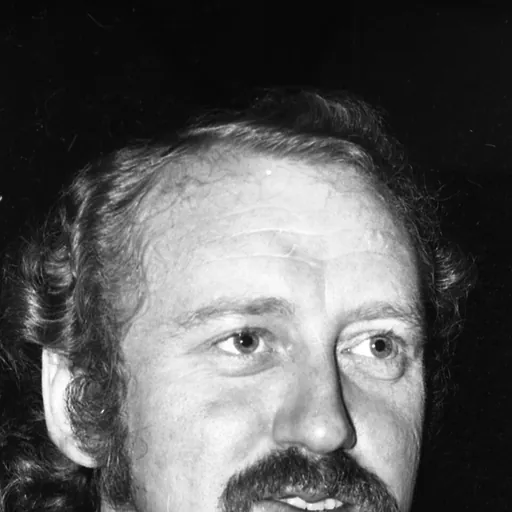
About Nicol Williamson
Lived 1936 – 2011 (aged 75). Nicol Williamson was a British actor, stage actor, film actor and television actor.
Thomas Nicol Williamson (He would later claim his birth year was 1938 in Who's Who.) and former hairdresser's assistant, and Mary Brown Hill, née Storrie. He left school at 16 to begin work in his father's factory and later attended the Birmingham School of Speech & Drama. He recalled his time there as "a disaster" and claimed "it was nothing more than a finishing school for the daughters of local businessmen".
Career Acting After his national service as a gunner in the Airborne Division, Williamson made his professional debut with the Dundee Repertory Theatre in 1960 and the following year appeared with the Arts Theatre in Cambridge. In 1962 he made his London debut as Flute in Tony Richardson's production of A Midsummer Night's Dream at the Royal Court Theatre. His first major success came in 1964 with John Osborne's Inadmissible Evidence, for which he was nominated for a Tony Award when it transferred to Broadway the following year. In spring 1981, he and original director Anthony Page revived the play for a six-week engagement at the Roundabout Theatre (23rd Street) in New York, fifteen years after the original Broadway run.
Also in 1964, he appeared as Vladimir in Samuel Beckett's Waiting for Godot at the Royal Court. He starred in the film version in 1968. Williamson's Hamlet for Tony Richardson at the Roundhouse caused a sensation; it was later transferred to New York and made into a film, with a cast including Anthony Hopkins and Marianne Faithfull. Faithfull later stated in her autobiography Faithfull that she and Williamson had an affair while filming Hamlet.
His most celebrated film role was as Merlin the magician in the King Arthur epic Excalibur in 1981. Director John Boorman cast him opposite Helen Mirren as Morgana over the protests of both actors; the two had previously appeared together on stage in Macbeth, with disastrous results, and they disliked each other intensely. It was Boorman's hope that the very real animosity that they had towards each other would generate more tension between them on screen. Williamson gained recognition from a much wider fanbase for his performance as Merlin. A review of Excalibur in The Times in 1981 states: "The actors are led by Williamson's witty, perceptive Merlin, missed every time he's off the screen." According to Mirren, she and Williamson, free from the problems with Macbeth, "wound up becoming very good friends" during Excalibur.
Some of his other notable cinematic performances include as a troubled Irish soldier in the 1968 Jack Gold film The Bofors Gun; in 1975 as an intelligence officer in apartheid South Africa in The Wilby Conspiracy (starring Sidney Poitier and Michael Caine); as Sherlock Holmes in the 1976 Herbert Ross film The Seven-Per-Cent Solution; and as Little John in the 1976 Richard Lester film Robin and Marian. Additionally, he portrayed an MI6 bureaucrat in The Human Factor (1979) (adapted from a novel by Graham Greene); an alcoholic attorney in I'm Dancing as Fast as I Can (1982); a colonel in the Cincinnati Gestapo in the Neil Simon comedy The Cheap Detective; Lord Louis Mountbatten in Lord Mountbatten - The Last Viceroy (1985); the dual roles of Dr. Worley/The Nome King in Return to Oz (1985); Father Morning in The Exorcist III (1990); Badger in the 1996 movie adaptation of Kenneth Grahame's Wind in the Willows; and as Cogliostro in the 1997 movie adaptation of Todd McFarlane's comic book Spawn.
In 1978, Williamson portrayed a murderous behaviour expert in the Columbo episode "How to Dial a Murder". His character was one of the few suspects who attempted to kill Columbo.
Additional work Following a late-night chat show appearance in which he showcased his singing talents, Williamson released an album of songs in 1971 on the CBS label (S 64045). The album contained songs such as "Didn't We", "It's Impossible" and "Help Me Make It Through the Night".
In 1974, Williamson recorded an abridged reading of The Hobbit for Argo Records, authorisation for the abridgement having been provided by J.R.R. Tolkien's publisher. The recording was produced by Harley Usill. According to his official website, Williamson re-edited the original script himself, removing many occurrences of "he said", "she said", and so on, as he felt that an over-reliance on descriptive narrative would not give the desired effect; he performed each character in a distinctive voice.
In 1994, Williamson wrote a play for solo actor on the life of actor John Barrymore. Jack, a Night on the Town with John Barrymore was produced at the Criterion Theatre in London.
Williamson made a major contribution to the documentary John Osborne and the Gift of Friendship, recalling episodes from his long professional relationship with Osborne. Recorded excerpts of his award-winning stage performance in Inadmissible Evidence also feature in the video.
Personality Williamson was known for throwing tantrums and engaging in other antics on stage. he punched the also-mercurial producer David Merrick. In 1968, he apologised to the audience for his performance one night while playing Hamlet and then walked off the stage, announcing he was retiring. In 1976, he slapped actor Jim Litten during the curtain call for the Broadway musical Rex. According to actor Stacy Keach, Williamson was fired from the lead role in The Ninth Configuration (1980) for ripping out a telephone from the wall of his hotel suite in Budapest, and tossing it through a plate glass window. In 1991, he hit co-star Evan Handler on the backside with a sword during a Broadway performance of I Hate Hamlet. This notoriously resulted in Handler walking out of the theater and an understudy taking over his role mid-performance.
Personal life In 1971, Williamson married actress Jill Townsend, who had played his daughter in the Broadway production of Inadmissible Evidence. They had a son, Luke (born 1973), but divorced in 1977.
Despite concerns over his health in the 1970s, Williamson admitted drinking heavily and claimed to smoke 80 cigarettes a day. and won the Silver Shell for the Best Actor from the San Sebastián International Film Festival in 1969 for his performance in Laughter in the Dark.
BAFTA Awards 1969 The Bofors Gun Best Actor in a Leading Role 1970 Inadmissible Evidence Best Actor in a Leading Role 1973 The Gangster Show: The Resistible Rise of Arturo Ui Television Award for Best Actor Drama Desk Awards 1969 Hamlet Outstanding Performance 1974 Uncle Vanya Outstanding Performance 1976 Rex Outstanding Actor in a Musical Laurence Olivier Award
Saturn Awards 1982 Excalibur Best Supporting Actor Tony Awards 1966 Inadmissible Evidence Best Actor in a Play 1974 Uncle Vanya Best Actor in a Play
Don’t just read it —
keep it.
Full-length biographies made to live with: read them, listen on the way to work, watch them tonight.
- E-book
- Audio
- Video
Instant download · yours to keep · every purchase keeps this site free
Important facts
Family & relationships
People in Nicol Williamson's life
Named in this biography and alive at the same time

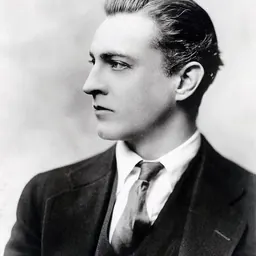

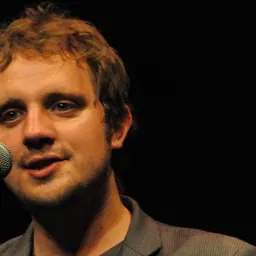
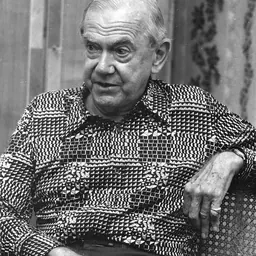


Related people
Same field, nearest in time






Contemporaries
People whose lives overlapped Nicol Williamson's



Frequently asked questions
Who was Nicol Williamson?
British actor (1936–2011)
When was Nicol Williamson born?
Nicol Williamson was born on 14 September 1936 in Hamilton.
When did Nicol Williamson die?
Nicol Williamson died on 16 December 2011 in Amsterdam.
What was Nicol Williamson's occupation?
Nicol Williamson was an actor, stage actor, film actor and television actor.
What nationality was Nicol Williamson?
Nicol Williamson was British.
Sources & further reading
Cite this page
APA: Biography.guide. (2026). Nicol Williamson. https://biography.guide/nicol-williamson/
MLA: "Nicol Williamson." Biography.guide, https://biography.guide/nicol-williamson/.
Chicago: "Nicol Williamson." Biography.guide. https://biography.guide/nicol-williamson/.
Data last updated: 2026-09-22 · Spot an error? Report a correction.
Portrait: Wikimedia Commons · author & licence
Page generated 2026-09-27 05:01 UTC