
About Nicholas Trist
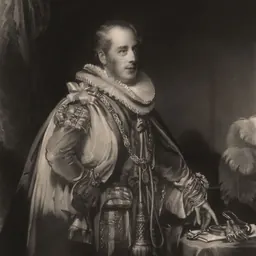
Lived 1800 – 1874 (aged 73). Nicholas Trist was an American diplomat, lawyer and politician.
Nicholas Philip Trist (June 2, 1800 – February 11, 1874) was an American lawyer, diplomat, planter, and businessman. Even though he had been dismissed by President James K. Polk as the negotiator with the Mexican government, he negotiated the Treaty of Guadalupe Hidalgo in 1848, which ended the Mexican–American War. The U.S. conquered Mexican territory and vastly expanded the United States. All or part of ten current states were carved out of former Mexican territory.
Early years Trist was born in Charlottesville, Virginia. He was the son of Hore Browse Trist, a lawyer, and Mary Brown. His grandfather was from England, while his grandmother, Elizabeth House Trist, was an acquaintance of Thomas Jefferson. Trist attended West Point but did not graduate and then studied law under Thomas Jefferson. Trist served as Jefferson's personal secretary in the 1820s and became an executor of his estate.
Trist married Virginia Jefferson Randolph, Thomas Jefferson's granddaughter, on September 11, 1824. They had three children, Martha Jefferson Trist Burke (1826–1915), Thomas Jefferson Trist (1828–1890), and Hore Browse Trist (1832–1896). As U.S. consul, Trist became unpopular with New England ship captains who believed he was more interested in maintaining good relations with Cuban officials than defending their interests. Captains and merchants pressed members of Congress for Trist's removal. In late 1838 or early 1839, the British commissioner Dr. Richard Robert Madden wrote U.S. abolitionists about Trist's misuse of his post to promote slavery and earn fees from the fraudulent document schemes. A pamphlet detailing Madden's charges was published shortly before the beginning of the sensational Amistad affair, when Africans sold into slavery in Cuba managed to seize control of the schooner in which they were being transported from Havana to provincial plantations. Madden travelled to the United States, where he gave expert testimony in the trial of the Amistad Africans, explaining how false documents were used to make it appear the Africans were Cuban-born slaves.
This exposure of the activities of the U.S. Consul General, coupled with the complaints of ship captains, caused a Congressional investigation and eventual recall of Trist in 1841 and his actions in Cuba were investigated by the House Commerce Committee which concluded there was no wrongdoing and the state department which concluded that while he could've taken more action in preventing the use of ships with the American flag participating in the illegal slave trade but that his "omission to do so has not been the result of indifference or any more corrupt motive; but of a settled conviction that any measures which he could take for the purposes alluded to would be entirely ineffectual from the impossibility of procuring such evidence as would be available in a court of justice." In 1847, during the Mexican–American War, President Polk sent Trist to negotiate with the government of Mexico. He was ordered to arrange an armistice with Mexico wherein the U.S. would offer a restitution up to $30 million U.S. dollars, depending on whether he could obtain Baja California and additional southern territory along with the already planned acquisitions of Alta California, the Nueces Strip, and New Mexico. If he could not obtain Baja California and additional territory to the south, then he was instructed to offer $20 million.
Trist ignored the order to leave Mexico, and wrote a 65-page letter back to Washington, D.C. explaining his reasons for staying. He capitalized on the opportunity to continue bargaining with Santa Anna offering $15 million. Trist successfully negotiated the Treaty of Guadalupe Hidalgo on February 2, 1848. Trist's negotiation was controversial due to him negotiating and signing the treaty after being recalled along with the terms of the treaty, the treaty would acquire all territory that was required per the orders he had received as negotiator but a considerable amount of expansionist Democrats felt that more land should have been annexed, including Polk himself. While Trist was in Mexico, Polk started believing he should have demanded more territory from Mexico than what he had ordered to Trist. After receiving the treaty, Polk wrote in his diary "if the treaty was now to be made, I should demand more territory, perhaps to make the Sierra Madra the line".
Polk was furious with Trist's conduct in Mexico and promptly fired him, but decided to approve the treaty Trist had negotiated since it still included all of the territory that he found essential; he also believed that if he rejected the treaty, Congress would not approve any further aid for the military occupation of Mexico. Trist’s treaty still followed Polk’s initial orders that Congress had approved. Polk also feared, with the upcoming 1848 election, the potential of a Whig Administration coming into power before a treaty was approved; the Whigs overwhelmingly disapproved of the war and the Polk Administration, and thus may have rejected any annexation at all.
Later years
Upon return to Washington, Trist was immediately fired for his insubordination, and his expenses since the time of the recall order were not paid. After his dismissal, Trist moved to West Chester, Pennsylvania, and then to Philadelphia, where he worked as a railroad clerk and paymaster. Trist finally recovered his expenses in 1871, at the urging of Senator Charles Sumner.
Trist supported Republican Abraham Lincoln for U.S. president in 1860. While the Lincoln administration did not offer Trist any patronage, he did serve as postmaster of Alexandria, Virginia, during the Grant administration.
He died in Alexandria on February 11, 1874, aged 73.
Don’t just read it —
keep it.
Full-length biographies made to live with: read them, listen on the way to work, watch them tonight.
- E-book
- Audio
- Video
Instant download · yours to keep · every purchase keeps this site free
Important facts
People in Nicholas Trist's life
Named in this biography and alive at the same time



Related people
Same field, nearest in time



Contemporaries
People whose lives overlapped Nicholas Trist's





Frequently asked questions
Who was Nicholas Trist?
American diplomat (1800-1874)
When was Nicholas Trist born?
Nicholas Trist was born on 2 June 1800 in Charlottesville.
When did Nicholas Trist die?
Nicholas Trist died on 11 February 1874 in Alexandria.
What was Nicholas Trist's occupation?
Nicholas Trist was a diplomat, lawyer and politician.
What nationality was Nicholas Trist?
Nicholas Trist was American.
Sources & further reading
Cite this page
APA: Biography.guide. (2026). Nicholas Trist. https://biography.guide/nicholas-trist/
MLA: "Nicholas Trist." Biography.guide, https://biography.guide/nicholas-trist/.
Chicago: "Nicholas Trist." Biography.guide. https://biography.guide/nicholas-trist/.
Data last updated: 2026-09-20 · Spot an error? Report a correction.
Page generated 2026-09-27 05:26 UTC