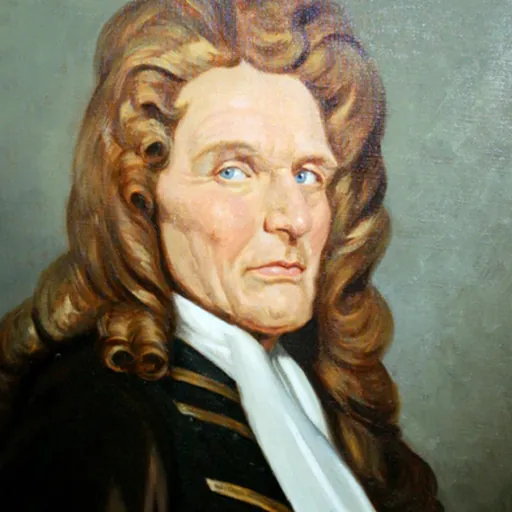
Nicholas Barbon
English economist, physician and financial speculator
About Nicholas Barbon
Lived 1640 – 1698 (aged 57–58). Nicholas Barbon was an English economist, politician, physician, architectural theoretician, master builder and numismatist, known for Economics, Property development and Property insurance.
Nicholas Barbon ( 1640 – 1698) was an English physician, real estate developer, and financier. He is regarded as one of the first economists and introduced several key innovations in the field of financial markets and insurance.
Initially trained as a physician, in the aftermath of the Great Fire of London, he became a property developer. In this role, he introduced significant innovations. He is credited as introducing several important types of financial instrument including fire insurance and mortgages, founding England's first insurance agency and the first bank to issue mortgages.
Barbon was also one of the first economists, writing books about commerce, international trade, finance and state policy, presenting ideas that were heterodox in his day but are now foundational to modern economics. Economic historians consider him one of the first writers to attack mercantilism and promote free trade, as well as one of the first to systematically examine the money supply and economic growth.
Early life Nicholas Barbon was born in London in either 1637 He was the eldest son of Praise-God Barebone (or Barbon), the namesake of Barebone's Parliament of 1653, the predecessor of Oliver Cromwell's Protectorate. Praise-God Barebone was a Fifth Monarchist who purportedly gave Nicholas the baptismal name "If-Jesus-Christ-had-not-died-for-thee-thou-hadst-been-damned," an example of a hortatory name, a type of virtue name that was common among some Dissenting families in 17th-century England. Conflicting sources claim the name "Unless-Jesus-Christ-Had-Died-For-Thee-Thou-Hadst-Been-Damned" was given to Nicholas' father and Nicholas' hortatory name was supposedly a variant on this name.
Barbon became a religious separatist with Millenarianist beliefs, including fervent advocacy of infant baptism in particular. He studied medicine at the Universities of Leiden and Utrecht in the Netherlands, and received his Doctor of Medicine qualification from the latter in 1661. Three years later, he became an honorary fellow of the Royal College of Physicians in London. Barbon did this despite long-established restrictions on new buildings associated with various Acts of Parliament and royal declarations in the late 16th century: he often simply disregarded legal and local objections, demolished existing buildings without permission and rebuilt speculatively in search of a quick profit. the redevelopment of Red Lion Square, and environs in Holborn without being authorised to do so. The Gray's Inn lawyers, Inns of Court adjacent saw their rural outlooks jeopardised, and started physical fist fights with Barbon's workmen, but the developer and his men fought back. The lawyers subsequently obtained warrants for his arrest but Barbon had these set aside and the development scheme was completed.
Insurance and mortgages At the same time, Barbon took an interest in the development of insurance and the banking industry, and helped to pioneer both. Fires were a major danger in London at the time: the Great Fire destroyed more than 13,000 houses and displaced about 100,000 people, and another conflagration in 1678 damaged the Middle Temple, one of the Inns of Court. The bank was moderately successful, and even threatened to usurp the Bank of England in 1696. The government budget deficit had grown to an unsustainable level; Barbon merged the National Land Bank with another institution (founded by John Briscoe) to form Land Bank United, and offered the government a £2 million loan (£ as of ). The scheme foundered when Barbon and Briscoe could not raise enough money, and Land Bank United was demerged. in the rotten borough of Bramber in Sussex, which enabled him to be elected one of its Members of Parliament in 1690 and 1695. Another project involved trying to pump drinking water from the River Thames, to be piped to his new building developments. He patented a design in 1694, and tried to sell pumping rights alongside fire insurance contracts. His works, especially A Discourse of Trade (written in 1690), influenced and drew praise from 20th-century economists such as John Maynard Keynes (in The General Theory of Employment, Interest and Money) and Joseph Schumpeter. He was one of several late 17th-century economic, social and political theorists with a medical education background; contemporaries included Benjamin Worsley, Hugh Chamberlen, William Petty and John Locke.
His early writings sought to explain and advertise his insurance and mortgage schemes and his building developments; for example, in his Apology for the Builder: or a Discourse showing the Cause and Effects of the Increase of Building of 1685—written in the aftermath of his fight with the lawyers of Gray's Inn—Barbon justified (anonymously) his expansionary building policy by describing the benefits it would bring to London and Britain as a whole. His A Discourse of Trade, written five years later, was much more significant, however. As a broad explanation of his economic and political views, it brought together all of his ideas and became the basis for his reputation as an economic theorist.
Barbon observed the power of fashion and luxury goods to enhance trade. Fashion demanded the replacement of goods before they had worn out; he believed this directed people towards the continuous purchasing of goods, which therefore created constant demand. These views were contrary to standard moral values of the time, influenced by the government and the church. He was one of the earliest writers to draw this distinction between the moral and economic aspects of purchasing.
His views on interest were praised by Joseph Schumpeter. Barbon described as a "mistake" the standard view that interest is a monetary value, arguing that because money is typically borrowed to buy assets (goods and stock), the interest that is charged on the loan is a type of rent—"a payment for the use of goods".
One of the main arguments in A Discourse of Trade
Barbon was influenced by populationism; he identified a country's wealth with its population. He also advocated the use of paper and credit money, and postulated the reduction of interest rates, which he thought impeded the growth in manufacturing and trade. He discussed these issues in his 1696 pamphlet, which also considered the effects of the Recoinage of that year, in which the Royal Mint recalled large quantities of silver coins, melted them down and reminted them, resulting in a temporary fall in the supply of money. This has been attributed to the early period in which he wrote, when economic thought was not yet fully developed.
Memorial Barbon Close, opposite Great Ormond Street Children's Hospital in central London, is named after him, as is Barbon Alley off Devonshire Square.
Works A Discourse Shewing the Great Advantages that New-buildings and the Enlarging of Towns and Cities do Bring to a Nation (1678) A Letter to a Gentleman in the Country, Giving an Account of the Two Insurance - Offices; the Fire-Office & Friendly-Society (1684) Apology for the Builder; or a Discourse showing the Cause and Effects of the Increase of Building (1685) A Discourse of Trade (1690) An Answer to Paper Entituled, Reasons against Reducing Interest to Four per Cent (1694) A Discourse Concerning Coining the New Money Lighter (1696)
Don’t just read it —
keep it.
Full-length biographies made to live with: read them, listen on the way to work, watch them tonight.
- E-book
- Audio
- Video
Instant download · yours to keep · every purchase keeps this site free
Important facts
People in Nicholas Barbon's life
Named in this biography and alive at the same time



Related people
Same field, nearest in time
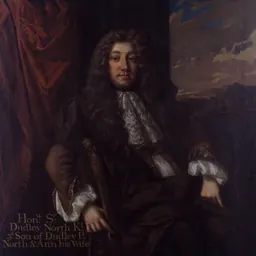




Contemporaries
People whose lives overlapped Nicholas Barbon's





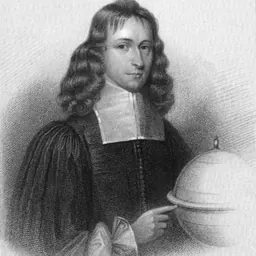
Frequently asked questions
Who was Nicholas Barbon?
English economist, physician and financial speculator
When was Nicholas Barbon born?
Nicholas Barbon was born in 1640 in London.
When did Nicholas Barbon die?
Nicholas Barbon died in 1698 in Middlesex.
What was Nicholas Barbon's occupation?
Nicholas Barbon was an economist, politician, physician, architectural theoretician, master builder and numismatist.
What was Nicholas Barbon known for?
Nicholas Barbon was known for Economics, Property development and Property insurance.
What nationality was Nicholas Barbon?
Nicholas Barbon was English.
Sources & further reading
Cite this page
APA: Biography.guide. (2026). Nicholas Barbon. https://biography.guide/nicholas-barbon/
MLA: "Nicholas Barbon." Biography.guide, https://biography.guide/nicholas-barbon/.
Chicago: "Nicholas Barbon." Biography.guide. https://biography.guide/nicholas-barbon/.
Data last updated: 2026-09-21 · Spot an error? Report a correction.
Portrait: Wikimedia Commons · author & licence
Page generated 2026-09-27 04:59 UTC