
About Niccolao Manucci
Lived 1638 – 1720 (aged 81–82). Niccolao Manucci was an Italian physician and historian.
Niccolao Manucci (19 April 1638 – 1717) was a Venetian writer, a self-taught physician, and traveller, who wrote accounts of the Mughal Empire as a first-hand witness. His work is considered to be one of the most useful foreign sources for the events that took place in India under Mughal rule. He also documented folk beliefs and customs of the period.
Biography Niccolò (or Nicolò) Manucci was born in Venice to Pasqualino Manucci and Rosa née Bellin. He joined an uncle in Corfu as a teenager and went aboard an English ship to India. In Delhi he lived with Jesuit priests learning Persian and some medical knowledge. He sent a ring back home with instructions that it should be sold for books on medicine to be sent back to him. After several dubious attempts as a medical practitioner with lucky cures effected for some influential patients he seems to have managed to work as a physician in the court of the Mughals. In 1653, he was recruited as a servant and guide by Henry Bard, 1st Viscount Bellomont, envoy from Charles II of England to Abbas II of Persia and Shah Jahan.
After Bard died at Hodal on 20 June 1656, Manucci moved to Surat and around 1656 he became an artillery man for Dara Shikoh. Following the death of Dara Shikoh he moved to Patna and later worked with Mirza Raja Jai Singh and in 1666 he tried to find work in Portuguese Bassein and Goa. He then returned to Mughal service in Lahore as a physician. He lost material in a shipwreck and then worked as a physician for Shah Alam in the Deccan. In 1682 he tried to act as an intermediary between the Portuguese and the Mughals and was made a member of the Order of Santiago by the Portuguese Viceroy Dom Francisco de Távora, Conde de Alvor but this ends in 1686 when he lost Mughal trust. He then moved to Hyderabad and then to Madras, marrying Elizabeth Hartley Clarke, widow of Portuguese interpreter Thomas Clarke. He lived in Madras with some work at Pondicherry where he obtained a house on the Rue Neuve de la Porte de Goudelour (Cuddalore). He maintained good relations with William Gyfford and Thomas Pitt.
Manucci remained in India for much of his life and is one of the few supposedly first hand European sources for Shah Jahan, Aurangzeb, Shivaji, Dara Shikoh, Shah Alam I, Jai Singh I and Kirat Singh. He had miniature paintings made of several of the Mughal rulers for his book.
He wrote about his work: "I must add, that I have not relied on the knowledge of others; and I have spoken nothing which I have not seen or undergone..."
Manucci spent almost his entire life in India. He would then send home the manuscript for "Storia do Mogor" which was lent to the French historian François Catrou. To Manucci's displeasure Catrou published his own embellished version as Histoire générale de l’empire du Mogul in 1705. The original then emerged in Berlin in 1915 and was written in three different languages. This version was translated and then published.
Works Some of Manucci's works, reprints, and translations include:
Don’t just read it —
keep it.
Full-length biographies made to live with: read them, listen on the way to work, watch them tonight.
- E-book
- Audio
- Video
Instant download · yours to keep · every purchase keeps this site free
Important facts
People in Niccolao Manucci's life
Named in this biography and alive at the same time

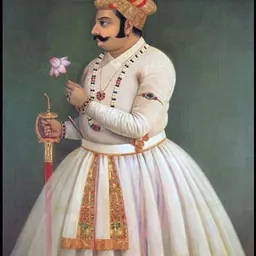



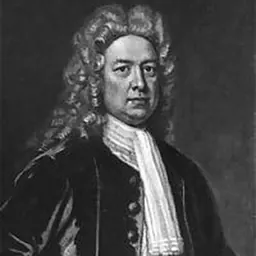

Related people
Same field, nearest in time
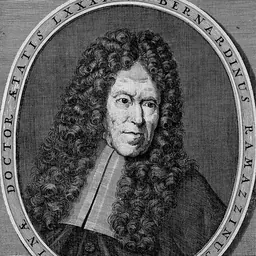

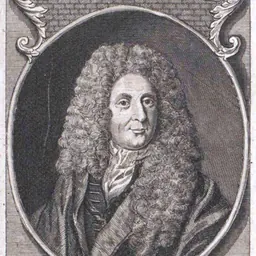
Contemporaries
People whose lives overlapped Niccolao Manucci's



Frequently asked questions
Who was Niccolao Manucci?
Italian writer and historian
When was Niccolao Manucci born?
Niccolao Manucci was born on 19 April 1638 in Venice.
When did Niccolao Manucci die?
Niccolao Manucci died in 1720 in Chennai.
What was Niccolao Manucci's occupation?
Niccolao Manucci was a physician and historian.
What nationality was Niccolao Manucci?
Niccolao Manucci was Italian.
Sources & further reading
Cite this page
APA: Biography.guide. (2026). Niccolao Manucci. https://biography.guide/niccolao-manucci/
MLA: "Niccolao Manucci." Biography.guide, https://biography.guide/niccolao-manucci/.
Chicago: "Niccolao Manucci." Biography.guide. https://biography.guide/niccolao-manucci/.
Data last updated: 2026-09-20 · Spot an error? Report a correction.
Page generated 2026-09-27 05:31 UTC