
Nguyễn Phúc Cảnh
Crown Prince of Vietnam
About Nguyễn Phúc Cảnh
Lived 1780 – 1801 (aged 20). Nguyễn Phúc Cảnh was a Vietnamese crown prince.
Nguyễn Phúc Cảnh (1780–1801), also known as Prince Cảnh, was the eldest son of the Vietnamese Prince Nguyễn Phúc Ánh, the future Emperor Gia Long. At the age of seven, he famously visited France with the French Catholic Father Pigneau de Béhaine to sign an alliance between France and Vietnam. Although Prince Cảnh was the legitimate heir to the throne, he died before his father, and none of his descendants ascended the throne after his half-brother Nguyễn Phúc Đảm was chosen by Gia Long.
Life Born April 6, 1780, Nguyễn Phúc Cảnh was the second son of Nguyễn Phúc Ánh and his first wife, Empress Tống Thị Lan (his older brother died soon after birth).
Embassy to France In 1785, at the age of five, Nguyễn Phúc Cảnh accompanied the French Catholic Father Pigneau de Béhaine to France in order to sign a treaty of alliance between France and Vietnam, the 1788 Treaty of Versailles. Prince Canh was also accompanied by two mandarins, a cousin, who became a Catholic known as Prince Pascal, soldiers and servants. The party reached Pondicherry in February 1785. which they reached in February 1787.
The party met with King Louis XVI on May 5 or 6, 1787. The Treaty of Versailles (1787) was signed on 28 November 1787. Prince Cảnh created a sensation at the court of Louis XVI, leading the famous hairdresser Léonard to create a hairstyle in his honour "au prince de Cochinchine". His portrait was made in France by Maupérin, and is now on display at the Séminaire des Missions Étrangères in Paris. Prince Canh dazzled the Court and even played with the son of Louis XVI, Louis-Joseph, Dauphin of France.
While in France, Nguyễn Phúc Cảnh resided in the 1732 building of the Paris Foreign Missions Society. Prince Canh became highly favourable to Christianity. He strongly desired to be baptized, but Pigneau de Behaine refrained doing so in order to avoid a negative reaction at the Vietnamese court.
Return to Vietnam
The party would leave France in December 1787 on board the Dryade, again staying in Pondicherry from May 1788 to July 1789. After his return from France, he refused to kneel in front of the altar of his ancestors, and painted crosses on Buddhist statues. He would regularly attend Catholic mass, but was not formally baptized although he wished to.
In 1793, Nguyễn Phúc Cảnh became "Crown Prince of the Eastern Palace" . From 1794 he participated to all the military expeditions, and his father Nguyễn Ánh insisted that he be accompanied every time by Father Pigneau de Behaine. He was besieged by the Tây Sơn with Pigneau de Behaine in the citadel of Duyen Khanh in 1794.
Prince Canh seems to have been baptized secretly towards the end of his life. According to Vietnamese annals:
He died in 1801 of smallpox. Missionaries claimed however that he was poisoned. Cảnh was given the posthumous name Anh Duệ Hoàng thái tử (英睿皇太子 lit. "The Crown Prince who is outstanding and forethoughtful") by Gia Long. He was buried in Bình Dương, Gia Định (in modern Bình Dương Province).
As Nguyễn Phúc Cảnh was the presumptive heir to Gia Long, Canh's eldest son Mỹ Đường was next in line for the succession. Gia Long however changed the primogeniture rule of succession to include "testamental measures" (gia thien ha), and ultimately changed his successor to his fourth son, who became emperor Minh Mạng.
The 1833-1835 Le Van Khoi revolt attempted to reestablish Prince Canh's line to the throne. This choice was designed to obtain the support of Catholic missionaries and Vietnamese Catholics, who had been supporting with Lê Văn Duyệt the line of Prince Canh.
My Duong's eldest son was Le Trung, who received the title of Marquis Ứng Hòa Hầu in 1826. Le Trung's eldest son was Anh Nhu (also known as Tang Nhu), who was considered as a candidate to the throne under French rule, following the establishment of the protectorate on Annam in 1884, and once again after the death of Đồng Khánh in 1889.
Anh Nhu, grand-grandson of Prince Canh, was the father of Cường Để, the eldest son of three, who became a well-known independentist and collaborator with the Japanese during World War II. Cường Để, according to the old rule of primogeniture was the heir of the Nguyễn dynasty.
Don’t just read it —
keep it.
Full-length biographies made to live with: read them, listen on the way to work, watch them tonight.
- E-book
- Audio
- Video
Instant download · yours to keep · every purchase keeps this site free
Important facts
Family & relationships
People in Nguyễn Phúc Cảnh's life
Named in this biography and alive at the same time
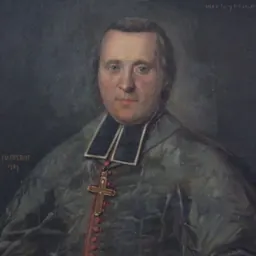


Related people
Same field, nearest in time



Contemporaries
People whose lives overlapped Nguyễn Phúc Cảnh's





Frequently asked questions
Who was Nguyễn Phúc Cảnh?
Crown Prince of Vietnam
When was Nguyễn Phúc Cảnh born?
Nguyễn Phúc Cảnh was born on 6 April 1780 in Gia Định.
When did Nguyễn Phúc Cảnh die?
Nguyễn Phúc Cảnh died on 20 March 1801.
What was Nguyễn Phúc Cảnh's occupation?
Nguyễn Phúc Cảnh was a crown prince.
What nationality was Nguyễn Phúc Cảnh?
Nguyễn Phúc Cảnh was Vietnamese.
Sources & further reading
Cite this page
APA: Biography.guide. (2026). Nguyễn Phúc Cảnh. https://biography.guide/nguyen-phuc-canh/
MLA: "Nguyễn Phúc Cảnh." Biography.guide, https://biography.guide/nguyen-phuc-canh/.
Chicago: "Nguyễn Phúc Cảnh." Biography.guide. https://biography.guide/nguyen-phuc-canh/.
Data last updated: 2026-09-20 · Spot an error? Report a correction.
Page generated 2026-09-27 05:18 UTC