
About Newton J. Walker
Lived 1803 – 1899 (aged 95). Newton J. Walker was an American politician.
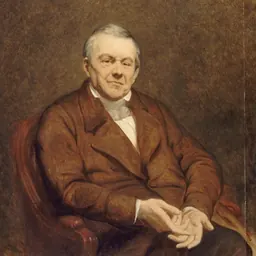
Isaac Newton Walker (December 18, 1803 – September 14, 1899) was a pioneer farmer and merchant in Illinois, designer of the third Fulton County courthouse, member of the Illinois House of Representatives, and a close personal friend of Abraham Lincoln.
Personal life and occupation
Isaac Newton Walker, generally referred to as Newton Walker, was born on December 18, 1803, in Madison County, Virginia, the son of Merriweather Walker and Elizabeth Kirtley. On May 14, 1834, Walker married Ann Eliza Simms (1814-1904), daughter of Colonel Reuben C. Simms and Frances M. Graves, in Madison County, Virginia. The couple moved to Lewistown, Illinois, in 1835, living on a farm that had been owned by Ossian M. Ross, the founder of Lewistown, who had subsequently moved to Havana, Illinois. Frances M. Simms married Lewis Winans Ross, a United States Congressman; and Catharine M. Simms married General Leonard F. Ross, a brigadier general in the American Civil War.
Newton Walker was engaged in farming in Lewistown. He was also the owner/proprietor of a general store, dealing in merchandise ranging from "mackerel to French edging."
Military service
In 1824, at the age of 21, Walker was appointed a major in the Virginia militia. He was then appointed to the command of the escort of the Marquis de Lafayette during Lafayette's fourth visit to the United States (1824-1825), accompanying him throughout Virginia. Walker continued to be addressed as "Major" throughout his life and in subsequent historical accounts.
Abraham Lincoln connection
Sketch of the "old" (third) Fulton County courthouse, designed by Major Walker, illustrating the outside staircase and the sandstone pillars in front.Shortly after moving to Lewistown, Major Walker was asked to design and supervise the construction of the Fulton County courthouse (actually, the third courthouse in Lewistown, and often referred to as the "old Court House"). This courthouse was built in 1838 in the Greek Revival style and featured four sandstone columns in front that were quarried from the Spoon River bottom. An outside staircase led to the upper floor. In this building, prominent local attorneys such as Abraham Lincoln, Edward Dickinson Baker and James Shields argued cases of law, and Stephen A. Douglas was a presiding judge. Lincoln and Douglas each gave speeches from between the columns, including Lincoln's famous "Back to the Declaration of Independence" speech on August 17, 1858. This courthouse burned in a fire of controversial origin on December 13, 1894.
After serving as a Fulton County supervisor, Walker was elected as a Whig to the Illinois House of Representatives in 1838, representing Fulton County. Abraham Lincoln was also a member of the Illinois House of Representatives at that time, representing Sangamon County, and was a fellow member of the Whig party. Despite having the same party affiliation, the two men had political differences, and Major Walker in his later years remarked that he used to give Lincoln "Hail Columbia."
The friendship between Walker and Lincoln continued after Walker left the legislature. Lincoln was a frequent guest in the Walker home in Lewistown, where Major Walker often played his fiddle for Lincoln in return for Lincoln's stories and anecdotes. Lincoln had his last meal in Lewistown in Major Walker's home on August 17, 1858, following Lincoln's address from the courthouse. The next morning, Walker drove Lincoln to Canton, Illinois, in his carriage. According to Walker, and at the time of his death was nearly blind and deaf. and the New York Tribune. Walker was interred in Lewistown's Oak Hill Cemetery, which is slightly southwest of Walker's house. Oak Hill Cemetery is also the location of the "Lincoln pillars:" two sandstone columns that were retrieved from the burnt remains of the old Fulton County courthouse that Major Walker had designed.
Walker is mentioned by name in Edgar Lee Masters' Spoon River Anthology: <
This verse is from "The Hill," the introductory section of the work, and it likely refers to Walker having known such men as Thomas Jefferson, James Madison, and Henry Clay when he lived in Virginia. This -story brick building with hard maple flooring and cherry wood trim was built on property that Walker had bought from Ossian Ross. The house is distinguished by corbie gables at the north and south ends. and floor plan are available from the Library of Congress as part of the Historic American Buildings Survey collection. The Walker house is slated for restoration to its original condition by the group Willing to Invest in Lewistown's Dream (WILD) in a project named "Restoration 1127."
Don’t just read it —
keep it.
Full-length biographies made to live with: read them, listen on the way to work, watch them tonight.
- E-book
- Audio
- Video
Instant download · yours to keep · every purchase keeps this site free
Important facts
People in Newton J. Walker's life
Named in this biography and alive at the same time
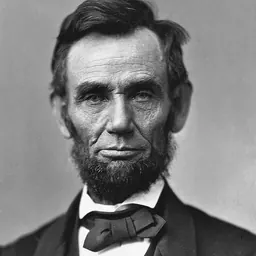


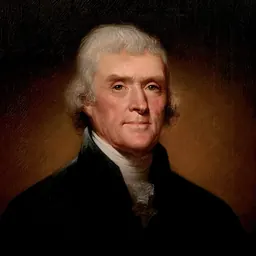

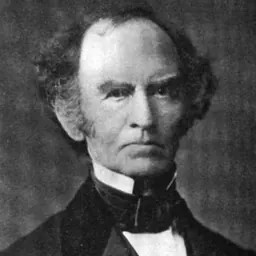

Related people
Same field, nearest in time
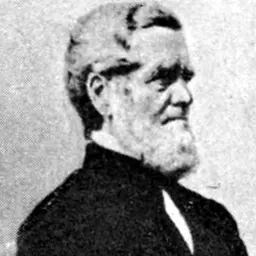



Contemporaries
People whose lives overlapped Newton J. Walker's






Frequently asked questions
Who was Newton J. Walker?
American politician
When was Newton J. Walker born?
Newton J. Walker was born on 18 December 1803 in Charlottesville.
When did Newton J. Walker die?
Newton J. Walker died on 14 September 1899 in Lewistown.
What was Newton J. Walker's occupation?
Newton J. Walker was a politician.
What nationality was Newton J. Walker?
Newton J. Walker was American.
Sources & further reading
· DBpedia: Isaac Newton Walker
Cite this page
APA: Biography.guide. (2026). Newton J. Walker. https://biography.guide/newton-j-walker/
MLA: "Newton J. Walker." Biography.guide, https://biography.guide/newton-j-walker/.
Chicago: "Newton J. Walker." Biography.guide. https://biography.guide/newton-j-walker/.
Data last updated: 2026-09-20 · Spot an error? Report a correction.
Page generated 2026-09-27 05:19 UTC