
About Neville Pickering
Lived 1923 – 1988 (aged 64). Neville Pickering was a New Zealand politician.
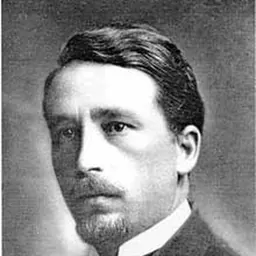
Neville George Pickering (18 November 1923 – 25 June 1988) was a New Zealand politician of the Labour Party.
Biography Early life Pickering was born in Hāwera in 1923. He was educated at Hamilton Technical College where he was also keen sportsman. In his youth he represented both Hamilton and Bay of Plenty at cricket. He married Alexia Pickering, who would become a notable disability advocate. They adopted three children before she had another child of her own. He was also vice-president of the South Canterbury Rugby Referees' Association.
Political career
In 1948, Pickering began his first posting in the Labour Party as their Southland party organiser, leading to him standing in the and s, in the electorate, but lost against the incumbent, George Richard Herron of the National Party. From 1950 to 1952, Pickering was the business manager of the Grey River Argus, a Labour newspaper in Greymouth, before leaving for Wellington in 1953 to become an assistant research officer at Labour's head office. In 1956, he took up position as Labour's South Island organiser. He was defeated in the 1960 election by Bert Walker.
Following his defeat, Pickering gained employment as manager of the Atlas Rubber Company. He was later a contender for the Labour nomination at the 1962 Buller by-election, though lost the nomination race to Bill Rowling. Pickering also declared his intention to seek the Labour nomination at the 1962 Timaru by-election after Clyde Carr announced his resignation. As a former resident his intentions were welcomed and received endorsement from trade union leader Fintan Patrick Walsh. Several weeks later he withdrew his name from the race at the insistence of the chairman of the St Albans electorate who wanted to retain him in Christchurch, convinced Pickering could win the seat back in 1963. He later reconsidered after receiving "overwhelming representations" from various union and party members urging him to seek nomination. He was ultimately not selected for the nomination.
In October 1962, Pickering was elected a member of the Christchurch City Council. He served for nine years as a councillor before he was elected Mayor of Christchurch in 1971. Upon his election as mayor he resigned his job at Atlas Rubber to be Mayor full-time which he saw the role of as bringing the people closer to the council. As one of his first acts as mayor he reinstituted the wearing of full mayoral robes and regalia, which many saw as a contradiction to his status as a Labour mayor. In 1972, Pickering boycotted an Anzac Day wreath-laying at Cathedral Square, protesting against the Returned Services' Association's restrictions on who could lay wreaths.
The dominant issue during Pickering's time as mayor was Christchurch's hosting of the 1974 British Commonwealth Games. He fulfilled an election pledge to leave Hagley Park untouched and build a purpose built facility for the games athletic events, which resulted in the construction of Queen Elizabeth II Park. Pickering insisted on the construction of a permanent facility for the city to have after the games' completion. This caused some concern by the games organising committee, who worried that the facilities might not be built to meet the deadlines and/or quality standards, though they were both met comfortably. In recognition to his contribution to the games, Pickering was given the honorary title of "President of the Tenth Commonwealth Games". It was a closely fought election with a large turnout. Pickering actually increased his vote share, but overall the increased voter turnout favoured Hay leading The Press to state the result was out of increased interest rather than a swing of public opinion. Pickering adopted novel campaign advertising strategies, including printed matchboxes with his face and the slogan, "The 'Bright Spark' This City Needs". Having lost the mayoralty, his wife insisted on moving back to Wellington. In the , he stood in the electorate but lost against Ken Comber. Soon afterwards he stood for the Labour candidacy for the seat in a 1979 by-election, but was again unsuccessful. A year later he stood for the Wellington City Council at the 1980 local elections and narrowly missed out on election. At the 1983 local elections he was a Labour candidate for the Wellington Harbour Board. Standing in the Lower Hutt constituency, he was unsuccessful. At both the 1983 and 1986 local elections he stood as a Labour candidate for a seat on the Lower Hutt City Council but was unsuccessful.
Later life and death Pickering died on 25 June 1988 and is buried at Memorial Park Cemetery in Christchurch. His wife, who subsequently remarried, died in 2017.
Honours and legacy In the 1985 New Year Honours, Pickering was appointed a Member of the Order of the British Empire, for services to local government. Pickering Courts, a 25-unit council housing project for the elderly built in St Albans in 1978, was named in his honour. After Pickering's death, both his successor as mayor, Sir Hamish Hay, and the chairman of the organising committee for the 1974 Commonwealth Games, Sir Ron Scott, described Queen Elizabeth II Park as a memorial to Pickering and his vision.
Don’t just read it —
keep it.
Full-length biographies made to live with: read them, listen on the way to work, watch them tonight.
- E-book
- Audio
- Video
Instant download · yours to keep · every purchase keeps this site free
Important facts
Family & relationships
People in Neville Pickering's life
Named in this biography and alive at the same time




Related people
Same field, nearest in time





Contemporaries
People whose lives overlapped Neville Pickering's
Frequently asked questions
Who was Neville Pickering?
New Zealand politician (1923-1988)
When was Neville Pickering born?
Neville Pickering was born on 18 November 1923 in Hāwera.
When did Neville Pickering die?
Neville Pickering died on 25 June 1988 in Wellington.
What was Neville Pickering's occupation?
Neville Pickering was a politician.
What nationality was Neville Pickering?
Neville Pickering was New Zealand.
Sources & further reading
· Wikipedia: Neville Pickering
Cite this page
APA: Biography.guide. (2026). Neville Pickering. https://biography.guide/neville-pickering/
MLA: "Neville Pickering." Biography.guide, https://biography.guide/neville-pickering/.
Chicago: "Neville Pickering." Biography.guide. https://biography.guide/neville-pickering/.
Data last updated: 2026-09-26 · Spot an error? Report a correction.
Page generated 2026-09-27 05:15 UTC