
About Neville Maxwell
Lived 1926 – 2019 (aged 92–93). Neville Maxwell was an Australian journalist.
Neville Maxwell (1926–2019) was an English-born Australian journalist and scholar who covered South Asia for The Times of London during 1959–1967, and one of the few who have seen the Henderson-Brooks Report, which was India's internal report of the 1962 border war with China, which is still currently being classified by the Indian government, and publicly unavailable to Indians. After five decades of the Indian government failing to declassify the Henderson-Brooks report, Maxwell later uploaded part of the report online and authored the book India's China War. The book is considered a revisionist analysis of the 1962 Sino-Indian War, putting the blame for it on India.
Career In 1959 he was posted to New Delhi as the South Asia correspondent, shortly after the Longju incident, the first Sino-Indian border clash. During the next few years, he reported on the emerging Sino-Indian border conflict, then the end of the Nehru era and the post-Nehru developments in India. During the 1962 Sino-Indian War, Maxwell wrote for The Times from New Delhi and was the only reporter there who did not uncritically accept the official Indian account of events.
In 1967, Maxwell joined the School of Oriental and African Studies, University of London, as a senior fellow to write his book India's China War. He was with the Institute of Commonwealth Studies at Oxford University when the book was published in 1970. He remained at Oxford for at least ten years, and created a visiting fellowship programme for journalists from developing countries.
Regarded as a comprehensive revisionist study, India's China War contradicted the then prevalent understanding of the war as a product of Chinese "betrayal and expansionism", The book drew extensively from India's classified Henderson Brooks–Bhagat Report, an internal operational review of India's military debacle, which Maxwell was able to obtain a copy of. On the other hand, Singaporean leader Lee Kuan Yew considered it "revisionist, pro-China history".
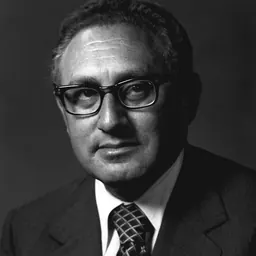
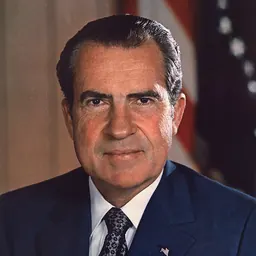
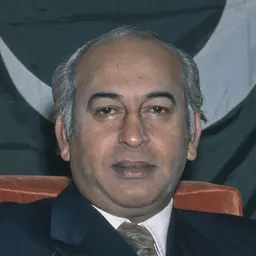
The book was apparently instrumental in bridging the gulf between the US and China. Henry Kissinger had read the book, and recommended it to Richard Nixon. He told Zhou Enlai, "Reading that book showed me I could do business with you people." Chinese leaders heaped praise on the book. In a banquet in 1971, Zhou En-lai and Zulfikar Ali Bhutto walked up to Maxwell and raised a toast. Zhou said, "your book did a service to truth which benefitted China." Others that knew him echo similar sentiments.
In 1967, he wrote a series of articles claiming that India's democracy was "disintegating". He said the famine was "threatening", the administration was "strained" and universally believed to be corrupt, the government and the governing party (Indian National Congress) had lost public confidence etc. The experiment of developing India within a democratic was said to have failed. He predicted that the next general election (for the 4th Lok Sabha) would be last one.
Leak of the Henderson Brooks–Bhagat report On 17 March 2014, Maxwell posted the first part of the Henderson Brooks–Bhagat Report on his website. The report was written by two Indian army officers in 1963 to examine India's defeat in the Sino-Indian War. It has been classified as top secret by the Indian government, but Maxwell acquired a copy and his India's China War contains the gist of the report. After the Indian government refused to release the report for over 50 years, Maxwell decided to make it public.
Reception Scholars regard Maxwell's India's China War as a revisionist account of the Sino-Indian War. The earliest accounts of the war regarded China as the aggressor that unleashed its forces on an unsuspecting India. Maxwell inverted the blame, by asserting that India was the aggressor and China the victim.
The book received negative reviews in India. Historian Parshotam Mehra commented that "deeply-rooted prejudice" oozed out of its every sentence, with examples such as: or Francis Watson's The Frontiers of China were missing from Maxwell's bibliography, and so too were the writings of men who had first-hand knowledge, such as Sir Olaf Caroe.
Historian Srinath Raghavan, Senior Fellow at the Centre for Policy Research, called India's China War a "seminal revisionist account". He argued that Maxwell "overreached" and that he "curiously interpreted Delhi's actions almost as Beijing would have viewed it". Raghavan recommended "post-revisionist" accounts, such as Steven Hoffman's India and the China Crisis.
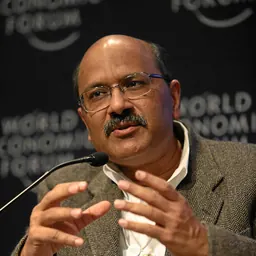
Shekhar Gupta praised Maxville as a "relentless journalist and scholar" over his findings of the Sino-Indian war. K. N. Raghavan described the book as the "most authoritative work" on Sino-Indian war but also noted that "the pronounced anti-India bias" of Maxwell's work "ensured the book was denied the credibility that such an account should have deserved".
In 2002, Rediff News included a book extract from India's China War in its "Remembering a War" series, with the comment "no account of the 1962 war would be complete without Neville Maxwell's authoritative analysis."
American political scientist John Garver wrote that Maxwell shaped the orthodox scholarly view, which was also reached by American scholar Allen Whiting, regarding China's perception of and response to India's Forward Policy: "in deciding for war, China's leaders were responding to an Indian policy of establishing Indian military outposts in territory claimed by both India and China but already under effective Chinese military occupation." Garver pointed out that Maxwell did not have access to Chinese documents or archives which would have given him insights into their policy making process.
Publications Books
Selected articles
Don’t just read it —
keep it.
Full-length biographies made to live with: read them, listen on the way to work, watch them tonight.
- E-book
- Audio
- Video
Instant download · yours to keep · every purchase keeps this site free
Important facts
People in Neville Maxwell's life
Named in this biography and alive at the same time




Related people
Same field, nearest in time


Contemporaries
People whose lives overlapped Neville Maxwell's

Frequently asked questions
Who was Neville Maxwell?
Australian-British journalist and writer
When was Neville Maxwell born?
Neville Maxwell was born in 1926 in London.
When did Neville Maxwell die?
Neville Maxwell died on 23 September 2019.
What was Neville Maxwell's occupation?
Neville Maxwell was a journalist.
What nationality was Neville Maxwell?
Neville Maxwell was Australian.
Sources & further reading
Cite this page
APA: Biography.guide. (2026). Neville Maxwell. https://biography.guide/neville-maxwell-journalist/
MLA: "Neville Maxwell." Biography.guide, https://biography.guide/neville-maxwell-journalist/.
Chicago: "Neville Maxwell." Biography.guide. https://biography.guide/neville-maxwell-journalist/.
Data last updated: 2026-09-20 · Spot an error? Report a correction.
Page generated 2026-09-27 05:29 UTC