
About Népomucène Lemercier
Lived 1771 – 1840 (aged 69). Népomucène Lemercier was a French poet, writer and playwright.
Louis Jean Népomucène Lemercier (20 April 1771 – 7 June 1840) was a French poet and playwright.
Life Lemarcier was born in Paris. His father had been intendant successively to the duc de Penthièvre, the comte de Toulouse and the unfortunate princesse de Lamballe, who was the boy's godmother. Lemercier was a prodigy; before he was sixteen his tragedy of Méléagre was produced at the Théâtre Français. Clarisse Harlowe (1792) provoked the criticism that the author was "pas assez roué pour peindre les roueries" (not enough scamp to depict scamp tricks.) Le Tartufe révolutionnaire a parody full of bold political allusions, was suppressed after the fifth performance.
In 1795, Lemercier's masterpiece Agamemnon, called by Charles Lafitte the last great antique tragedy in French literature, was produced. It was a great success, but was violently attacked later by Julien Louis Geoffroy who stigmatized it as a bad caricature of Prosper Jolyot de Crébillon. Les quatre métamorphoses (1799) was written to prove that the most indecent subjects might be treated without offence. The Pinto (1800) was the result of a wager that no further dramatic innovations were possible after the comedies of Pierre Beaumarchais. It is a historical comedy on the subject of the Portuguese Revolution of 1640. This play was construed as casting reflections on the first consul Napoleon, who had hitherto been a firm friend of the avowed republican Lemercier. His extreme freedom of speech finally offended Napoleon, and the quarrel proved disastrous to Lemercier's fortune for the time. In 1803, he earned a severe disappointment on the première of his tragedy Isule et Orovèse which was widely ridiculed and hooted by the public; consequently, at the beginning of the third act Lemercier withdrew his manuscript. He published his text with annoted "hootings" in order to pay deference to his public.
None of his subsequent work fulfilled the expectations raised by Agamemnon, with the exception perhaps of Frédégonde et Brunehaut (1821). In 1810, he was elected to the Académie française, where he consistently opposed the romanticists, refusing to vote for Victor Hugo – who was to succeed him in the fauteuil 14. In spite of this, he has some pretensions to be considered the earliest of the romantic school. His Christophe Colomb (1809), advertised on the play-bill as a comédie shakespérienne [sic], represented the interior of a ship, and showed no respect for the classical unities. Its numerous innovations provoked such violent disturbances in the audience that one person was killed and future representations had to be guarded by the police.
Lemercier wrote four long and ambitious epic poems: Homère, Alexandre (1801), L'Atlantiade ou la théogonie newtonienne (1812), Moïse (1823) and Panhypocrisiade (1819–1832), a distinctly romantic production in sixteen cantos, which has the sub-title Spectacle infernal du XVIe siècle. In it 16th century history, with Charles V and Francis I as principal personages, is played out on an imaginary stage by demons in the intervals of their sufferings.
Lemercier died on 7 June 1840 in Paris. He had composed his own epitaph as follows: « Il fut homme de bien et cultiva les lettres. » ("He was a gentleman and a man of letters.")
Works Theatre 1788: Méléagre, tragedy in 5 acts 1792: Clarisse Harlowe, drama, in verse 1795: Le Tartufe révolutionnaire, comedy in 5 acts, in verse 1796: Le Lévite d'Éphraïm, tragedy in 3 acts 1797: Agamemnon, tragedy in 5 acts, presented at the Théâtre de la République 5 floréal an V (24 April) 1797: La Prude, comedy 1798: Ophis, tragedy in 5 acts, presented at the Théâtre de la République 2 nivôse an VII 1800: Pinto, ou la Journée d'une conspiration, historical comedy, created at the Théâtre de la République 1 germinal an VIII (22 March) 1803: Isule et Orovèse, tragedy in 5 acts 1808: Baudouin, empereur, tragedy in 3 acts 1808: Plaute ou la Comédie latine, comedy in 3 acts, in verse, presented at the Comédie-Française, 20 January 1809: Christophe Colomb, historical comedy in 3 acts, in verse, presented at the Théâtre de S. M. l'Impératrice et Reine, 7 March 1816: Charlemagne, tragedy in 5 acts, presented at the Comédie-Française, 27 June 1816: Le Frère et la Sœur jumeaux, comedy in 3 acts, in verse, presented at the Théâtre de l'Odéon, 7 November 1817: Le Faux bonhomme, comedy in 3 acts tombée dès le commencement du 3e act, presented at the Théâtre français, 25 January 1817: Le Complot domestique, ou le Maniaque supposé, comedy in 3 acts and in verse, presented at the Théâtre de l'Odéon, 16 June 1818: Ismaël au désert ou l'origine du peuple arabe, scène orientale en vers (1801), presented at the Théâtre de l'Odéon 23 January (under the title Agar et Ismaël, ou l'Origine du peuple arabe) 1820: La Démence de Charles VI, tragedy in 5 acts, meant ti be presented at the Théâtre de l'Odéon 25 September 1820: Clovis, tragedy in 5 acts 1821: Frédégonde et Brunehaut, tragedy in 5 acts, presented at the Second Théâtre français 27 March 1821: Louis IX en Égypte, tragedy in 5 acts, presented at the Second Théâtre français, 5 August 1822: Le Corrupteur, comedy in 5 acts and in verse, completed 22 November, presented at the Second Théâtre-Français, 26 November 1823: Dame Censure, ou la Corruptrice, tragi-comedy in 1 act and in prose 1824: Richard III et Jeanne Shore, historical drama in 5 acts and in verse, imitated from Shakespeare and Rowe 1825: Les Martyrs de Souli, ou l'Épire moderne, tragedy in 5 acts, inspired by the writings of François Pouqueville. 1826: Camille, ou le Capitole sauvé, tragédy in 5 acts 1828: L'Ostracisme, comedy Richelieu ou la journée des dupes, comedy in 5 acts, in verse 1835: L'Héroïne de Montpellier, melodrama in 5 acts, presented at the Théâtre de la Porte-Saint-Martin 7 November 1827: Les Deux filles spectres, melodrama in 3 acts and in prose, représenté au théâtre de la Porte-Saint-Martin 8 Novembre 1830: Les serfs polonais, melodrama in 3 acts, presented at the Théâtre de l'Ambigu 15 June.
Poems and varia 1789: Épître d'un prisonnier délivré de la Bastille 1798: Les Quatre Métamorphoses 1800: Homère, poem 1800: Alexandre, poem 1801: Les Trois fanatiques, poem 1802: Un de mes songes ou quelques vers sur Paris 1803: Les Âges français, poème en 15 chants 1804: Hérologues, ou Chants des poètes rois 1804: L'Homme renouvelé, récit moral en vers 1806: Traduction des Vers dorés de Pythagoras et de deux idylles de Theocritus 1806: Discours de la nature 1807: Épître à Talma 1808: Essais poétiques sur la théorie Newtonienne tirés de l'Atlantiade [...] - Paris : Collin 1812: L'Atlantiade ou la théogonie newtonienne, poème en 6 chants: Bizarre poème didactique où des divinités allégoriques représentent le calorique, l'oxygène, le phosphore, etc. 1812: Ode sur le doute des vrais philosophes 1814: Épître à Bonaparte sur le bonheur de la vertu 1814: Épître à Bonaparte, sur le bruit répandu qu'il projetait d'écrire des commentaires historiques 1815: Réflexions d'un Français, sur une partie factieuse de l'armée française 1818: La Mérovéide ou les champs catalauniques, poème en 14 chants 1818: Du Second Théâtre-français, ou Instruction relative à la déclamation dramatique 1819: La Panhypocrisiade ou la comédie infernale du XVIe siècle, poème en 16 chants 1819 and 1823: Moïse, poem 1820: Cours analytique de littérature générale, 4 vol. : collection of lessons given at the Athénée from 1811 to 1814. 1820: Chant pythique sur l'alliance européenne 1820: Ode à notre âge analytique 1823: Le Paysan albigeois 1824–1825: Chants héroïques des montagnards et matelots grecs, translated into French verse Ode à la mémoire du Comte de Souza Almînti, ou le Mariage sacrilège, physiological novel Ode à l'hymen, set in music by Luigi Cherubini Ode sur la Melpomène des Français
Don’t just read it —
keep it.
Full-length biographies made to live with: read them, listen on the way to work, watch them tonight.
- E-book
- Audio
- Video
Instant download · yours to keep · every purchase keeps this site free
Important facts
People in Népomucène Lemercier's life
Named in this biography and alive at the same time
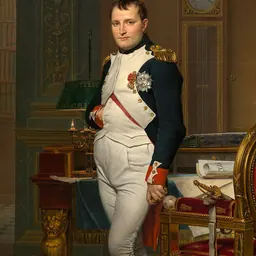

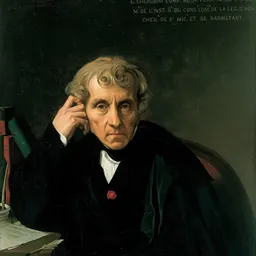

Related people
Same field, nearest in time
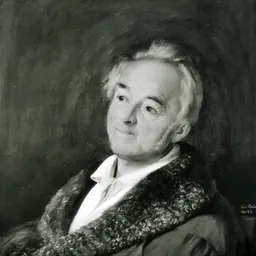
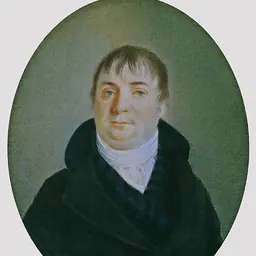
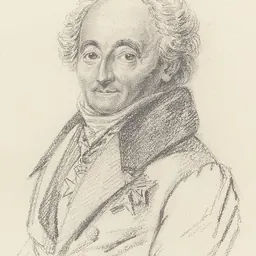

Contemporaries
People whose lives overlapped Népomucène Lemercier's



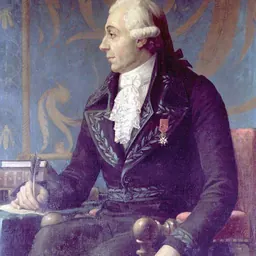
Frequently asked questions
Who was Népomucène Lemercier?
French poet (1771-1840)
When was Népomucène Lemercier born?
Népomucène Lemercier was born on 21 April 1771 in Paris.
When did Népomucène Lemercier die?
Népomucène Lemercier died on 7 June 1840 in Paris.
What was Népomucène Lemercier's occupation?
Népomucène Lemercier was a poet, writer and playwright.
What nationality was Népomucène Lemercier?
Népomucène Lemercier was French.
Sources & further reading
· Wikipedia: Népomucène Lemercier
· DBpedia: Népomucène Lemercier
Cite this page
APA: Biography.guide. (2026). Népomucène Lemercier. https://biography.guide/nepomucene-lemercier/
MLA: "Népomucène Lemercier." Biography.guide, https://biography.guide/nepomucene-lemercier/.
Chicago: "Népomucène Lemercier." Biography.guide. https://biography.guide/nepomucene-lemercier/.
Data last updated: 2026-09-24 · Spot an error? Report a correction.
Page generated 2026-09-27 05:05 UTC