
About Nelson P. Jackson
Lived 1910 – 1960 (aged 49). Nelson P. Jackson was an American military personnel.
Nelson Parkyn Jackson (December 26, 1910 – November 13, 1960) was a highly decorated U.S. Air Force colonel who commanded the 327th Fighter Group and the 64th Fighter Wing during World War II. He was also the chief of staff of I Fighter Command, where he played a key role in training pilots for combat and developing close air support tactics. After the war, he was involved in the formation of Strategic Air Command (SAC) as deputy chief of staff of the 15th Air Force and was actively involved in the US atomic energy program, participating in Operation Crossroads nuclear tests and commanding Operation Fitzwilliam.
Jackson later served as a NATO liaison officer within the Joint Chiefs of Staff. He went on to become the D.C. manager for GE's Atomic Energy Division and an attorney involved in the aerospace and nuclear industries. He was a founder and president of the National Space Club, which later established the Nelson P. Jackson Aerospace Memorial Award in his honor.
Ancestral heritage Nelson P. Jackson was born in Burlington, Vermont, in 1910. He was the son of Mabel Maude Parkyn and S. Hollister Jackson, who served as the 56th Lieutenant Governor of Vermont until his death in the Great Vermont Flood of 1927.
His maternal uncle was Dr. Herbert A. Parkyn, a prominent figure in the New Thought movement and founder of The Chicago School of Psychology. In 1929, he received an appointment to the United States Military Academy at West Point from Senator Porter H. Dale. That same year, his childhood friend from Burlington, Alfred D. Starbird, was also admitted. Graduating in the class of 1933, Jackson received his commission as a second lieutenant and joined the Air Corps.
Early military career In the fall of 1933 Jackson began his primary flight training at Randolph Field near San Antonio, Texas. He then completed his advanced pursuit flight training at Kelly Field earning his pilot wings in 1934.
In December 1934, Jackson was transferred as a first lieutenant to Albrook Field in Balboa, Panama. He was assigned to the 74th Pursuit Squadron, under the command of Orrin Leigh Grover. In 1935 the squadron won the "Department Commander's Trophy", an annual award given to the best Air Corps squadron in the department. Several of his class of 1933 USMA classmates, including Dwight Divine (24th Pursuit), Laurence B. Kelley (25th Bomb), Robin B. Epler (7th Observation), and Thomas B. Hall (80th Service), were also stationed with him at Albrook Field.
In 1940, he was promoted to the rank of captain and reassigned back to Albrook Field, Panama, serving as both a flying instructor and a fighter squadron commander, responsible for defending the Panama Canal Zone and conducting antisubmarine air patrols.
World War II Emblem, 327th Fighter Group. The Gorgon / Medusa’s head. Motto : Ne Deficit Animus, "Courage does not fail me" At the start of U.S. involvement in World War II, Jackson was assigned to organize and train new fighter units. In August 1942, he was transferred to I Fighter Command, First Air Force, at Mitchel Field, New York, where he took command of the newly formed 327th Fighter Group. The unit was then placed under the Philadelphia Air Defense Wing and temporarily stationed at Philadelphia Municipal Airport before being permanently relocated to Richmond Army Air Base in Virginia. The 327th Fighter Group would serve as the parent operational training unit for the Philadelphia Air Defense Wing, which was designated as the training wing for the First Air Force. It comprised the 323d, 324th, 325th, and 443d Fighter Squadrons.
Col. Nelson P Jackson, commander 327th Fighter Group & Col. Edward E Hildreth, commander Richmond air base In February 1943, Jackson was promoted to the rank of major and advanced to colonel in July of the same year, becoming the fourth youngest officer to attain this rank at the time.
The 327th initially trained with P-40 Warhawks, then transitioned to the new Republic P-47 Thunderbolt (nicknamed the “Jug”) in early 1943. The P-47 offered greater speed, improved bomb load capacity, and enhanced survivability against enemy defenses. By October 1943, the first fully trained P-47 fighter group composed of the initial wave of pilots trained by the 327th was ready for combat. Designated by Gen. Barcus as the 358th Fighter Group, it was assigned to the Eighth Air Force and deployed to England. The group would quickly earn a reputation for executing devastating attacks on German aircraft and ground forces in France. Gen. Barcus regarded them as the best-organized and best-trained fighter group sent into combat.
WWII: 64th Fighter Wing Emblem of the 64th Fighter Wing with the motto, Mors Semper Tyrannis, "Death always to tyrants" In early 1944, Jackson was promoted to chief of staff of I Fighter Command at Mitchel Field, New York, where Gen. Barcus had assumed command a few months earlier. The reassignment was prompted by the decision to introduce the P-47 Thunderbolt into existing fighter groups in the Mediterranean theater. Jackson and Barcus were tasked with training pilots on the new aircraft and developing combat maneuvers suited to its capabilities while operating in an active combat zone. After several months of tactical planning and overseeing the transition of fighter groups to P-47s, Jackson and Barcus deployed overseas in April 1944, arriving in Naples, Italy. There, they joined the 64th Fighter Wing, with Barcus assuming command while Jackson remained on detached service as chief of staff of I Fighter Command until transitioning to chief of staff of the 64th in August 1944.
The 64th Fighter Wing, operating under XII Tactical Air Command of the Twelfth Air Force, had been active since early 1943, participating in the North African and Sicilian campaigns and was presently deeply engaged in the Italian invasions. Equipped with advanced radar technology, including VHF communication and various SCR (Set Complete Radio) radar systems, the wing had played an early role in developing close air support tactics, but with radar still in its early stages, integrating it into battlefield operations had presented significant challenges.
Jackson flew 29 combat sorties during the campaign. On one mission, his aircraft was heavily damaged by German anti-aircraft fire, nicknamed "Jerry ack-ack" by US pilots. While strafing a German supply train emerging from a tunnel in the Alps, he pulled up to assess the remaining cars on the other side, only to be met with a Nazi railway flak unit positioned at the rear of the train. His P-47 was riddled with shrapnel, and he sustained injuries in the attack. Due to the P-47's rugged design, which allowed it to endure significant damage, he managed to keep the aircraft airborne and reach an emergency landing base within Allied-controlled territory. For his injuries sustained in combat, Jackson was awarded the Purple Heart.
WWII: Invasion of Southern France
On August 15, 1944, the Allied invasion of Southern France began. Aboard the main headquarters ship, Barcus and Jackson directed air support for the landing forces. To improve coordination with ground troops, they embedded a 64th Fighter Wing unit alongside the advance paratroopers and glider troops landing just inland from St. Tropez and St. Maxime. This unit was equipped with a glider carrying an SCR radio and a jeep that would deploy upon landing. This tactic enabled rapid movement with advancing forces while directing P-47 Thunderbolts in close air support. It also allowed monitoring of Tactical Reconnaissance reports to relay enemy positions to ground commanders.
The plan was designed to fully integrate airborne forward controllers within VI Corps, to improve coordination between ground forces and P-47 fighter-bombers. When reconnaissance identified a target, the information was relayed to a VI Corps ground station, which then requested P-47 support from the 64th Fighter Wing. The 64th would dispatch a L-5 Sentinel aircraft, call-sign "Horsefly," with a flying officer acting as a forward controller linked to the 64th and an artillery observer maintaining communication with VI Corps ground units. Since the P-47 pilots were not pre-briefed on the target, the "Horsefly" controller would visually locate the target and provide direct guidance to the flight leader. Simultaneously, the artillery observer remained in contact with ground units, who would use colored smoke to mark the targets.
WWII: First Tactical Air Force (Provisional)
In late 1944, multiple Army Air Force and French Air Force units merged into the First Tactical Air Force (Provisional) to provide close air support for U.S. forces advancing into Germany. Combining units from the Ninth and Twelfth Air Forces, it brought together the most effective air-ground coordination techniques developed throughout the war. It was established following the link-up in Eastern France of the US Army forces that had invaded from Normandy and from Southern France earlier that year. Its command structure was led by XII Tactical Air Command with the 64th Fighter Wing operating fighter-bomber coordination and the 42nd Bomb Wing overseeing bomber operations. The 64th would now command 9,000 airmen and five P-47 groups, reuniting Jackson and Barcus with the 358th Fighter Group, composed of pilots they had trained in 1942-43.
In January 1945, Gen. Barcus was appointed commanding general of the XII Tactical Air Command and Col. Nelson P Jackson was promoted to commander of the 64th Fighter Wing. Troops in fortified positions surrendered in droves, emerging from bunkers and cellars in shock as American infantry advanced. To Germans in the ranks, as well as on the highest level of command, P-47 fighter bombers were the most terrifying Allied weapon on the western front. When they were asked what weapon they feared most, German captives in the prison cages invariably answered "Jabo." Some soldiers refused orders to return to their posts; others were too shaken to fight. Between 15 and 23 March, the toll on enemy forces was staggering: 40 locomotives, 208 rail cars, 2,542 motor vehicles, 51 tanks, 284 horse-drawn wagons, 1,218 buildings, two bridges, and 46 guns destroyed. Roads were blocked, rail lines severed, command posts demolished, and strongpoints obliterated. The P-47 fighter groups commanded by the 64th Fighter Wing had turned the tide. The 15th's geographic responsibility included the western half of the United States, extending coverage across the American Southwest, the West Coast, and strategic locations in the Pacific.
In April 1946, under the supervision of Fifteenth Air Force headquarters staff, the 509th Bombardment Group deployed to Kwajalein with a number of Boeing B-29 Superfortress aircraft. In addition to delivering the atomic bomb for the test detonation, B-29s were used for tracking and monitoring the explosion, including the first-ever B-29 drone capable of being remotely controlled from takeoff to landing. This was the first atomic test in which the Fifteenth Air Force and Col. Jackson were involved, but they would go on to play key roles in future tests.
Hanford Engineer Works
Fort George Wright’s most strategic significance was its proximity—just 130 miles from the Hanford Site, the primary facility producing plutonium for the Army’s atomic bombs. With the Fifteenth Air Force overseeing atomic weapons delivery across the western half of the country, Hanford's production was a key asset. Colonel Jackson and his team of 40 officers and 60 enlisted men arrived in Spokane just days after the Atomic Energy Act of 1946 was signed on August 1, transferring control of nuclear materials from the military to the newly established Atomic Energy Commission (AEC). The transition, set to take effect on December 31, 1946, would bring an end to direct military oversight of plutonium production at Hanford.
At the same time, Hanford was undergoing another major transition. DuPont, which had built and operated the site under the Manhattan Project, opted not to continue its contract obligations beyond the initial postwar period and would cease to operate the facility. With DuPont’s departure, General Leslie Groves ultimately negotiated an agreement with General Electric. GE assumed operational control of Hanford on September 1, 1946, with full authority transferring on September 30.
In 1954, after retiring from the Air Force, Colonel Jackson became the General Electric Atomic Energy Division representative in Washington, D.C. The following year, in 1955, he authored a paper for the American Water Works Association Journal titled Atomic Energy and the American Economy, in which he provided detailed insights into the inner workings of the highly classified Hanford Site.
Post War: Operations Fitzwilliam and Sandstone
In January 1948, Col. Nelson P. Jackson was assigned to oversee Operation Fitzwilliam, a highly classified U.S. Air Force initiative aimed at developing methods for long-range detection (LRD) of nuclear detonations. This operation was conducted in conjunction with Operation Sandstone, the 1948 atomic tests at Eniwetok Atoll in the Pacific Marshall Islands. thumb Operation Fitzwilliam was a last-minute addition to the Sandstone tests, introduced by General William E. Kepner, co-commander of Joint Task Force 7 (JTF-7), the military division responsible for conducting the nuclear tests. In September 1947, President Truman had tasked Kepner with developing an LRD capability in response to growing concerns among military and scientific officials that the U.S. lacked a system for monitoring Soviet nuclear activity. The urgency of this issue led to the rapid integration of Operation Fitzwilliam into Sandstone.
To facilitate this effort, General Kepner established Air Force Materiel Special Weapons-1 (AFMSW-1) on December 31, 1947, appointing General Albert P. Hegenberger as its military commander and Dr. Ellis Johnson as its technical director.
On May 13, 1948 Major General Kepner returned to Washington, D.C. and assigned Col. Jackson as the commander of Operation Fitzwilliam. Jackson would oversee the Zebra detonation test and would conduct all the post-test briefings to senior military and government officials.
Jackson completed the program and graduated in June 1951, after which he was assigned to the Office of the Joint Chiefs of Staff under General Hoyt S. Vandenberg, the Chief of Staff of the U.S. Air Force.
Gen. Hoyt S Vanderberg and Col. Jackson Jackson and Vandenberg had extensive prior experience working together in various capacities.
In 1933 Vandenberg was a flight instructor and deputy stage commander at Randolph Field, Texas when Col. Jackson took his primary flight training there.
Joint Chiefs of Staff, NATO liaison officer
In his new role at the Pentagon, Col. Jackson was assigned as a NATO liaison officer for the U.S. Air Force, within the Joint Chiefs of Staff. He would serve as the US Air Force representative at NATO Military Representatives Committee (MRC) meetings within NATO’s Standing Group, which was responsible for military coordination and strategic planning among alliance members. His role involved working directly with senior military officials, including General Omar N. Bradley, Chairman of the Joint Chiefs of Staff, and General Dwight D. Eisenhower, Supreme Allied Commander Europe (SACEUR).
During his tenure as NATO liaison, the United States was expanding its nuclear deterrence capabilities across Europe. Jackson was tasked in planning the integration of U.S. nuclear weapons into NATO’s collective defense strategy, including basing, logistics, and delivery systems. His role included advising on the placement of nuclear-capable aircraft and infrastructure at NATO air bases. Jackson was also involved in the ongoing Korean War, where he participated in airpower strategies as well as resource allocation between the conflict in Asia and NATO’s commitments in Europe.
He remained in this position until his retirement from the Air Force in 1954.
Post military service
Nelson P. Jackson voluntarily retired from the United States Air Force in 1954 after 21 years of service. He subsequently became a practicing attorney in Washington, D.C., and was admitted to practice before the Supreme Court and the United States Court of Military Appeals. Jackson also worked as the Washington, D.C. manager for the Atomic Products Division of General Electric Co. From 1954 to 1958, he handled nuclear-related activities for General Electric and chaired an atomic energy advisory group. He published articles on nuclear topics, including "Nuclear Powerplants," "Atomic Energy Economics," and "The Disposal of Atomic Wastes." He was a member of the Atomic Industrial Forum and the American Nuclear Society.
He gave public lectures on atomic energy, including a 1954 speech at the Lowell Institute in Boston on "Atomic Energy in Industry and Research." In 1955, he wrote Atomic Energy and the American Economy for the American Water Works Association Journal, which discussed the Hanford Site. In 1956, he chaired a panel in San Antonio on "Putting the Atom to Work."
In 1957, Jackson co-founded the National Rocket Club, later renamed the National Space Club. In 1959, he became the government office manager for Joy Manufacturing Company, now Joy Global, which produced heavy equipment used in missile systems, launch platforms, aircraft, submarines, mining and construction projects.
National Space Club
In 1957, Nelson P. Jackson co-founded the National Rocket Club, later renamed the National Space Club, alongside Erik Bergaust and Wernher von Braun. At the time, Jackson was an attorney specializing in space law and had written papers on “Education for the Space Age” and “The Law of Outer Space.” He was also a member of the American Rocket Society and the Institute of the Aeronautical Sciences. The launch of Sputnik by the Soviet Union in 1957 sent shockwaves through the western world, especially among those involved in the defense of the United States who had long advocated for a stronger national commitment to the Space Race. Jackson, Bergaust, and von Braun, were all collaborators with this same shared ambition.
Bergaust and von Braun considered Jackson the ideal candidate for president of the Club because of his extensive experience and connections. His military service, involvement in atomic energy programs, legal expertise in space law, and lobbying work positioned him as a central figure linking government, the military, private industry, and the public in space-related initiatives.
Nelson P. Jackson Aerospace Memorial Award In 1960, the National Space Club created the Nelson P. Jackson Aerospace Memorial Award to recognize Jackson’s role as a founder and president of the Club. It is the Club's second most prestigious honor, awarded for significant contributions to the advancement of missile, aircraft, and space technology.
Described by NASA as "the space world's equivalent of an Academy Award" it is presented annually by the National Space Club during the Dr. Robert H. Goddard Memorial Dinner in Washington, D.C.
List of past Nelson P. Jackson Aerospace Memorial Award winners.
"Review of the Space Program" Congressional testimony On February 23, 1960, Nelson P. Jackson appeared before the U.S. House Committee on Science and Astronautics as the president and representative of the National Rocket Club. The committee was conducting hearings to gather input from scientific and private industry leaders involved in aeronautical and space-related research and development.
The panel included the National Rocket Club, the American Astronautical Society, the American Rocket Society, Dr. William H. Pickering, director of the Jet Propulsion Laboratory, and Dr. H. Guyford Stever of the Institute of the Aeronautical Sciences.
In August 1939, Jackson and Patricia divorced, and in November of that same year he married Virginia Grey Thornton, who was born and raised in Panama to an American family involved in the construction of the Panama Canal and railroad. Their first two sons, Wells T. and Bruce P., were born in Panama in 1940 and 1941. In 1943, while Jackson was stationed in Richmond, their daughter Virginia G. was born, and in 1946, while in Spokane, their youngest son, Glenn H., was born.
Nelson P. Jackson had one younger brother, Samuel Hollister Jackson II (1916–1995), who served as a lieutenant colonel in the U.S. Air Force. During World War II, he was an intelligence officer who served as a US Air Force liaison to the British military and to China’s 5th Army in the Burma-India theater, for which he was awarded the China Star Medal. In 1947, the brothers were reunited when they were both stationed at the 15th Air Force headquarters in the 201st AAF Base Unit, where Samuel served as the provost marshal for the 15th’s HQ. He later spent several years stationed in Ankara, Turkey.
Nelson Parkyn Jackson was as a member of the Knights Templar Masonic Order.
Death Col. Jackson was flying a Ryan L17 Navion plane when he crashed. On November 13, 1960, Nelson P. Jackson died in a plane crash on Spruce Mountain, West Virginia. His assistant, Roger Bell, was also killed.
Jackson took off from Friendly, Maryland, at 6:25 p.m. in a Pentagon owned single-engine Ryan L17 Navion plane operated by the Pentagon Aero Club. He was flying to New Philadelphia, Ohio, a trip expected to take two and a half hours. When no contact was made and the plane had not arrived by 9 p.m., the Washington Flight Service of the Federal Aviation Agency notified Jackson’s wife at 11 p.m. that the aircraft was missing. Col. Nelson Parkyn Jackson's headstone at Arlington National Cemetery The next morning, Civil Air Patrol units from Maryland, Washington, D.C., and West Virginia launched a search. About 50 Civil Air Patrol members took part, but freezing temperatures and six inches of snow made the search difficult. Two days later, Bell’s badly burned body was found on U.S. Route 33, several miles from Spruce Knob, the highest peak in a four-state area. The next day, searchers found the wreckage on Spruce Mountain near Riverton, West Virginia, close to the Virginia-West Virginia border. The plane had crashed at night on a snow-covered peak and burned on impact. Jackson’s body was found in the wreckage. Searchers found Bell's belt midway between the crash site and nine miles away where his body was discovered, indicating he had survived the crash and attempted to walk for help.
Colonel Jackson had more than 3,500 flying hours with aerial experience in 23 different types of airplanes including seven fighters, three bombers, six transports, three liaison and four training airplanes.
In 1961, Jackson’s family sued the federal government, claiming the Pentagon owned aircraft had been negligently maintained. The case resulted in a $1.2 million settlement.
Jackson was buried in Arlington National Cemetery.
Awards and decorations
Legion of Merit (2) – one awarded for his leadership of the 327th Fighter Group and another for the training of I Fighter Command to a high rate of efficiency Distinguished Flying Cross Bronze Star Medal French Croix de Guerre (2) Air Medal with One Cluster Purple Heart Army Commendation Ribbon Distinguished Unit Citation Five Battle Stars on the European Theatre Ribbon American Defense Ribbon with One Star (denoting service at the start of WWII) American Theatre Ribbon with One Star (for participation in anti-submarine warfare off the coast of Panama)
Don’t just read it —
keep it.
Full-length biographies made to live with: read them, listen on the way to work, watch them tonight.
- E-book
- Audio
- Video
Instant download · yours to keep · every purchase keeps this site free
Important facts
People in Nelson P. Jackson's life
Named in this biography and alive at the same time
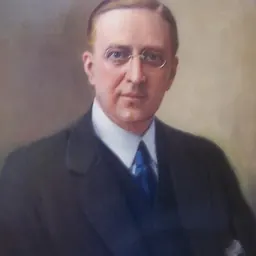

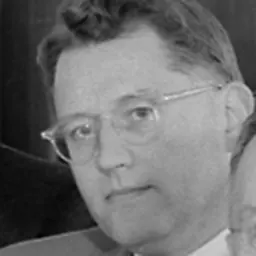



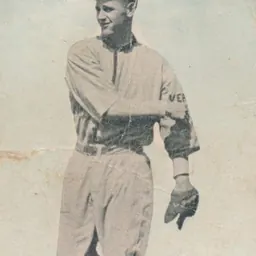

Related people
Same field, nearest in time

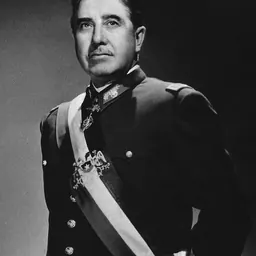



Contemporaries
People whose lives overlapped Nelson P. Jackson's






Frequently asked questions
Who was Nelson P. Jackson?
US Air Force colonel (1910 – 1960)
When was Nelson P. Jackson born?
Nelson P. Jackson was born on 26 December 1910.
When did Nelson P. Jackson die?
Nelson P. Jackson died on 13 November 1960 in Spruce Mountain.
What was Nelson P. Jackson's occupation?
Nelson P. Jackson was a military personnel.
What nationality was Nelson P. Jackson?
Nelson P. Jackson was American.
Sources & further reading
· Wikipedia: Nelson P. Jackson
Cite this page
APA: Biography.guide. (2026). Nelson P. Jackson. https://biography.guide/nelson-p-jackson/
MLA: "Nelson P. Jackson." Biography.guide, https://biography.guide/nelson-p-jackson/.
Chicago: "Nelson P. Jackson." Biography.guide. https://biography.guide/nelson-p-jackson/.
Data last updated: 2026-09-20 · Spot an error? Report a correction.
Page generated 2026-09-27 05:26 UTC