
About Nelly Roussel
Lived 1878 – 1922 (aged 44). Nelly Roussel was a French women's rights activist, anarchist, journalist, feminist and writer.
Nelly Roussel (5 January 1878 – 18 December 1922) was a French free thinker, anarchist, and feminist. As a Neo-Malthusian feminist, she advocated for birth-control in European as well as a number of other pro-women and motherhood positions within Europe's capitalist systems. She was known for her beauty and charm during public speaking, along with her soft yet commanding voice that appealed to many people.
Early life and family Roussel was born in France to Louise Nel Roussel and Léon Roussel. Roussel was raised Catholic. Shortly after her father's death in 1894, her mother remarried Antonin Montupet. Roussel also had a sister born in 1880, Andrée Roussel. She was educated at an elementary school, and then continued her education further at home.
Advocacy and personal relationships
Roussel became the first feminist spokeswoman for birth control in Europe. She was a Neo-Malthusian. Members of the Neo-Malthusian movement, led by Paul Robin, believed that birth control held the answer to preventing natural disaster, poverty, and suffering by artificially regulating the population. She delivered her messages on birth control, motherhood, women's place in the capitalist system, and women's rights within the home through public lectures, journalism, and theatre. Following the performance of Louise Michel’s La Grève, Roussel and Véra Starkoff were involved in the movement to create a theater for the people that would advocate the socialist ideal.
In a speech given on 9 April 1904, Roussel claimed she was fighting for "freedom in, for, or of motherhood". She had support, but political resistance to her message revealed conservative perceptions about gender among the French. She was a political activist. Roussel got letters from her audience that discussed the impact she had on them.
Roussel was married to Henri Godet, a French artist and sculptor, Due to her involvement with supporting birth control, he growing population of the French right-wing pronatalist movement blamed her and others for the declining birth rates in France. Pourquoi elles vont à l'église: comédie en un acte, Paroles de combat et de paix, Quelques discours (1903), Quelques lances rompues pour nos libertés (1910), Paroles de combat et d'espoir (1919) Ma forêt (1920) Trois conférences (1930, published posthumously) Derniers combats (1932, posthumously published) L'eternelle sacrifiée (1979, posthumously published)
Don’t just read it —
keep it.
Full-length biographies made to live with: read them, listen on the way to work, watch them tonight.
- E-book
- Audio
- Video
Instant download · yours to keep · every purchase keeps this site free
Important facts
People in Nelly Roussel's life
Named in this biography and alive at the same time
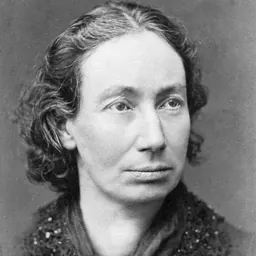

Related people
Same field, nearest in time
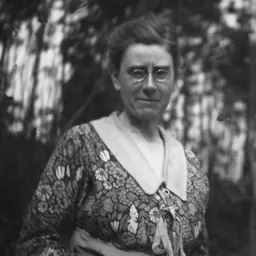
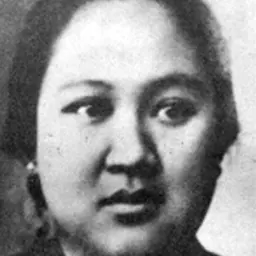



Contemporaries
People whose lives overlapped Nelly Roussel's




Frequently asked questions
Who was Nelly Roussel?
French activist (1878–1922)
When was Nelly Roussel born?
Nelly Roussel was born on 5 January 1878 in Paris.
When did Nelly Roussel die?
Nelly Roussel died on 18 December 1922 in Paris.
What was Nelly Roussel's occupation?
Nelly Roussel was a women's rights activist, anarchist, journalist, feminist and writer.
What nationality was Nelly Roussel?
Nelly Roussel was French.
Sources & further reading
Cite this page
APA: Biography.guide. (2026). Nelly Roussel. https://biography.guide/nelly-roussel/
MLA: "Nelly Roussel." Biography.guide, https://biography.guide/nelly-roussel/.
Chicago: "Nelly Roussel." Biography.guide. https://biography.guide/nelly-roussel/.
Data last updated: 2026-09-25 · Spot an error? Report a correction.
Page generated 2026-09-27 05:12 UTC