
Nectarius of Aegina
Metropolitan of Pentapolis
About Nectarius of Aegina
Lived 1846 – 1920 (aged 74). Nectarius of Aegina was a Turkish eastern Orthodox priest, eastern Orthodox monk, preacher, metropolitan and scholar.
Nectarios of Aegina (; 1 October 1846 – 8 November 1920), Metropolitan of Pentapolis and Wonderworker of Aegina, is one of the most renowned Greek saints, venerated in the Eastern Orthodox Church. On 20 April 1961, Patriarch Athenagoras I of Constantinople glorified him as a saint. His feast day is celebrated every year on 9 November.
Life
Anastasios Kephalas , later Nectarios, was born on 1 October 1846 in Selymbria, to a poor family.
At the age of 14, he moved to Constantinople, modern-day Istanbul, to work and further his education. In 1866, at age 20, he moved to the island of Chios to take a teaching post. On November 7, 1876, he became a monk, at age 30, in the Monastery of Nea Moni, for he had long wished to embrace the ascetic life. He then returned to Greece in 1891, and spent several years as a preacher (1891–1894). He was then director of the Rizarios Ecclesiastical School for the education of priests in Athens for fifteen years. Nectarios ordained two women as deaconesses in 1911. Up to the 1950s, a few Greek Orthodox nuns also became monastic deaconesses. In 1986, Christodoulos, the Metropolitan of Demetrias and later Archbishop of Athens and all of Greece, ordained a woman as deacon in accordance with the "ritual of Saint Nectarios" (the ancient Byzantine text Nectarios had used).
In December 1908, at the age of 62, Nectarios resigned from his post as school director and withdrew to the Holy Trinity Convent on Aegina, where he lived out the rest of his life as a monk. He wrote, published, preached, and heard confessions. He also tended the gardens, carried stones, and helped with the construction of the monastery buildings that were built with his own funds.
Nectarios died on November 8, 1920, at the age of 74, following hospitalization for prostate cancer and two months of treatment. His body was taken to the Holy Trinity Convent, where he was buried by his best friend Savvas of Kalymnos, who later painted the first icon of Nectarios. The funeral of Nectarios was attended by multitudes of people from all parts of Greece and Egypt.
Saint Nektarios is considered a patron saint for people who are suffering from diseases; such as cancer, heart trouble, joint pain, epilepsy, arthritis, etc.
Veneration The relics of Nectarios were removed from his grave on 2 September 1953. On 20 April 1961, Patriarch Athenagoras I of Constantinople glorified Nectarios as a saint in Saint George's Cathedral, Istanbul. The feast day of Saint Nectarios is celebrated every year on 9 November.
Decision of Holy Synod of the Patriarchate of Alexandria
On September 15, 1998, the Greek Orthodox Patriarchate of Alexandria and all Africa restored the ecclesiastical order of Nectarios:
Alexandria 15th September 1998
The Holy Spirit has enlightened the gathered members of the Holy Synod of the Patriarchate of Alexandria and all Africa, under the leadership of H.B. Petros VII, Pope and Patriarch of Alexandria and all Africa, more than a century since Saint Nektarios, the great Teacher and Father of the Holy Eastern Orthodox Church was expelled from the Church of Alexandria, to reach the following decision:
Taking into account the resolution of the Church to rank Saint Nektarios amongst the saints because of his innumerable miracles and his acceptance within the religious conscience of Orthodox Christians throughout the world, we appeal to the mercy of the ever-charitable God.
We hereby restore the ecclesiastical order of the Saint of our Century, Saint Nektarios, and grant to him all due credits and honours. We beseech Saint Nektarios to forgive both us, unworthy as we are, and our predecessors, our brothers of the Throne of Alexandria, for opposition to the Saint and for all which, due to human weakness or error, our Holy Father, Bishop of Pentapolis, Saint Nektarios, suffered. PETROS VII, By the Grace of God Pope and Patriarch of Alexandria and All Africa.
Works Translated into English Repentance and Confession, 2nd Printing - 2011, (Translated and Published by St. Nektarios Monastery, Roscoe, NY). Christology, 2nd Printing - 2012, (Translated and Published by St. Nektarios Monastery, Roscoe, NY).
In popular media The life of Nectarios was depicted in the 2021 film Man of God, written and directed by Yelena Popovic.
Don’t just read it —
keep it.
Full-length biographies made to live with: read them, listen on the way to work, watch them tonight.
- E-book
- Audio
- Video
Instant download · yours to keep · every purchase keeps this site free
Important facts
People in Nectarius of Aegina's life
Named in this biography and alive at the same time

Related people
Same field, nearest in time
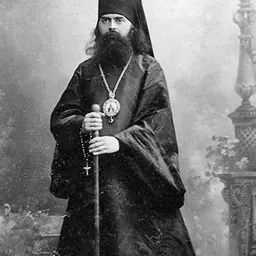


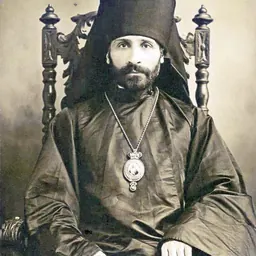
Contemporaries
People whose lives overlapped Nectarius of Aegina's



Frequently asked questions
Who was Nectarius of Aegina?
Metropolitan of Pentapolis (1846–1920)
When was Nectarius of Aegina born?
Nectarius of Aegina was born on 1 October 1846 in Silivri.
When did Nectarius of Aegina die?
Nectarius of Aegina died on 8 November 1920 in Athens.
What was Nectarius of Aegina's occupation?
Nectarius of Aegina was an eastern Orthodox priest, eastern Orthodox monk, preacher, metropolitan and scholar.
What nationality was Nectarius of Aegina?
Nectarius of Aegina was Turkish.
Sources & further reading
· Wikipedia: Nectarius of Aegina
· DBpedia: Nectarios of Aegina
Cite this page
APA: Biography.guide. (2026). Nectarius of Aegina. https://biography.guide/nectarius-of-aegina/
MLA: "Nectarius of Aegina." Biography.guide, https://biography.guide/nectarius-of-aegina/.
Chicago: "Nectarius of Aegina." Biography.guide. https://biography.guide/nectarius-of-aegina/.
Data last updated: 2026-09-20 · Spot an error? Report a correction.
Page generated 2026-09-27 05:29 UTC