
About Nawaf Obaid
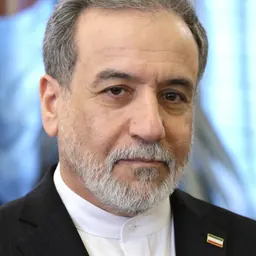
Nawaf Obaid was a diplomat, businessperson and writer.
Nawaf Essam Ahmad Obaid (Arabic: نواف عصام احمد عبید) is a Saudi political scientist specializing in intelligence studies, defence doctrine, nuclear strategy, and Middle Eastern security affairs. He is a senior research fellow at the Department of War Studies at King's College London and the Founder and Managing Director of Project AURORAH GeoSignal MASINT System, a fused intelligence architecture focused on the integration of GEOINT, SIGINT, MASINT, OSINT, and strategic operational sequencing for military and geopolitical analysis. His research and writing have focused on geopolitics, military affairs, intelligence, energy security, regional strategy, and state resilience across the Middle East.
Obaid was born into the Obaid family, a prominent family originating from Yanbu Al Nakhal (“Yanbu the Oasis”), a historic settlement in the Madinah Province of western Saudi Arabia. The family traces its ancestry to the Filali tribal confederation, one of the historic Arab lineages whose branches spread across the Arabian Peninsula and North Africa.
Through the Al Dakhil branch (named after Al-Hassan Ad-Dakhil) of the wider Filali tribal lineage, the Obaid family shares ancestral connection with the Sharifian Alawi dynasty, the ruling royal house of Morocco. Both families trace their origins to the Dakhil line of the Filali tribal tradition emanating from Yanbu Al Nakhal.
The Obaid family has long been associated with public service, commerce, scholarship, publishing, and state-building in Saudi Arabia. Growing up within a family deeply involved in public affairs, diplomacy, and intellectual life, Obaid developed an early interest in history, politics, international relations, and strategic affairs, interests that would later shape both his academic career and public service.
Among the family’s most prominent figures was Obaid’s grandfather, Sayyid Ahmad Mohammed Obaid, one of the early technocrats and media pioneers of the modern Saudi state. Following the establishment of the Kingdom of Saudi Arabia in 1932, King Abdulaziz entrusted him with a series of senior governmental responsibilities as the authority of the newly unified state expanded across the Arabian Peninsula.
During the 1934 Saudi–Yemeni War, Sayyid Ahmad Obaid served as battlefield communications coordinator for Saudi military operations that culminated in the Treaty of Taif, which formally incorporated Jizan, Najran, and Assir into Saudi Arabia. He subsequently joined the Ministry of Finance, reporting directly to Finance Minister Abdullah bin Suleiman Al Hamdan, and was tasked with establishing customs administration and border-control offices along the Kingdom’s newly defined frontiers with Yemen, Kuwait, and Iraq.
He later served as Saudi Arabia’s financial and customs attached to pre-independent Kuwait prior to the establishment of formal diplomatic relations between the two states when Kuwait finally gained its independence. Returning to Riyadh, he became Director General of the Ministry of Finance before being appointed Deputy Minister of Agriculture in 1953 under the ministry’s first minister, late Crown Prince Sultan bin Abdulaziz Al Saud. After more than two decades of public service, he retired from government in 1955.
In addition to its contributions to government service, the family has been active in publishing, academia, diplomacy, and international affairs, establishing a tradition of public engagement that has continued across multiple generations and has significantly influenced Nawaf Obaid’s own academic, policy, humanitarian, and public-service career. MPP – International Security & Political Economy; John F. Kennedy School of Government at Harvard University, 1996–1998. PhD – Political Science (Security Studies) at MIT Center for International Studies; Department of Political Science at Massachusetts Institute of Technology, 2000–2001 (coursework completed). MA – War Studies; Department of War Studies at King's College London, 2010–2011. PhD – War Studies; Department of War Studies at King's College London, 2011–2013.
During Obaid's time at Harvard Kennedy School, he studied under American international relations theorists Graham Allison and Joseph Nye. Professor Nye served as the academic mentor and supervisor to Obaid while he wrote a controversial master's thesis on US-Saudi relations. Although Obaid was a student of Professor Nye, he subscribes to the neorealism school of thought in international relations theory and has been heavily influenced by eminent theorists Kenneth Waltz of Columbia University, Samuel P. Huntington of Harvard University, and Barry Posen and Stephen Van Evera of MIT.
Career Public career Obaid started his public career in February 2003 by being named, alongside murdered Saudi journalist Jamal Khashoggi, as a Special Advisor for Strategic Communications to the Saudi Ambassador to the UK and then to the US. Based between London and Washington DC, he held the position until December 2006. Obaid is widely considered to having been an intimate friend of Khashoggi after working closely together for over fifteen years. They had a significant falling out several months before the assassination of Jamal Khashoggi in Istanbul because, according to former French intelligence officials, Obaid discovered that Khashoggi was involved in several covert political initiatives to attempt to undermine Saudi domestic security.
In December 2006, Obaid was fired from the staff of Prince Turki Al Faisal, then Saudi Ambassador to the United States, for publishing an opinion piece in The Washington Post "contending that 'one of the first consequences' of an American pullout of Iraq would 'be massive Saudi intervention to stop Iranian-backed Shiite militias from butchering Iraqi Sunnis.'" The article also suggested that the Kingdom could cut oil prices in half, which "would be devastating to Iran." He held this position until January 2016.
From September 2014 up to the present, Obaid has also served as CEO of the Essam and Dalal Obaid Foundation (EDOF), based in Geneva, Switzerland. EDOF was founded by Obaid and his two brothers to honour the humanitarian legacy of their parents. EDOF supports organizations that are doing important work in the fields of medical research and social progress in order to help them fulfill their already proven track record of success. Some of the projects that EDOF has supported include initiatives with the Mayo Clinic, the CNN Freedom Project, and the International Committee of the Red Cross, among others. EDOF also funded the creation of the Essam and Dalal Obaid Center for Reconstructive Transplant Surgery at the Mayo Clinic in Rochester, Minnesota.
Since April 2018, Obaid has been a Commissioner at the Commission for International Justice & Accountability (CIJA). CIJA is a non-profit, non-governmental organisation dedicated to conducting criminal investigations during armed conflict and analysing evidence of genocide, war crimes, and crimes against humanity. CIJA is apolitical and carries out its investigative activities independently from any government. Through its work CIJA provides support for local police forces, war crimes and counterterrorism investigations, and countering violent extremism (CVE) programmes.
CIJA has been especially implicated in the Syrian civil war. Since 2012, CIJA Investigators have smuggled more than a million government documents out of Syria, many of them from top secret intelligence facilities. "The documents are brought to the group's headquarters, in a nondescript office building in Western Europe, sometimes under diplomatic cover. There, each page is scanned, assigned a bar code and a number, and stored underground. A dehumidifier hums inside the evidence room; just outside, a small box dispenses rat poison".
The so-called "Assad Files" have allowed CIJA investigators and criminal lawyers to capture top secret intelligence and security reports and tie the Syrian regime to mass torture and killings, and crimes against humanity.
For the past several years, CIJA has been at the receiving end of a massive covert Russian disinformation campaign to discredit it. In 2021, the BBC revealed that CIJA operatives had unraveled a network of Russian informants within Britain's elite institutions of higher education. These academics, masquerading as members of the so-called "Syria Working Group" are aiding Russia's main intelligence services to wage a war of false news and alternative facts using conspiracy theories to justify their support for the Assad regime in Syria. As the BBC reported, "A British professor corresponded for months with a man called only "Ivan", seeking assistance to discredit an organisation [CIJA] that helps bring Syrian war criminals to justice. He also asked "Ivan" to investigate other British academics and journalists. The email exchange, seen by the BBC, reveals how, a decade on from the start of the Syrian conflict, a battle is still being waged in the field of information and misinformation."
In recent years, Obaid has continued his work on conflict analysis, intelligence studies, war crimes investigations, and accountability mechanisms relating to contemporary conflicts. His work has focused particularly on Syria and Gaza, where he has participated in independent intelligence verification and evidentiary-review efforts examining allegations of war crimes and crimes against humanity. This work has included the collection, verification, and analysis of intelligence and evidentiary material intended to support international accountability processes and legal proceedings before international institutions, including cases associated with the International Court of Justice (ICJ) and the International Criminal Court (ICC).
In January 2026, Obaid founded Project AURORAH GeoSignal MASINT System, an intelligence and analytical architecture designed to integrate multiple intelligence disciplines, including geospatial intelligence (GEOINT), signals intelligence (SIGINT), measurement and signatures intelligence (MASINT), open-source intelligence (OSINT), open-source geospatial intelligence (OSINT-G), and temporal operational sequencing. The project focuses on the fusion of intelligence streams to support strategic forecasting, military analysis, conflict monitoring, and the reconstruction of complex operational environments.
Project AURORAH became known for its application to the analysis of the Iran War, where it was used to produce a series of real-time intelligence estimates examining military deployments, escalation dynamics, strategic signalling, targeting cycles, operational sequencing, and battlefield developments. The project’s methodology emphasizes the integration of disparate intelligence disciplines into a unified analytical framework intended to improve situational awareness, strategic forecasting, and military decision-support.
Academic career June 2020 – Present | Visiting Senior Research Fellow at the Department of War Studies, King's College London. April 2017 – August 2018 | Inaugural Visiting Fellow for Intelligence and Defense Projects at Harvard University's Belfer Center for Science and International Affairs. March 2017 | Co-founded the Saudi & GCC Security Project at Harvard University's Belfer Center for Science and International Affairs. September 2012 – April 2017 | Visiting Fellow and Adjunct Lecturer at Harvard University's Belfer Center for Science and International Affairs. January 2008 – January 2016 | Senior Fellow at the King Faisal Center for Research and Islamic Studies, the think tank of the King Faisal Foundation in Riyadh. May 2004 – January 2007 | Adjunct Fellow for the Arleigh A. Burke Chair in Strategy at the Center for Strategic and International Studies (CSIS) in Washington DC. January 1999 – January 2000 | Research Fellow at The Washington Institute for Near East Policy (WINEP) in Washington DC.
Past Honoured Academic Appointments May 2015 – May 2017 | Distinguished International Affairs Fellow at National Council on U.S.-Arab Relations (NCUSAR) in Washington, DC. September 2014 – June 2017 | Senior Visiting Lecturer at Stirling University's Division of History & Politics in Stirling, Scotland.
Selected publications . Susris. 9 December 2011. A New Generation of Saudi Leaders, and a New Foreign Policy. The Washington Post. 26 March 2015. A Saudi Arabian Defense Doctrine. Belfer Center for Science and International Affairs, Harvard Kennedy School. 27 May 2014. A Saudi View on the Islamic State. With Saudi Al Sarhan. European Council on Foreign Relations. 2 October 2014. Actually, Saudi Arabia Could Get a Nuclear Weapon. CNN. 19 June 2015. Bashar Al-Assad is Syria's Problem, Not Its Solution. CNN. 5 October 2015. . Susris. 20 April 2011. Determinants of a New Saudi Oil Policy. Reuters. 2 December 2014. How Saudi Arabia Is Tying its Oil and Foreign Policies Together. The Telegraph. 18 May 2016. . Susris. 18 April 2011. Iran's Syrian Power Grab and Saudi Arabia. Project Syndicate. 19 November 2015. Meeting the Challenge of Fragmented Iraq: A Saudi Perspective. Center for Strategic and International Studies. 6 April 2006. National Security in Saudi Arabia: Threats, Responses, and Challenges. With Anthony Cordesman. Praeger. 30 September 2005. Obama's Last Chance with Saudi Arabia. The National Interest. 20 April 2016. Only Saudi Arabia Can Defeat ISIS. The Guardian. 22 December 2015. President Trump Goes to Saudi Arabia. Belfer Center for Science and International Affairs, Harvard Kennedy School. 19 May 2017. Qatar is Playing a Dangerous Game of Political Chicken. The National Interest. 6 August 2017. Saudi Arabia Gets Forceful on Foreign Policy. The Washington Post. 24 October 2013. Saudi Arabia is Emerging as the New Arab Superpower. The Telegraph. 5 May 2015. Saudi Arabia is Preparing Itself in Case Iran Develops Nuclear Weapons. The Telegraph. 29 June 2015. Saudi Arabia Shifts to More Activist Foreign Policy Doctrine. Al Monitor. 17 October 2013. Saudi Arabia Shifts to More Assertive Defense Doctrine. Al Monitor. 3 June 2014. Susris. 20 November 2011. Saudi Arabia's Gulf Union Project Includes Military Dimension. Al Monitor. 29 December 2013. Saudi Arabia's Master Plan Against ISIS, Assad, and Iran in Syria. The National Interest. 16 February 2016. Saudi Arabia's New Role in the Emerging Middle East. BBC News. 28 April 2011. Saudi Arabia's Strategic Energy Initiative: Safeguarding Against Supply Disruptions. Center for Strategic and International Studies. 9 November 2006. Saudi Oil Supplies are Safe and Secure. CNN. 7 April 2011. Stepping Into Iraq. The Washington Post. 29 November 2006. Syria Tragedy a Turning Point for the West. CNN. 16 September 2013. The Arab D-Day. With Jamal Khashoggi. The New York Times. 8 September 2013. The Collapsing Arab State. Project Syndicate. 25 April 2013. The Day of Saudi Collapse Is Not Near. Foreign Policy. 13 April 2011. The $40-a-Barrel Mistake. The New York Times. 25 May 2004. Susris. 4 December 2013. The Telegraph. 26 August 2015. The Long Hot Arab Summer: On the Viability of the Nation State System in the Arab World. Belfer Center for Science and International Affairs, Harvard Kennedy School. March 2013. Susris. 16 December 2013. The Muslim Brotherhood: A Failure in Political Evolution. July 2017. Belfer Center Intelligence Report. The Myth of Saudi Support for Terrorism. The Washington Times. 21 July 2016. The Oil Kingdom at 100: Petroleum Policymaking in Saudi Arabia. Washington Institute for Near East Policy. 1 December 2001. The Salman Doctrine: The Saudi Reply to Obama's Weakness. The National Interest. 30 March 2016. The Saudi Coalition Is Right. Qatar's Support for the Muslim Brotherhood Must Not Stand. The Telegraph. 19 July 2017. The Saudis and Containing Iran in Lebanon. The Daily Star. 30 August 2006. The Saudis Can Crush Isis. New York Times. With Saud Al-Sarhan. 8 September 2014. The Truth about the Saudi Executions. Al Monitor. 25 January 2016. US Should Stand with Saudi Arabia in Yemen. Defense One. 6 October 2016. There Will Be No Uprising in Saudi Arabia. Foreign Policy. 10 March 2011. This Congressional Act Threatens US National Security. CNN.com, 29 August 2017. Trump Can End ISIS by Learning from Saudi Arabia. CNN. 27 April 2017. What the West Gets Wrong about Saudi Arabia. CNN. 22 November 2013. What will US-Saudi Summit Mean for Iranian Policy in the Middle East? Al Monitor. 6 September 2015. Why OPEC is Increasingly Irrelevant. Financial Times. 17 December 2014. Why Saudi Arabia is Stable Amidst Middle East Unrest. The Washington Post. 11 March 2011. Why Saudi Arabia Needs a New Defense Doctrine. CNN. 23 June 2014. Why Saudis Formed Anti-Terror Coalition. CNN. 22 December 2015. Why Saudis May Take on Iraq's Shia Militias. Al Monitor. 29 February 2016. Shame on the Arabs. Foreign Policy. 3 February 2019. Saudi Arabia just won control of the oil market. CNN. 20 March 2020. The American oil boom is over. CNN. 23 April 2020.
Don’t just read it —
keep it.
Full-length biographies made to live with: read them, listen on the way to work, watch them tonight.
- E-book
- Audio
- Video
Instant download · yours to keep · every purchase keeps this site free
Important facts
Related people
Same field, nearest in time

Frequently asked questions
Who was Nawaf Obaid?
Saudi Arabian author and diplomat
What was Nawaf Obaid's occupation?
Nawaf Obaid was a diplomat, businessperson and writer.
Sources & further reading
Cite this page
APA: Biography.guide. (2026). Nawaf Obaid. https://biography.guide/nawaf-obaid/
MLA: "Nawaf Obaid." Biography.guide, https://biography.guide/nawaf-obaid/.
Chicago: "Nawaf Obaid." Biography.guide. https://biography.guide/nawaf-obaid/.
Data last updated: 2026-09-20 · Spot an error? Report a correction.
Page generated 2026-09-27 05:09 UTC