
Nathaniel Coe
American pioneer and founder of Hood River, Oregon, United States
About Nathaniel Coe
Lived 1788 – 1868 (aged 80). Nathaniel Coe was a judge and politician.
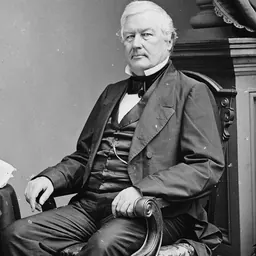
Nathaniel Coe (September 6, 1788 – October 17, 1868) was an American pioneer, Whig politician, War of 1812 veteran, and frontier agriculturist who founded Hood River, Oregon. He was considered a radical for his strong opposition to slavery and support for progressive legislation for women's rights. Coe served in municipal, every level of state, and executive government offices, both through appointment and election. He was elected to serve four terms in the New York State Assembly. In 1850, Coe declined a nomination to serve on the United States Senate to instead accept President Millard Fillmore's appointment as the Special Postal Agent for the Pacific Northwest.
After settling in Oregon Territory, he developed the Hood River Valley's thriving fruit industry and served as the first chair of the Hood River County School District.
Early life and family Coe was born on September 6, 1788, in Morristown, New Jersey, to Joel and Huldah Coe . Coe is the fourth great-grandson of public official Robert Coe, the colonial public official, and the fifth great-grandson of Barnabas Horton, another colonist who built the first buildings on Long Island and the progenitor of the family that founded Tim Hortons. Mount Coe and Coe Glacier are named for his son, Henry C. Coe, who platted the town of Hood River, Oregon, and made the first ascent of Mount Adams. Coe is the great-grandfather of Sidney Howard, the screen writer of Gone with the Wind. Their genealogy was featured in an episode of Who Do You Think You Are? on TLC starring Howard's grandson, actor Tony Goldwyn. He served in the military, rising to the rank of captain, and fought in the War of 1812.
In 1828, Coe returned to settle in Nunda, where he was later appointed the clerk of the village. There he met and married Mary White, a poet and literature scholar. They had four sons and two daughters. Both daughters died in childhood in Nunda. which was converted into the Nunda Literary Institute in the 1840s.
Political career
Coe became a politician serving Allegany County, New York, with an appointment as justice of the peace, and three successful elections to the New York State Assembly in 1843, 1844, and 1845. He also represented Livingston County, New York, for one term in the state legislature in 1847. His politics were extremely progressive for the time period. He was a member of the Whig Party and strongly anti-slavery and fought for the equal rights of women. He was considered by many of his peers to be a radical, but was esteemed and well-respected. At the time, men who raped women were not charged with a crime and the victims were deemed unfit for marriage and often had no choice but to enter the sex industry as prostitutes. During the 71st session of the Assembly, Coe introduced the first-of-its-kind anti-rape bill "An act to punish seduction", which passed into law on March 22, 1848. In 1850, he was nominated to represent New York in the United States Senate, but he declined. Instead, he accepted the nomination to serve as the Special Postal Agent for the Pacific Northwest from President Millard Fillmore. His work stretched across all of Washington and Oregon territories to just east of the Rocky Mountains by waterway on the steamer Canemah and horseback. The Canemah had a fatal accident when a flue exploded on August 8, 1853, killing a passenger. It sank the following September, was decommissioned and taken to Vancouver. Coe established the first post office at The Dalles.
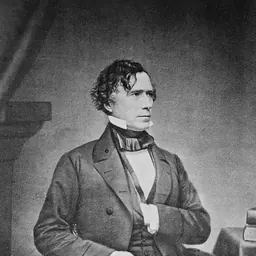
Founding of Hood River In 1853, upon Democrat Franklin Pierce's presidential election, a Democratic postal agent was appointed and Coe and his family platted and cultivated the Hood River, donating their government land grant for the establishment of Hood River. They planted the first orchards filled with 300 trees and bushes of apples, pears, apricots, strawberries, peaches, and plums. The first year of harvesting bore of peaches.
His wife Mary led an initiative to change the name of the Dog River in Oregon to its current name, Hood River, for nearby Mount Hood, which she thought was more respectable. It was officially changed in 1858. The rest of the valley took on a similar name and the success of fruit growing led to the formation of the Hood River Fruit Growers Union, the first agricultural cooperative in the Pacific Northwest. The area became an agricultural cradle when the first commercial orchard was planted in the 1880s.
Tensions with the Klickitats
In the early 1800s, following the Lewis and Clark encounters, the Klickitat people used their power in numbers to levy a tax on settlers passing through Wishram village eventually opening depots for collecting furs. The Klickitat were skilled and by 1843 had developed working relationships with the settlers, hiring out farmhands and scouting in the war for hostile tribes. Natives were dispossessed of their lands and pushed onto reservations to make room for settlers.
The implications of the council ignited the high tensions between natives and settlers in the area into the Rogue River Wars and the Yakima War. Coe fled the area with his family and joined the other settlers and some of the Klickitat at Fort Dalles, where they stayed until it was safe to return to the area around 1859.
Don’t just read it —
keep it.
Full-length biographies made to live with: read them, listen on the way to work, watch them tonight.
- E-book
- Audio
- Video
Instant download · yours to keep · every purchase keeps this site free
Important facts
People in Nathaniel Coe's life
Named in this biography and alive at the same time
Related people
Same field, nearest in time


Contemporaries
People whose lives overlapped Nathaniel Coe's


Frequently asked questions
Who was Nathaniel Coe?
American pioneer and founder of Hood River, Oregon, United States
When was Nathaniel Coe born?
Nathaniel Coe was born on 12 September 1788 in Morristown.
When did Nathaniel Coe die?
Nathaniel Coe died on 17 October 1868.
What was Nathaniel Coe's occupation?
Nathaniel Coe was a judge and politician.
Sources & further reading
Cite this page
APA: Biography.guide. (2026). Nathaniel Coe. https://biography.guide/nathaniel-coe/
MLA: "Nathaniel Coe." Biography.guide, https://biography.guide/nathaniel-coe/.
Chicago: "Nathaniel Coe." Biography.guide. https://biography.guide/nathaniel-coe/.
Data last updated: 2026-09-20 · Spot an error? Report a correction.
Page generated 2026-09-27 05:25 UTC