
About Nathan Webb
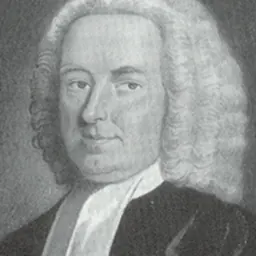
Lived 1705 – 1772 (aged 66). Nathan Webb was an American pastor.
Nathan Webb (April 9, 1705 March 17, 1772), an early-American Congregational Church minister.
Early life He was born in Braintree, Norfolk County, Massachusetts, to Benjamin Webb (1667–1739) and Susanna Ballentine.
He married Ruth Adams in Braintree on November 23, 1731. His nephew became President John Adams. John Adams recorded in his diary a visit in Uxbridge with his uncle Nathan Webb in March 1756. it is reported by local historians that Nathan Webb held several slaves.
Career Webb was the first called minister of the new Congregational Church in the newly incorporated (1727) Town of Uxbridge. The Uxbridge Congregational Church was officially split from the church at Mendon, Massachusetts. Webb was called on January 6, 1731. This church was the first church to be built in the new town of Uxbridge.
Webb was ordained at the Uxbridge First Congregational Church, then within Suffolk County, on February 3, 1731. The Uxbridge church is the first to be mentioned in a list of 45 new Congregational churches in New England which were started in the decade beginning in 1731. Spring later founded the Massachusetts Missionary Society and the Andover Theological Seminary. Spring has many published sermons and works to his credit. He was considered a Congregationalist fundamentalist. He had trained under Webb and later at the Princeton Theological Seminary in Princeton, New Jersey.
Webb spent his entire career in the ministry at Uxbridge, spanning over 41 years of service.
It appears that Webb and his ministry was the longest to ever serve this parish. Some early histories of the town record the prominence of this church and the role that he and the church played in this new pioneer community. His ministry spanned the pre-Revolutionary War period of Uxbridge, in the Province of Massachusetts Bay.
Death and afterwards Webb served in Uxbridge until his death there at the age of 66. The Worcester County history text reports that he "continued in the faithful service of the Master" until his death.
The present location of the Congregational Church, in the Uxbridge Common District, changed from the 1830s due to a split with the more liberal Unitarian Church tradition.
Quakers come to town
Three years before Webb's death, Rhode Island Quaker abolitionists, with ties to Moses Brown, built a local meetinghouse on the outskirts of Uxbridge. The Quakers and the Congregationalists lived peacefully together and both supported the abolition movement, although Rev. Webb and Deacon Read owned slaves around 1754. This was among the first Quaker meetings in Massachusetts after their expulsion, in the 1600s by Puritans (later known as Congregationalists).
Abby Kelley Foster, a later radical abolitionist, and her family were members of the Friends Meetinghouse at Uxbridge up until at least 1841. She led Lucy Stone and Susan B. Anthony into the abolition movements. Many houses in Uxbridge later served as part of the Underground Railroad.
Key Quakers at early Uxbridge included Richard Mowry, Abby Kelley and Effingham Capron. Quiet Quakers, who carried the heart of their faith into their vocations, worked side by side with the descendants of legalistic Puritans, known as Congregationalists, to lead major social reforms and industry in their new nation.
Concerns for women's rights and human rights were among the legacies of the early religious traditions at Uxbridge. The American hymn writer Lowell Mason, of Medford, Massachusetts, came to Uxbridge, sixty years after Webb's death, and wrote the classical hymn tune "Uxbridge", one of 1,600 hymns composed by Mason. It appears that the Webb's ministry helped to begin a lasting religious legacy in this part of the Blackstone Valley.
Significance in American history Webb pastored the first new Congregational Church in Massachusetts, started during the Great Awakening period for over 41 years. His parishioners made a mark on America and its early freedoms. The eulogy of his death was given by Reverend Ebeneezer Chaplin, of the church at Sutton, Massachusetts, to embody the character of Webb for posterity. The sermon was delivered exactly three years before the Lexington Alarm. Young Baxter Hall of this church answered the Lexington Alarm as a drummer in the first muster of the American Revolution.
Don’t just read it —
keep it.
Full-length biographies made to live with: read them, listen on the way to work, watch them tonight.
- E-book
- Audio
- Video
Instant download · yours to keep · every purchase keeps this site free
Important facts
People in Nathan Webb's life
Named in this biography and alive at the same time




Related people
Same field, nearest in time

Contemporaries
People whose lives overlapped Nathan Webb's



Frequently asked questions
Who was Nathan Webb?
American Congregational minister (1705-1772)
When was Nathan Webb born?
Nathan Webb was born on 9 April 1705 in Braintree.
When did Nathan Webb die?
Nathan Webb died on 17 March 1772 in Uxbridge.
What was Nathan Webb's occupation?
Nathan Webb was a pastor.
What nationality was Nathan Webb?
Nathan Webb was American.
Sources & further reading
· DBpedia: Nathan Webb (minister)
Cite this page
APA: Biography.guide. (2026). Nathan Webb. https://biography.guide/nathan-webb-pastor/
MLA: "Nathan Webb." Biography.guide, https://biography.guide/nathan-webb-pastor/.
Chicago: "Nathan Webb." Biography.guide. https://biography.guide/nathan-webb-pastor/.
Data last updated: 2026-09-20 · Spot an error? Report a correction.
Page generated 2026-09-27 05:11 UTC