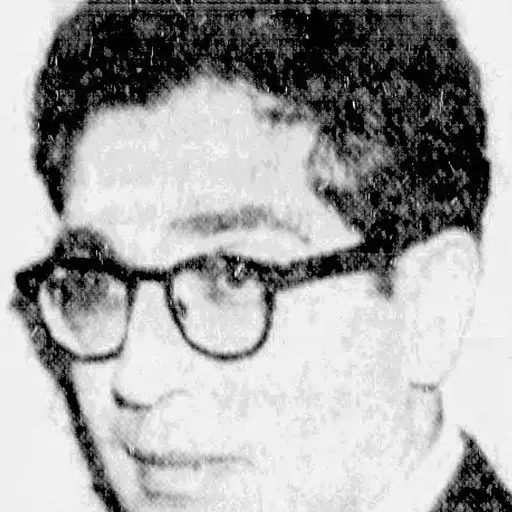
About Nathan Glazer
Lived 1923 – 2019 (aged 95). Nathan Glazer was an American historian, sociologist, university teacher, writer, journalist and educator.
Nathan Glazer (February 25, 1923 – January 19, 2019) was an American sociologist who taught at the University of California, Berkeley, and for several decades at Harvard University. He was a co-editor of the now-defunct policy journal The Public Interest.
Known for books such as Beyond the Melting Pot which deal with race and ethnicity, Glazer is critical of some of the Great Society programs of the mid-1960s.
He was often considered neoconservative in his thinking on domestic policy, but remained a Democrat. Glazer grew up in the city's areas of East Harlem and the East Bronx. His parents, Jewish emigrants from the Russian Empire, About the same time, Glazer also undertook a detailed study of the Rosenberg Case. Glazer's investigation convinced him not only of the Rosenbergs' guilt, but also that a larger number of conspirators were involved. As Glazer said, "The story that has not been told is of espionage more extensive than we know."
Looking back at the McCarthy era over 40 years later as an interviewee in the film Arguing the World, Glazer reflected on the stance he and some other liberal anticommunists took: "Even at the time and also in retrospect we never managed to figure out a good position, one that was respectable and moral and responsive to all the complicated issues raised... I still don't think we have one." The book argued that the children and grandchildren of earlier immigrants to New York City, including Puerto Ricans, Jews, Italians, and Irish, had retained their ethnic consciousness and that the phenomenon of persistent ethnic identities over the course of generations would continue to endure. That conclusion was fairly novel for the early 1960s, when there was relatively little interest in studying ethnic groups in general, much less their precise levels of adjustment.
Glazer and Moynihan also argued that the "disproportionate presence of Negroes and Puerto Ricans on welfare" was one of the primary racial problems in the city, but they suggested the 1970s could end up being a "decade of optimism" for those two groups. In Lyndon Johnson's administration, Glazer was a consultant with the Model Cities Program.
By now, Glazer was becoming skeptical of the War on Poverty and of Washington-based reform efforts in general. As he would argue years later in his book The Limits of Social Policy, Great Society programs were not really the answer because "the breakdown of traditional modes of behavior is the chief cause of our social problems," and he did not think that breakdown could be addressed by government. Even in the late 1990s, Glazer continued to condemn the students' "enthusiastic and euphoric rejection of forms and norms," and in 2005, he pointed out that the revolts at Berkeley, Columbia University, and many other campuses were "a disorder that made no sense to those of us who had come from harder circumstances."
Writing in what one commentator deemed a "rueful" tone, he suggested his earlier arguments regarding issues such as affirmative action and the future prospects for African Americans were essentially wrong. The civil rights legislation of 1964 and 1965 did not allow blacks to fully integrate into American society, their situation was worse now than it had been 20 years before, and a multicultural curriculum in schools was essentially the result. James Traub, on the other hand, argued, "Glazer is still the neoconservative who wrote The Limits of Social Policy," but his "own logic leaves him with nothing to offer—except the admittedly specious comforts of multiculturalism."
Neoconservatism As the term "neoconservative" became common parlance during the administration of President George W. Bush, Glazer pointed out that it had been "hijacked" and now meant something quite different from what it once had. According to Glazer, "in its early application, in the 1970s, it referred to the growing caution and skepticism among a group of liberals about the effects of social programs. It was later applied to a vigorous and expansionist democracy-promoting military and foreign policy, especially in the wake of the dissolution of the Soviet Union."
Later career Glazer's most recent book was From a Cause to a Style: Modernist Architecture’s Encounter With the American City (2007), an essay collection "that traces the diminishment of Modernist architecture from a social revolution—which asserted that traditional architecture 'had come to an end'—down to a mere style, and one almost universally resented outside the profession."
Glazer served on committees for the National Academy of Sciences and received numerous grants and fellowships, including the Guggenheim Fellowship and the Fulbright Fellowship, throughout his career.
Books The Lonely Crowd: A Study of the Changing American Character with David Riesman and Reuel Denney, New Haven, Yale University Press, 1950 Faces in the Crowd: Individual Studies in Character and Politics with David Riesman, New Haven, Yale University Press, 1952 A New Look at the Rosenberg-Sobell Case, New York, Tamiment Institute, 1953 American Judaism, Chicago, University of Chicago Press, 1957 (revised editions in 1972 and 1988) The Social Basis of American Communism, New York, Harcourt, Brace, 1961 Negroes & Jews: The New Challenge to Pluralism New York, American Jewish Committee, 1964 The Characteristics of American Jews, New York, Jewish Education Committee Press, 1965 Beyond the Melting Pot: The Negroes, Puerto Ricans, Jews, Italians, and Irish of New York City with Daniel P. Moynihan, Cambridge, Massachusetts Massachusetts Institute of Technology Press, 1963 (second expanded edition in 1970) Remembering the Answers: Essays on the American Student Revolt, New York, Basic Books, 1970 The Poor: A Culture of Poverty: Or A Poverty of Culture?, Grand Rapids, Eerdmans, 1971 Affirmative Discrimination: Ethnic Inequality and Public Policy Cambridge, Massachusetts, Harvard University Press, 1975 (second edition in 1987) The Urban Predicament with William Gorham, Washington, The Urban Institute, 1976 Civil Rights, Land Policy and the Cities: A Perspective on the Eighties, Cambridge, Massachusetts, Lincoln Institute of Land Policy, 1979 Dimensions of Ethnicity: Prejudice with Thomas F. Pettigrew, George M. Fredrickson, Dale T. Knobel & Reed Ueda, Cambridge, Massachusetts, Harvard University Press, 1982 Ethnic Groups in History Textbooks, Washington, Ethics & Public Policy Center, 1983 Ethnic Dilemmas, 1964–1982 Cambridge, Massachusetts, Harvard University Press, 1985 The Limits of Social Policy Cambridge, Massachusetts Harvard University Press, 1988 The New Immigration: A Challenge to American Society, San Diego, San Diego State University Press, 1988 Our Changing Population with Richard Thomas Gill, Upper Saddle River, Prentice Hall, 1992 Conflicting Images: India and the United States with Sulochana Raghavan Glazer, Riverdale, Riverdale Company Pub, 2008 We Are All Multiculturalists Now Cambridge, Massachusetts, Harvard University Press, 1997 Sovereignty Under Challenge: How Governments Respond with John Dickey Montgomery, Piscataway, Transaction Publisher, 2002 From a Cause to a Style: Modernist Architecture's Encounter with the American City, Princeton, Princeton University Press, 2007 The National Mall: Rethinking Washington’s Monumental Core with Cynthia R. Field, Baltimore, Johns Hopkins University Press, 2008
As editor: Studies in housing & minority groups with Davis McEntire, Berkeley, University of California Press, 1960 Perspectives on Soviet Jewry, New York, KTAV, 1971 Ethnicity: Theory and Experience with Daniel P. Moynihan, Cambridge, Massachusetts, Harvard University Press, 1975 The American Commonwealth, 1976 with Irving Kristol, New York, Basic Books, 1976 Ethnic Pluralism and Public Policy: Achieving Equality in the United States and Britain with Ken Young, London, Heinemann, and Lexington, Massachusetts, Lexington Press, 1983 Clamor at the Gates: The New American Immigration, San Francisco, ICS Press, 1985 The Public Face of Architecture: Civic Culture and Public Spaces with Mark Lilla, New York, Simon and Schuster, 1987 Arguing Immigration: The Debate Over the Changing Face of America with Nicolaus Mills, New York, Simon and Schuster, 1994
Preface, foreword, forward: The Many Faces of Anti-Semitism by Rose Feitelson and George Salomon, New York, American Jewish Committee, Institute of Human Relations, 1967 Soviet Jewry: 1969, New York, Academic Committee on Soviet Jewry, 1969
Don’t just read it —
keep it.
Full-length biographies made to live with: read them, listen on the way to work, watch them tonight.
- E-book
- Audio
- Video
Instant download · yours to keep · every purchase keeps this site free
Important facts
Family & relationships
People in Nathan Glazer's life
Named in this biography and alive at the same time





Related people
Same field, nearest in time
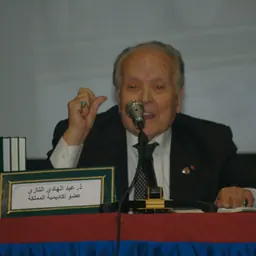



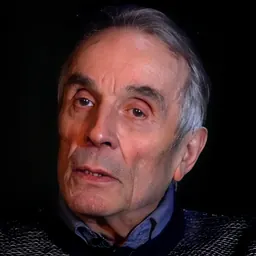
Contemporaries
People whose lives overlapped Nathan Glazer's
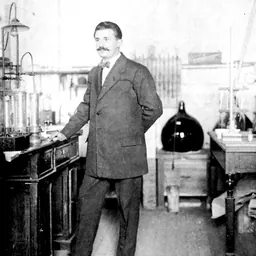

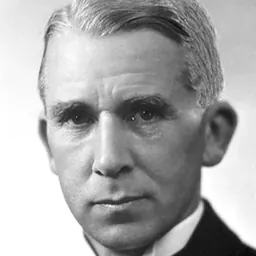
Frequently asked questions
Who was Nathan Glazer?
American sociologist (1923–2019)
When was Nathan Glazer born?
Nathan Glazer was born on 25 February 1923 in New York City.
When did Nathan Glazer die?
Nathan Glazer died on 19 January 2019 in Cambridge.
What was Nathan Glazer's occupation?
Nathan Glazer was a historian, sociologist, university teacher, writer, journalist and educator.
What nationality was Nathan Glazer?
Nathan Glazer was American.
Sources & further reading
Cite this page
APA: Biography.guide. (2026). Nathan Glazer. https://biography.guide/nathan-glazer/
MLA: "Nathan Glazer." Biography.guide, https://biography.guide/nathan-glazer/.
Chicago: "Nathan Glazer." Biography.guide. https://biography.guide/nathan-glazer/.
Data last updated: 2026-09-21 · Spot an error? Report a correction.
Portrait: Wikimedia Commons · author & licence
Page generated 2026-09-27 05:00 UTC