
About Nathan Dunn
Lived 1782 – 1844 (aged 61). Nathan Dunn was an American businessperson.
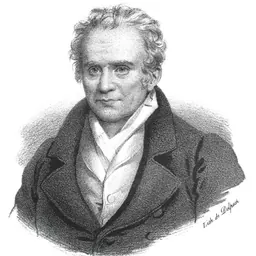
Nathan Dunn (November 11, 1782 – September 19, 1844) was an American businessman, philanthropist and sinology pioneer who accumulated a large collection of Chinese artifacts while running a trade business in Canton, China for 12 years. In 1838, he created the first systematic collection of Chinese materials exhibited publicly in the United States at the Chinese Museum in Philadelphia. The exhibit toured London in 1842 and 1851 and was auctioned off to various collectors after Dunn's death.
Biography Early life Dunn was born on November 11, 1783, in Pilesgrove, New Jersey, one of 5 children in the farming family of Nathan Dunn and Rhoda, née Silvers. His father died in 1782 at the age of 39. In 1788 Rhoda married Thomas Osborn and had 3 more children, of them Rhoda Osborn married Restore S. Lamb. Rhoda and Restore S. Lamb were noted ministers of the Religious Society of Friends.
Trading company In 1816, Dunn was disowned by Philadelphia Monthly Meeting of the Society of Friends for bankruptcy. However, John Field, one of his creditors, proposed a way for Dunn to pay down debt through the creation of a joint business and a post in China.
In 1818 Dunn went to Canton, China and started the Nathan Dunn & Company trading business. Except for a visit to England in 1820-1821, he lived and worked there for 12 years buying tea and nankeen and selling specially produced British goods. Dunn designed an innovative triangular shipping pattern; American goods were shipped to Britain, profit from the sale of those good were used to purchase British goods popular in China; the British goods were shipped to Canton and exchanged for Chinese goods; the Chinese good were then shipped to America.
Dunn's year-round residence in China was a strategic advantage since it allowed him to out bid competitors on silk products before the other traders arrived in China for the tea season trading. He strictly abstained from the opium trade, a common profitable business of the time. His compliance with the Chinese anti-opium laws was one of the things that created a good reputation for him among his Chinese partners including Houqua, Tinqua and other Hong merchants. During the disastrous November 1822 fire at Canton warehouses, Tinqua sent eighty workers and multiple boats to rescue merchandise from Dunn's warehouse while competitors suffered huge losses. Before leaving China, Dunn's wealth was estimated to be $200,000. He returned to Philadelphia in 1832, and brought with him a large collection of Chinese artistic and cultural objects and paid off all of his creditors. 100,000 visitors saw it in Philadelphia. Despite the large number of attendees, the exhibit was not a financial success in Philadelphia and in 1842 Dunn brought the exhibit, known as The Chinese Collection, to London to expand the scope of people who could observe it and to highlight Chinese culture in an attempt to thwart the opium trade. The collection was displayed in a pagoda-like exhibition hall designed by John Notman at Hyde Park Corner. An estimated 100,000 people viewed the exhibit in London including a young Queen Victoria.
Apart from artifacts, the museum had life-size clay figures accurately modeled after about 50 real Chinese acquaintances personally selected by Dunn, representing variety of social positions, occupations etc., standing against dioramas, and extensive annotations of the exhibits.
Later life Dunn was a supporter of several charities. In 1840 he gave a gift of over $20,000 to Haverford College. He built a "Chinese cottage" in Mt. Holly, New Jersey, which for many years was run by his half-sisters Phoebe and Rhoda. He was elected a member of the American Philosophical Society and joined the Academy of Natural Sciences. His remains were returned to the US and he was interred at Laurel Hill Cemetery in Philadelphia. Dunn's assets could not cover the generous bequests of his will and the collections was exhibited throughout England in an attempt to raise money.
Don’t just read it —
keep it.
Full-length biographies made to live with: read them, listen on the way to work, watch them tonight.
- E-book
- Audio
- Video
Instant download · yours to keep · every purchase keeps this site free
Important facts
People in Nathan Dunn's life
Named in this biography and alive at the same time


Related people
Same field, nearest in time



Contemporaries
People whose lives overlapped Nathan Dunn's


Frequently asked questions
Who was Nathan Dunn?
American collector, born 1782
When was Nathan Dunn born?
Nathan Dunn was born on 11 November 1782 in Pilesgrove Township.
When did Nathan Dunn die?
Nathan Dunn died on 19 September 1844 in Vevey, Switzerland.
What was Nathan Dunn's occupation?
Nathan Dunn was a businessperson.
What nationality was Nathan Dunn?
Nathan Dunn was American.
Sources & further reading
Cite this page
APA: Biography.guide. (2026). Nathan Dunn. https://biography.guide/nathan-dunn/
MLA: "Nathan Dunn." Biography.guide, https://biography.guide/nathan-dunn/.
Chicago: "Nathan Dunn." Biography.guide. https://biography.guide/nathan-dunn/.
Data last updated: 2026-09-25 · Spot an error? Report a correction.
Page generated 2026-09-27 05:12 UTC