
About Natesa Sastri
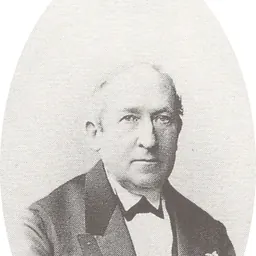
Lived 1859 – 1906 (aged 46–47). Natesa Sastri was an Indian writer.
S. M. Natesa Sastri (1859–1906) was a polyglot, scholar in eighteen languages and authored many books in Tamil, Sanskrit and English. His scholarliness over Tamil and Sanskrit languages got him the title "Pandit".
Life Sastri was born in a traditional Brahmin family in a village called as Sangendhi which is in Lalgudi taluk in Tiruchirappalli District . And he was educated at Kumbakonam College and the Madras University. At 22, he joined the Archaeological Survey of India as an assistant to Robert Sewell.
Chembai Vaidyanatha Bhagavatar was one of his prominent disciples.
In 1906, he died tragically after being trampled by a horse at a temple festival in Madras. Sastri's collections were based on Tamil versions of the folk tales drawn from his own memory and translated to English, and addressed to non-Indian audiences.
It was Richard Carnac Temple, a British folklorist in India who served as the President of the Folklore Society, who inspired Sastri's work and encouraged him to publish his first book on the tales. One review of the Folklore Society proclaimed that Sastri was the only Hindu member of the organisation.
Sastri was very keen in emphasising the importance of folktales. However, despite the irrefutably native credentials of folklore, it did not ultimately become an important vehicle for nationalism in Madras, having been eclipsed by the Tamil classics of the Sangam period.
Apart from his work on folk tales, Sastri published critical studies of Sanskrit literature, translations of Valmiki's Ramayana and several of Shakespeare's plays and six Tamil novels, over his twenty-five year long scholarly career. The Rejuvenation of Komalan (1902), is a piece of bizarre comic romance in which two sisters obtain a drug which makes younger. The Two Orphans (1902) is a moralising story covering the life of two orphaned sisters from their birth till their marriage. A Wife Condoned (1903) is a melo-dramatic story in which a woman has an adulterous relationship with another man. The motif of women's adultery was quite new in Tamil fiction at the time. The Mother-in-Law in Council (1903) is somewhat a historical novel combining social criticism, set in the 18th century. Curtain Lectures (1903) is an adaptation of Douglas Jerrold's Mrs. Caudle's curtain lectures.
Don’t just read it —
keep it.
Full-length biographies made to live with: read them, listen on the way to work, watch them tonight.
- E-book
- Audio
- Video
Instant download · yours to keep · every purchase keeps this site free
Important facts
People in Natesa Sastri's life
Named in this biography and alive at the same time

Related people
Same field, nearest in time




Contemporaries
People whose lives overlapped Natesa Sastri's



Frequently asked questions
Who was Natesa Sastri?
Tamil writer and folklorist
When was Natesa Sastri born?
Natesa Sastri was born in 1859 in Thanjavur.
When did Natesa Sastri die?
Natesa Sastri died in 1906 in Triplicane.
What was Natesa Sastri's occupation?
Natesa Sastri was a writer.
What nationality was Natesa Sastri?
Natesa Sastri was Indian.
Sources & further reading
Cite this page
APA: Biography.guide. (2026). Natesa Sastri. https://biography.guide/natesa-sastri/
MLA: "Natesa Sastri." Biography.guide, https://biography.guide/natesa-sastri/.
Chicago: "Natesa Sastri." Biography.guide. https://biography.guide/natesa-sastri/.
Data last updated: 2026-09-25 · Spot an error? Report a correction.
Page generated 2026-09-27 05:12 UTC