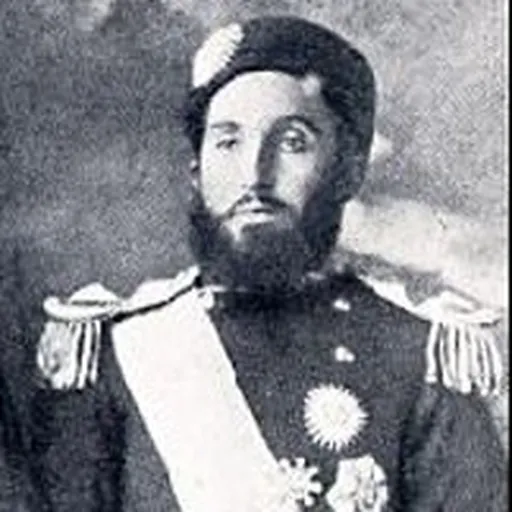
About Nasrullah Khan
Lived 1874 – 1920 (aged 45–46). Nasrullah Khan was an Afghan monarch.
Nasrullah Khan Barakzai (1874 – May 1920), sometimes spelt as Nasr Ullah Khan, was shahzada (crown prince) of Afghanistan and second son of Emir Abdur Rahman Khan. He held the throne of Afghanistan as Emir for one week, from 21 to 28 February 1919, until Habibullah's son Amanullah staged a coup against his uncle.
Early life
Nasrullah was born to a Pashtun family in Samarkand in 1874, the second of three sons of Abdur Rahman Khan. His brothers were Habibullah Khan who was his elder brother and Mohammed Omar Khan. Nasrullah's birth occurred during a period in which his father Abdur Rahman Khan was living in exile in Russian Turkestan.
On 22 July 1880, Nasrullah's father was recognised as Emir following the end of British occupation of Afghanistan, on the condition that he align Afghanistan's foreign policy with that of Britain. As a consequence of his father's ascension of the throne, Nasrullah (and his elder brother Habibullah) became Shahzada (crown princes) of Afghanistan.
Visit to England
Prince Nasrullah meets Queen Victoria during his 1895 visit to England. In 1895 the Emir Abdur Rahman Khan had intended to undertake a state visit to England to pay his respects to the ageing Queen Victoria. However, his health prevented him from making the trip, and so he instead sent his son the Shahzada Nasrullah Khan. Nasrullah departed Bombay on 29 April 1895, with an entourage of over 90 dignitaries, including "five or six" high-ranking Afghan nobles and a group of priests for the observance of religious functions. as well as staying with Lord Armstrong at Cragside. He made a gift of £2,500 to Abdullah Quilliam to support the work of the Liverpool Muslim Institute.
At the time of his visit, the Shahzada was 20 years of age. He reportedly did not speak English well, and did not make a good impression on the local press. and from Paris went on to Rome and Naples, and arrived in Karachi on 16 October 1895. He returned to Kabul through Quetta, Chaman and Kandahar.
In 1895, Nasrullah and his brother Habibullah received the Knight Grand Cross of St Michael and St George from Queen Victoria in recognition of their services to the British Commonwealth. Throughout his adult life he advocated an Afghan policy strongly aligned with Islamic principles.
The Treaty of Gandamak also required that Afghanistan sever its relationships with the independent tribes of the tribal regions of Afghanistan, those lying on the far side of the Durand Line. These tribes had previously been a substantial source of military power for the Afghanistan throne. When Habibullah became Emir he was pressured by the British government to ratify the Treaty of Gandamak and, although he did so by proclamation in 1905, he would not commit to withdraw Afghan influence from the British side of the Durand Line, or to sever Afghanistan's relationship with the tribes in that area. Finally in 1916 Nasrullah offered to remove Habibullah from power and take charge of the frontier tribes in a campaign against British India, but by then the mission realised such action would be fruitless and declined.
The Turko-German embassy withdrew in 1916, but not before it had convinced Habibullah that Afghanistan was an independent nation which should not remain beholden to the British. Following the closure of the World War, Habibullah petitioned the British for favours resulting from Afghanistan's alleged assistance to the British during the war. These favours included the recognition of Afghanistan's independence and a seat at the Versailles Peace Conference. Britain refused both these requests. Habibullah sought to open further negotiations but before these could progress he was assassinated.
Succession and death
In February 1919, Emir Habibullah Khan went on a hunting trip to Afghanistan's Laghman Province. Among those in his retinue were Nasrullah Khan, Habibullah's first son Inayatullah, and Habibullah's commander-in-chief Nadir Khan. On the evening of 20 February 1919, Habibullah was assassinated in his tent by Shuja ud-Dawla, one of the pages who slept in his tent, on orders from his younger son, Amanullah, leaving Nasrullah the heir successor to the Afghan throne. Nasrullah at first refused to take the throne and declared his allegiance to Inayatullah, Habibullah's first born. Inayatullah refused and said that his father had made Nasrullah the heir rightfully and wanted him to become Emir. All the local tribes people also gave their allegiance to Nasrullah because of his strong religious beliefs.
The remainder of Habibullah's party journeyed south-east to Jalalabad, and on 21 February 1919 reached that city, whereupon Nasrullah was declared Emir, supported by Habibullah's first son Inayatullah.
Amanullah Khan, third son of Habibullah by Habibullah's first wife, received the news in Kabul where he had remained as the king's representative. Using this opportunity, he immediately seized control of the treasury at Kabul and staged a coup against his uncle. He took control of Kabul and the central government, declaring war against Nasrullah. Nasrullah did not want any bloodshed in order for him to be king. He told Amanullah that he can have the kingdom, and he will take exile in Saudi Arabia. Amanullah Khan swore upon the Quran that no harm would come to Nasrullah if he returned to Kabul and then he could do as he pleased. Fearing that Nasrullah's supporters would rise against Amanullah, the latter went against his word and imprisoned Nasrullah and his supporters. On 28 February 1919, Amanullah proclaimed himself Emir, and had him assassinated approximately one year later while in the royal jail.
Don’t just read it —
keep it.
Full-length biographies made to live with: read them, listen on the way to work, watch them tonight.
- E-book
- Audio
- Video
Instant download · yours to keep · every purchase keeps this site free
Important facts
People in Nasrullah Khan's life
Named in this biography and alive at the same time


Related people
Same field, nearest in time

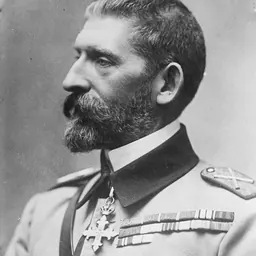

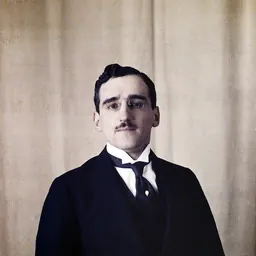
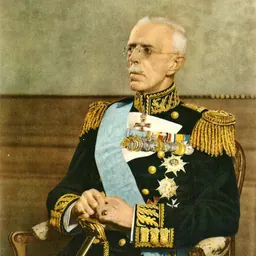
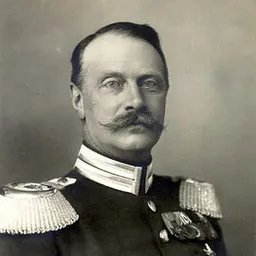
Contemporaries
People whose lives overlapped Nasrullah Khan's
Frequently asked questions
Who was Nasrullah Khan?
Emir of Afghanistan (1919)
When was Nasrullah Khan born?
Nasrullah Khan was born in 1874 in Kabul.
When did Nasrullah Khan die?
Nasrullah Khan died in 1920 in Kabul.
What was Nasrullah Khan's occupation?
Nasrullah Khan was a monarch.
What nationality was Nasrullah Khan?
Nasrullah Khan was Afghan.
Sources & further reading
· DBpedia: Nasrullah Khan (emir of Afghanistan)
Cite this page
APA: Biography.guide. (2026). Nasrullah Khan. https://biography.guide/nasrullah-khan-monarch/
MLA: "Nasrullah Khan." Biography.guide, https://biography.guide/nasrullah-khan-monarch/.
Chicago: "Nasrullah Khan." Biography.guide. https://biography.guide/nasrullah-khan-monarch/.
Data last updated: 2026-09-22 · Spot an error? Report a correction.
Portrait: Wikimedia Commons · author & licence
Page generated 2026-09-27 05:03 UTC