About Narendra Kumar
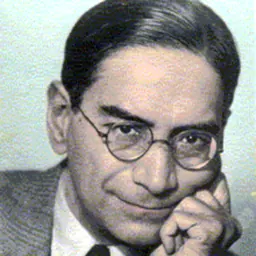
Lived 1933 – 2020 (aged 87). Narendra Kumar was an Indian mountaineer and soldier.
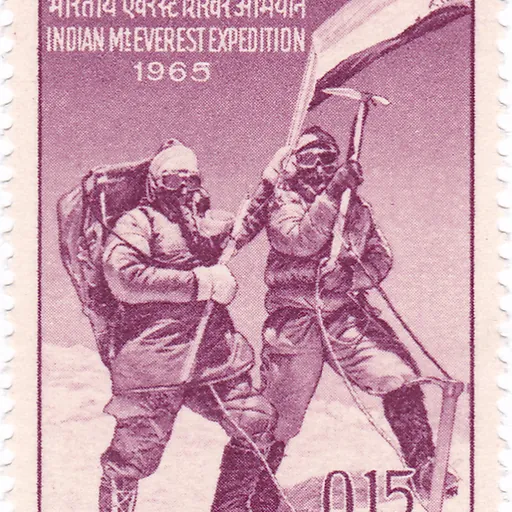
Colonel Narendra Kumar, PVSM, KC, AVSM, FRGS (8 December 1933 – 31 December 2020) was an Indian soldier and mountaineer. He is known for his expeditions across various mountain ranges such as the Himalayas and Karakorams, and respective subranges such as the Pir Panjals and Saltoro Mountains. His reconnaissance efforts on the Siachen glacier were key to the Indian Army's reclamation of the forward posts of the glacier in Operation Meghdoot in 1984. He was the deputy leader of the first successful Indian Mount Everest expedition in 1965.
He was a recipient of multiple military and civilian honours including the Param Vishisht Seva Medal, Kirti Chakra, and the Padma Shri.
Early life Kumar was born in Rawalpindi, British India on 8 December 1933, in a Punjabi Hindu family. He had three brothers and two sisters; he and his brothers joined the Indian Army. In 1947, he took part in the World Scout Jamboree to Paris at the age of 13, representing the then state of Punjab. He returned to a partitioned India. Most Muslims on his ship were de-boarded in Karachi while everyone else landed in Bombay. His parents had moved to Shimla after the partition of India.
Army life and mountaineering Kumar joined the Indian Army in 1950. and was promoted lieutenant on 6 June 1956. During his service with the regiment, he was exposed to winter sports and mountaineering.
1961–1964: Barahoti, Nilkantha and Nanda Devi One of the first army operations that Kumar was sent to was to Barahoti (known to the Chinese as Wuje). He was to lead the mission. Before the mission, Prime Minister Nehru himself asked Kumar if he was ready for the mission. He had the entire government machinery to get things done within the limited time frame. He chose his team from members of the para platoon. Lance Naik Hansa Datt was Kumar's buddy. The importance of the mission lay in the fact that the Chinese considered Barahoti as their territory. On the successful completion of the mission, Kumar was congratulated by the Prime Minister, Defence Minister and senior army commanders. A Dakota supply aircraft had crashed on its way back from a supply drop to the group. When he heard of the news, he went back for the bodies.
In 1961, he led a five-member expedition to scale Neelkanth [] in the Garhwal Himalayas. In this trip, he lost four toes with frostbite and stopped 200m below the summit. On 9 June 1966, by now an acting major, Kumar was appointed Principal of the Himalayan Mountaineering Institute, with the local rank of lieutenant-colonel. He was promoted substantive major on 6 June the following year. On 21 January 1971, he was appointed Principal of the Ski School at Gulmarg, with the local rank of lieutenant-colonel.
In 1977, Kumar led the first successful ascent of the Kangchenjunga, the third highest mountain in the world, from the north eastern side. He wrote in the American Alpine Club's publication that the team consisted entirely of personnel from the Indian Army – sixteen climbers and two doctors. In 1981, he was a member of the Antarctica Task Force, chartered with acclimatising and training the first Indian expedition to the continent, led by S. Z. Qasim, in 1982. In 1983, he summited Kamet [] and Abi Gamin []. During his mountaineering career, he ascended above [] on Mount Everest, more than twenty times. which incorrectly showed the line marking the ceasefire agreement between India and Pakistan, took his findings in January 1978 to Lieutenant General M. L. Chibber, then India's Director of Military Operations. Chiber obtained the necessary permissions for Kumar to lead a reconnaissance mission to the glacier.
Starting at the snoutof the glacier, the team went to the mid-way point from where a summit team of three completed its ascent of Teram Kangri II [], at the southern end of Shaksgam Valley. The team was helped by the Indian Air Force with rations and other logistical support. In a period of eight weeks, the team would summit Saltoro Kangri I (25,400 feet) and Sia Kangri I (24,350 ft), hike to the top of Indira Col at 24,493 ft, and ski to Bilafond La, Saltoro Pass, Sia La, Turkistan La and Pass Italia passes on Saltoro. The first account was of the Teram Kangri I ascent in October 1978. The second account was in 1981 of Sia Kangri and Saltoro Kangri.
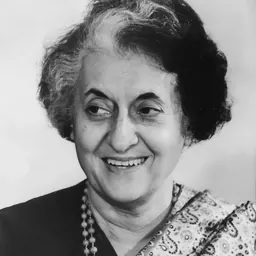
Kumar's expeditions to the Siachen glacier, and the detailed topographical mapping exercise, as well as photographs and videos from his expeditions helped the then Prime Minister of India, Indira Gandhi, to authorise Operation Meghdoot. Crediting Kumar's contributions being instrumental in the Indian Army's efforts to ending Pakistan's occupation of the glacier, Lieutenant General V. R. Raghavan, commanding officer of the operation, called him 'a mountain of information'. Their son, Akshay Kumar (1969–2020), ran Mercury Himalayan Explorations, an adventure travel and rafting company. In 1985, his youngest brother, Major K. I. Kumar also went on to ascend Mount Everest; however, he would die in a fall from a height of 8,500 m.
Awards and recognition
Kumar's mountaineering achievements were recognised by military and civilian awards and honours. He was awarded the Padma Shri, India's fourth highest civilian honour, and the Arjuna Award, in 1965, for the first Indian Everest Expedition of 1965. He remains the only Colonel to have received the Param Vishisht Seva Medal. In 2010, he was presented the MacGregor Medal, by the United Service Institution of India, for his military reconnaissance and exploration efforts of remote Indian areas between 1978 and 1981. Kumar was also a Fellow of the Royal Geographical Society.
The Indian Army's Siachen Battalion HQ in the Siachen Glacier is named as "Kumar Base" in his honour; the base is also a logistics forwarding post. Producers Ramon Chibb and Anku Pande have acquired the rights for the film.
Writings
Col N. Kumar (1981). Teram Kangri II Expedition. The Himalayan Journal (Vol.37) Col N. Kumar (1983). The Indian Army Expedition To The Eastern Karakoram, 1981. The Himalayan Journal (Vol.39) Kumar, Narinder; Malhotra, Kapil; Pasricha, Ram Nath (1987). Kamet east, Kamet west: the Kumaoni Expedition. New Delhi, India: Vision Books. .
Don’t just read it —
keep it.
Full-length biographies made to live with: read them, listen on the way to work, watch them tonight.
- E-book
- Audio
- Video
Instant download · yours to keep · every purchase keeps this site free
Important facts
People in Narendra Kumar's life
Named in this biography and alive at the same time



Related people
Same field, nearest in time



Contemporaries
People whose lives overlapped Narendra Kumar's




Frequently asked questions
Who was Narendra Kumar?
Indian Army officer and mountaineer
When was Narendra Kumar born?
Narendra Kumar was born on 8 December 1933 in Rawalpindi.
When did Narendra Kumar die?
Narendra Kumar died on 31 December 2020.
What was Narendra Kumar's occupation?
Narendra Kumar was a mountaineer and soldier.
What nationality was Narendra Kumar?
Narendra Kumar was Indian.
Sources & further reading
· DBpedia: Narendra Kumar (mountaineer)
Cite this page
APA: Biography.guide. (2026). Narendra Kumar. https://biography.guide/narendra-kumar-mountaineer/
MLA: "Narendra Kumar." Biography.guide, https://biography.guide/narendra-kumar-mountaineer/.
Chicago: "Narendra Kumar." Biography.guide. https://biography.guide/narendra-kumar-mountaineer/.
Data last updated: 2026-09-23 · Spot an error? Report a correction.
Portrait: Wikimedia Commons · author & licence
Page generated 2026-09-27 05:07 UTC