
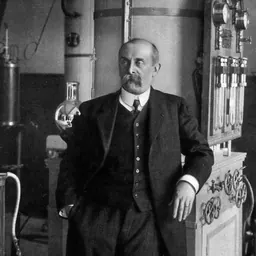
About Napoleon Zervas
Lived 1891 – 1957 (aged 66). Napoleon Zervas was a Greek politician, military personnel, hellenic Parliament, ioannina, liberal Party (Greece) and minister of Public Works.
Napoleon Zervas (; May 17, 1891 – December 10, 1957) was a Hellenic Army officer and resistance leader during World War II. He organized and led the National Republican Greek League (EDES), the second most significant (after EAM), in terms of size and activity, resistance organization against the Axis Occupation of Greece.
Early life and army career Zervas was born in Arta, Epirus, but his ancestors were from the village of Souli. The Zervas family belonged to one of the famous Souliot clans, who pioneered the struggles against Ali Pasha and many of them were chieftains during the years of the Greek War of Independence. Zervas' mother was Evanthia Konstantopoulou. After finishing high school in 1910, he volunteered for the 2nd Infantry Division. During the Balkan Wars, he was promoted to the rank of first sergeant. Later he attended the Hellenic Army NCO School and graduated as sergeant major in 1914.
Zervas was a Venizelist, and in 1916 was among the first to join the venizelist Movement of National Defense in Thessaloniki. He served with distinction in many battles of the Macedonian front during World War I, being eventually promoted to major. After the defeat of Venizelos' Liberal Party in the elections of 1920, he fled to Constantinople. He only returned to Athens in late 1922, after the Revolution of September 1922, and rejoined the army.
Three years later, after the establishment of General Theodoros Pangalos' dictatorship (June 1925), he was appointed as garrison commander of the city of Athens and at the same time, took command of the Second Battalion of the Republican Guard. These troops served as the main strongholds of Pangalos' military regime in the capital. Nevertheless, Zervas participated in the coup d'état of 22 August 1926, led by General Georgios Kondylis, that overthrew Pangalos. Zervas, however, confronted Kondylis a month later, when the new strongman sought to disarm and dissolve the Republican Guard. Bloody battles took place in Athens between Zervas' battalion and the governmental forces. After his defeat, Zervas was sentenced to life in prison. However, two years later, the newly established republican government of Eleftherios Venizelos (the Liberals' government of 1928–1932), granted him amnesty and Zervas was named lieutenant colonel in retirement.
Occupation and resistance Establishment of EDES
In September 1941, a few months after the start of the Axis Occupation of Greece, Zervas, along with other Venizelist army officers and political figures, founded the National Republican Greek League (EDES). The goals of EDES were the fight against the conquerors of Greece, the abolition of the Greek monarchy and the establishment of a republic on social-democratic principles. The two most guiding principles for Zervas was hatred of the House of Glücksburg together with an equally intense hatred of communism. The party platform of EDES talked of a "republic in a socialist form", but the British historian Mark Mazower described Zervas's socialism as "only skin deep". Notably, the platform of EDES did not mention armed resistance, and only after Zervas was bribed with 24,000 gold sovereigns from an agent of the British Special Operations Executive (SOE) did he agree to take to the mountains to wage guerrilla war. The EDES-EOEA forces were proclaimed as combatant forces of the Allied Armies by the British General Headquarters of Middle East.
Zervas incorporated not only Republicans but increasingly also royalists into his movement, who saw EDES as the only acceptable alternative to EAM, the Communist-dominated rival resistance movement that had established itself over most of the country. EOEA's activities were largely confined to Epirus, but Zervas had some control of Aetolia-Acarnania, in the Valtos area.
Gorgopotamos and Epirus In November 1942, the forces of EDES and those of ELAS (under the command of Aris Velouchiotis), in collaboration with a small group of British and New Zealand expert saboteurs, blew up the Gorgopotamos Bridge. Afterward the success of Operation Harling, a team of SOE agents led by "Monty" Woodhouse arrived to train his forces and arrange for arms shipments. By threatening to cut off the supply of arms, the SOE was able to impose the National Bands Agreement in May 1943, under which EAM and EDES agreed to stop fighting each other, and both put themselves under the command of Field Marshal Henry "Jumbo" Wilson, the supreme Allied commander in the Mediterranean. On 18 June 1944, EDES forces under Zervas with Allied support launched an attack on Paramythia, in Thesprotia. After a short-term conflict against the combined Cham-German forces, the town was finally liberated. The successful advance of the EDES forces continued during summer 1944. A number of violent reprisals that took part against the town's Muslim community during these developments were done without the permission of the EDES leadership. These reprisals caused most of the Cham community to flee across the border to Albania.
The US and the UK opposed his appointment suspecting him of collaboration with Nazi Germany during World War II and dictatorial ambitions. When he was replaced, Dwight Griswold, head of the U.S economic mission in Greece, said "I feel he is making more Communists than he is eliminating". He did not manage his reelection in the Parliament at the next elections and withdrew from politics.
He died in Athens on 10 December 1957.
In 2008, the house belonging to Zervas' second wife Aikaterini located on Kallergi 9 street in Metaxourgio was donated to the War Museum Foundation with intention of transforming it into a museum dedicated to his life. The House of General Napoleon Zervas Museum opened in November 2022, its exhibits cover Zervas' life and EDES' resistance activity.
Books Mazower, Mark. Inside Hitler's Greece: The Experience of Occupation, 1941-44, New Haven, Yale University Press, 1993.
Don’t just read it —
keep it.
Full-length biographies made to live with: read them, listen on the way to work, watch them tonight.
- E-book
- Audio
- Video
Instant download · yours to keep · every purchase keeps this site free
Important facts
People in Napoleon Zervas's life
Named in this biography and alive at the same time


Related people
Same field, nearest in time





Contemporaries
People whose lives overlapped Napoleon Zervas's




Frequently asked questions
Who was Napoleon Zervas?
Greek general (1891-1957)
When was Napoleon Zervas born?
Napoleon Zervas was born on 17 May 1891 in Arta.
When did Napoleon Zervas die?
Napoleon Zervas died on 10 December 1957 in Athens.
What was Napoleon Zervas's occupation?
Napoleon Zervas was a politician, military personnel, hellenic Parliament, ioannina, liberal Party (Greece) and minister of Public Works.
What nationality was Napoleon Zervas?
Napoleon Zervas was Greek.
Sources & further reading
Cite this page
APA: Biography.guide. (2026). Napoleon Zervas. https://biography.guide/napoleon-zervas/
MLA: "Napoleon Zervas." Biography.guide, https://biography.guide/napoleon-zervas/.
Chicago: "Napoleon Zervas." Biography.guide. https://biography.guide/napoleon-zervas/.
Data last updated: 2026-09-25 · Spot an error? Report a correction.
Page generated 2026-09-27 05:12 UTC