
About Nancy Kricorian
Born 1960. Nancy Kricorian is an American novelist.
Nancy Jean Kricorian (born September 19, 1960) is an American author of the novels Zabelle , Dreams of Bread and Fire (2003). , All the Light There Was (2013), and The Burning Heart of the World (2025). Her novels center on the Armenian diaspora and the aftermath of the Armenian genocide, for which she has received the Anahid Literary Award and a Gold Medal from the Writers Union of Armenia.
Personal life and career Kricorian was born in Watertown, Massachusetts, She is of Armenian descent on the paternal side and French-Canadian descent on the maternal side. Her grandmother's family was almost annihilated during the Armenian genocide with only her grandmother and a younger brother surviving. Kricorian stated in an interview that her non-conformity started during her childhood as she recalled: "One time I was having a fight with my father and he said, 'Now you don't talk to me like that'. And I responded 'I'm going to talk and I'm going to talk and you can't stop me'. That is a kind of resistance, they are telling me to shut up, lie down, go shopping, no, I don't want to".
In a 2013 interview, Kricorian described her youth as: "I grew up in the Armenian community. I grew up in a two-family house in Watertown, Massachusetts; on the block where I grew up half the families were Armenian. I went to the Armenian church, and a third of my classmates at school were Armenian. I really was in the community and then I desperately wanted to get out of there, I wanted to get away, so when I went to college I thought, you know, "I'm escaping," but then somehow it ended up that that is somewhere my imagination went. I ended up in this "home" place.""
Kricorian graduated from Dartmouth College in 1982 and gained a Master of Fine Arts degree from Columbia University in 1987. who has taught at Yale, Queens College, Rutgers, and Columbia. By her own account, she hated New York when she first arrived in 1984, and by she came to like the city in stages, settling in the city's intellectual district. The Syrian-born Canadian-Armenian writer Hrag Vartanian described her: "By her own admission Nancy Kricorian is an intellectual. A recognized poet, she is more popularly known as a novelist with two books that give voice to distinctly Armenian-American sensibilities". In her poem My Armenia she wrote: "Armenia is a country where someone is always crying, Women punch in and out on the clock, grieving in shifts, 1895, 1915, 1921, the thirties, 1988, 1992, 1993, 1994..."
She is a former member of the editorial board of Ararat Quarterly the advisory board of the Armenia Tree Project, and is a NAASR member.
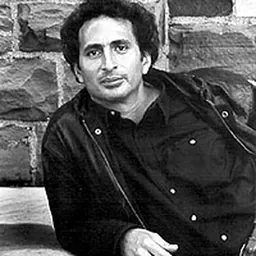
Kricorian is married to producer and screenwriter James Schamus. Schamus is on the board of directors of the group Jewish Voices for Peace. Schamus and Kricorian live in New York and have two daughters.
Literary works Zabelle (1998) Her first novel, Zabelle (1998), concerned the legacy of the Armenian genocide, which she took six years to write. Zabelle was one of several novels and memoirs by the Armenian-American writers such as Rise the Euphrates (1994) by Carol Edgarian and The Black Dog of Fate (1997) by Peter Balakian that appeared in the late 20th century dealing with the matter of the Armenian genocide, which had been a subject that had long been ignored in American literature. In the novel, Toros Chahasbanian, the husband of the narrator confesses to her his shame at his passivity during the genocide as he states: "I watched the whole thing and did nothing. God will never forgive me". Vartanian wrote Kricorian's novels concern female characters with "huge appetites" for wanting to explore and enjoy the world who are usually faced with some moral dilemma. Vartanian wrote: "In her novels, moral dilemmas are carefully dissected, but they are always become fragments of larger systems, which does not make for easy morality. Kricorian's characters don't dally or naval gaze, they are sometimes curt, often direct, and always emotionally present, even when they are confronted with something as horrific as genocide...". In Zabelle, the narrator says: "I remember what it was like to be a child-you see the world in pieces". The line reflects Kricorian's interest how memories affect people. Kricorian stated: "I don't think [Zabelle] sees the whole world, but as an adult you can make connections between the different scenes and impressions you can't do as a child. This perception had to do with watching one of my daughters, who seemed to have a map of the world in her head that was quite sophisticated in some small patches, but there were gaping chasms between these areas of knowledge". The narrator says of her youth: "we didn't speak of those times, but they were like dead and rotting animals behind the walls of our house", reflecting Kricorian's belief that the genocide had done lasting harm to the Armenians. Kricorian wrote that she had come to identify with her characters so much that she had unconsciously started to stockpile the food that the Pegorian family had missed under the Occupation.
Other works At present, Kricorian is working on a novel concerning an ethnic Armenian family in Beirut during the Lebanese Civil War of 1975–1990.
Activism Anti-war activism On International Woman's Day in 2003, she attended an anti-war protest outside of the office of Senator Hillary Clinton, which led her to become involved in the anti-war group Code Pink. In a 2005 essay she wrote for Code Pink, she endorsed what she calls direct action as a means of social change. She defined direct action as the "...political tactic of confrontation and sometimes-illegal disruption intended to attract and arouse public awareness and action. The Montgomery Bus Boycott in 1955 was an example of direct action that was successful in ending seating segregation on public buses...Street theater...involves the acting out of a social issue in a public space...Civil disobedience, which is another form of direct action, involves the nonviolent act of breaking the law to call attention to a particular law or set of laws that some people think are immoral or questionable. An example of civil disobedience from the Civil Rights Movement was the “sit-in” campaign by African-American students in the South". from 2003 to 2010, and is currently on the national staff of CODEPINK Women for Peace. She was the fall 2015 writer-in-residence at the Hagop Kevorkian Center for Near Eastern Studies at New York University, and a fellow of Women Mobilizing Memory project at Columbia University's Center for the Study of Social Difference.
United States politics In the 2008 election, she endorsed Barack Obama for president, writing in a joint essay together with several other feminists that Hillary Clinton's record as a senator who voted repeatedly for increased defense spending and for the congressional resolution authorizing the war in Iraq in October 2002 made her in their opinion unsuitable to be president.
In 2011, she supported the Occupy Wall Street protests. In an interview on October 28, 2011, Kricorian stated that her belief that "voting no longer represents democracy" as she believes that the rich have corrupted the politicians and that she hopes that "the wealthy realize that their well-being is dependent on the health and happiness of the 99 percent." She added that she believes: "Our country has been bankrupted by colonial wars and occupations while local needs, such as education, healthcare, and physical infrastructure, have been starved of needed resources. The anti-war movement, of which I have been a part since early 2003, was practically eviscerated by the hope of 'Yes We Can,' but now people have realized that [President Barack] Obama can't and won't unless the people push him harder than the wealthy one percent have been doing".
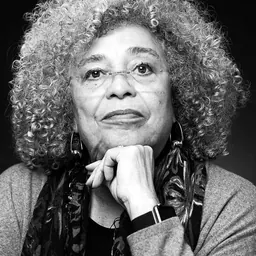
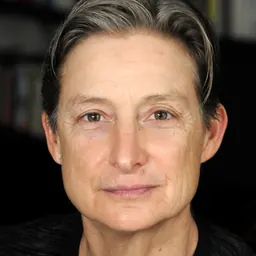
In August 2020, she joined the group Writers Against Trump that campaigned against President Donald Trump in the 2020 presidential election as the group stated: "We believe that this presidency is uniquely dangerous to our present and future society." In October 2020, she signed a public letter together with a number of other Armenian-Americans accusing the American media of being biased towards Azerbaijan with regard to the Nagorno-Karabakh war by wrongfully accusing Armenia of starting the war. The letter stated: "Armenia is a country smaller than the population of Los Angeles – an approximate population of three million Armenians who are largely descendants of the 1915 Armenian Genocide. Artsakh [Nagorno-Karabakh] has a population of only 150,000. Today, the two nations of Turkey and Azerbaijan have a combined population of more than 90 million and have supplemented their fighters with mercenary forces from Syria and Libya hired by a Turkish contracting company. Both Turkey and Azerbaijan have a history of committing genocide and pogroms against Armenians in the twentieth century, while also being more significantly armed with the world's most sophisticated weaponry." On April 24, 2015, Kricorian gave a speech at Galatasary Square in Istanbul commentating the 100th anniversary of the beginning of the Armenian genocide, which started on April 24, 1915 when the orders were given from the Central Committee of the Committee for Union and Progress to kill all of the Armenians living in the Ottoman empire. Kriocrian spoke before a mixed audience of Armenians and Turks, arguing that no reconciliation was possible until the Republic of Turkey finally admitted that the Ottoman empire had waged genocide against the Armenians. Kricorian argued against the concept of "dialogue", which she felt was a subtle form of genocide denial as it implied that the fact of the genocide should be a subject of discussion and debate and that the position of the Turkish state that the genocide never occurred was just as valid as the Armenian position that the genocide did place; instead, she called for "co-resistance", urging Armenian and Turkish feminists to work together. The site of Galatasary Square was chosen because it is the location of weekly protest rallies against state violence against women in Turkey, and the Turkish feminist organizers of the rally saw a link between the state violence against Armenians in the Ottoman empire and the present-day misogynous violence in Turkey. Kricorian supports recognition of the Armenian genocide by the United States; a controversial position as the Turkish government has lobbied strongly against such recognition. She supports boycotting Israel and in particular is against the Israeli cosmetic company Ahava, which operates a factory in the West Bank by the shores of the Dead Sea, where it extracts minerals it uses for its skin care products. In April 2016, Ahava was purchased for $77 million US dollars by the Chinese corporation Fosun, which led Kricorian to state that the sale to Fosun "signifies that Ahava's brand was so tainted because of the prolonged international boycott against them that they were unable to find investors in the United States or Europe". In May 2021, Kricorian organized a petition criticizing the treatment of Israeli Palestinians by the Israeli government in the city of Lod (called Lydda by the Palestinians). She told the journalist Valentina Di Liscia: "We were contacted by Palestinian friends who were feeling personally endangered. There have been roving gangs of extremists that have been pulling Palestinians out of cars, attacking their shops, breaking into their homes. What's so scary is that the Israeli police and army don't stop them." The petition was signed by over a 1,000 American intellectuals, the best known of whom were Molly Crabapple, Rehab Nazzal, Judith Butler, Angela Davis; Rachel Kushner and Ottessa Moshfegh.
Memberships Women Mobilizing Memory Fellow at The Center for the Study of Social Difference, Columbia University (2013–2017) PEN American Center (2003) Ararat Literary Quarterly Editorial Board (1998–2004) Armenia Tree Project Executive Committee (2001–2016) CODEPINK Women for Peace (2003–2016) Board of the National Association of Armenian Studies and Research (2016)
Honors and awards Writer in Residence, Kevorkian Center for Near East Studies, New York University, Fall 2015 Gold Medal of the Writers Union of Armenia, 2007 Anahid Literary Award, The Armenian Center at Columbia University, 1998 Ararat Short Story Prize, 1997 Daniel Varoujan Prize, New England Poetry Club, 1995 Residency, Yaddo, Saratoga Springs, N.Y., January 1991 Educational Press Award, Editorial Category, 1991 Judith's Room Emerging Talent Prize, 1990 River Styx Poetry Prize, 1990 Fellowship, New York Foundation for the Arts, 1988 Tuition Scholarship, School of Criticism and Theory, 1988 Academy of American Poets Prize, Columbia, 1987 Residency, Karolyi Foundation, Vence, France, Summer 1986 Finalist, Benjamin Burns Poetry Contest, Columbia, 1985 Graduate Writing Fellowship, Columbia, 1985 Claire Woolrich Scholarship, Columbia, 1984 Dartmouth Graduate Fellowship to the University of Paris, 1983–1984 Phi Beta Kappa, Dartmouth, 1982 Senior Fellowship, Creative Writing, Dartmouth, 1981 The Alexander Laing Poetry Prize, Dartmouth, 1980 and 1981
Publications Fiction All the Light There Was, Houghton Mifflin Harcourt (hardcover) March 2013; She Writes Press (paperback) October 2014 Dreams of Bread and Fire, Grove Press (hardcover), May 2003, (paperback) April 2004 Dreams of Bread and Fire foreign editions: Aras (Turkey, Nov. 2017); Editions Thaddée (France, forthcoming) "The Tin Cup," excerpt from Zabelle, Salamander Magazine, Vol. 6, No. 2, 1999 Zabelle, novel, Atlantic Monthly Press (hardcover), January 1998 and Bard/Avon (paperback), March 1999 (later a HarperPerennial title); paperback reissued by Grove, September 2009. Zabelle foreign editions: Machborot (Israel, Nov. 98), Piper (Germany, Aug. 98), Gyldendal (Denmark, June 98), Vassallucci (The Netherlands, April 98), Writers Union of Armenia (Armenia, Dec. 07), Belge (Turkey, Feb. 08) "The Balcony," short story, Ararat, Fall 1997 "Armenian Eyes," short story, Ararat, Spring 1991
Non-fiction
Don’t just read it —
keep it.
Full-length biographies made to live with: read them, listen on the way to work, watch them tonight.
- E-book
- Audio
- Video
Instant download · yours to keep · every purchase keeps this site free
Important facts
Family & relationships
People in Nancy Kricorian's life
Named in this biography and alive at the same time




Related people
Same field, nearest in time






Contemporaries
People whose lives overlapped Nancy Kricorian's




Frequently asked questions
Who is Nancy Kricorian?
Armenian-American writer
When was Nancy Kricorian born?
Nancy Kricorian was born on 19 September 1960 in Watertown.
What is Nancy Kricorian's occupation?
Nancy Kricorian is a novelist.
What nationality is Nancy Kricorian?
Nancy Kricorian is American.
Sources & further reading
Cite this page
APA: Biography.guide. (2026). Nancy Kricorian. https://biography.guide/nancy-kricorian/
MLA: "Nancy Kricorian." Biography.guide, https://biography.guide/nancy-kricorian/.
Chicago: "Nancy Kricorian." Biography.guide. https://biography.guide/nancy-kricorian/.
Data last updated: 2026-09-20 · Spot an error? Report a correction.
Page generated 2026-09-27 05:17 UTC