
About Nancy Hale
Lived 1908 – 1988 (aged 80). Nancy Hale was an American writer and novelist.
Nancy Hale (May 6, 1908 – September 24, 1988) was an American novelist and short-story writer. She received the O. Henry Award, a Benjamin Franklin magazine award, and the Henry H. Bellaman Foundation Award for fiction.
Early life and education Nancy Hale was born in Boston on May 6, 1908. Her parents, Philip Leslie Hale and Lilian Westcott Hale were both painters, and her father was the son of famed speaker and Unitarian minister Edward Everett Hale.
Nancy Hale began writing at an early age, producing a family newspaper, the Society Cat, at age eight, and publishing her first story, "The Key Glorious," in the Boston Herald, at age eleven. She also devoted considerable energy to the study of art under her parents' tutelage.
She graduated from the Winsor School in 1926 and studied at the Boston Museum of Fine Arts and under her father at the Fenway Studios.
Career
Early career In 1928, Hale moved to New York City with her first husband, where she was hired to work in the art department at Vogue. She was, however, almost immediately put to work as an assistant editor and writer instead. Under the pen name Anne Leslie, she wrote "chatty news" items, fashion news, and editorials. In 1933, one of her stories,"To the Invader," won the O. Henry Memorial Award Prize.
Hale was hired by the New York Times as its first woman straight news reporter in the spring of 1934, a job which she left after an exhausting six months. At over 700 pages, it was by far her longest work, and its publication followed by the longest interruption to Hale's writing career, resulting from an emotional breakdown. She would later publish a novel, Heaven and Hardpan Farm (1957), based in part on her experience of recovery and psychiatric treatment.
In 1951, she published her fourth novel, The Sign of Jonah, about a Vermont girl's married life in Virginia, She once claimed to have sold the magazine a record number of stories in one year (12) and eventually published over 80, placing her among The New Yorker's most prolific fiction authors.
During this period, she also wrote two plays, "The Best of Everything" (1952) and "Somewhere She Dances" (1953), which were produced at the University of Virginia's Minor Hall Theatre. She also delivered a series of lectures at the Bread Loaf Writers' Conference in 1959 and 1960 that she later published in The Realities of Fiction (1963). Her last, Secrets (1968), was described as a "semi-fictional memoir" in The New York Times and categorized as young adult fiction by the Saturday Review.
In 1969, she published The Life in the Studio, a collection of autobiographical pieces, first published in The New Yorker, inspired by having to clear out her parents' studios after her mother's death. May Sarton wrote of the book, "The singular charm of Nancy Hale's memories of her artist mother and father and their circle is that we see them as in a double mirror ... the discerning eye of the adult writer is always present, but at the same time we are immersed in and captured by this private world of artists, as it was." When she followed this in 1975 with a biography of the painter Mary Cassatt, however, the Times' art critic, John Russell wrote that, "The fact that Miss Hale comes of a family of painters and has published a number of novels must be said to have given her delusions of competence both as to the nature of art and as to the motivation of complex and altogether exceptional human beings."
She and a fellow writer, Elizabeth Coles Langhorne, founded the Virginia Center for the Creative Arts in 1971. Hale argued that "if Virginia really wanted to further the arts, it could do so easily, moreover cheaply, by purchasing an abandoned motel and staffing it for writers to write in—feeding them and seeing that they were uninterrupted." The University of Virginia invited Hale to give the graduation address; she was the first woman to have ever been given this invitation.
Norah Lind has written of Hale that "despite any claims she made to the contrary, her work is largely autobiographical. She writes of her remarkable artistic family, successful career years, troubled marriages, and emotional breakdowns. The author is present in the characters who fill her narratives—often youthful and lovely women from privileged social backgrounds."
Awards She won ten O. Henry Awards for her short stories, beginning with "To the Invader" in 1932. She was awarded a Benjamin Franklin Magazine award from the University of Illinois, and the Henry H. Bellaman Foundation Award for fiction. Her 1942 story, "Those are as Brothers," was included in the anthology, 100 Years of the Best American Stories.
In 2018 the Virginia Capitol Foundation announced that Hale's name would be on the Virginia Women's Monument's glass Wall of Honor.
Don’t just read it —
keep it.
Full-length biographies made to live with: read them, listen on the way to work, watch them tonight.
- E-book
- Audio
- Video
Instant download · yours to keep · every purchase keeps this site free
Important facts
Family & relationships
People in Nancy Hale's life
Named in this biography and alive at the same time



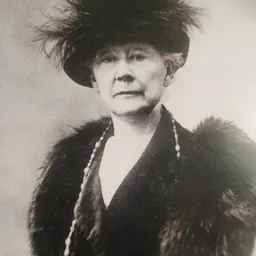
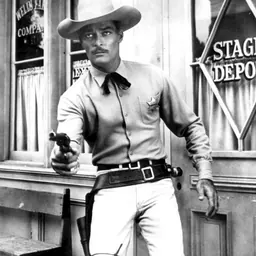


Related people
Same field, nearest in time


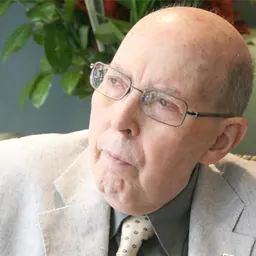
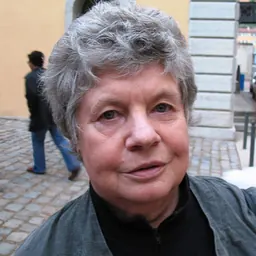

Contemporaries
People whose lives overlapped Nancy Hale's

Frequently asked questions
Who was Nancy Hale?
American writer (1908-1988)
When was Nancy Hale born?
Nancy Hale was born on 6 May 1908 in Boston.
When did Nancy Hale die?
Nancy Hale died on 24 September 1988 in Charlottesville.
What was Nancy Hale's occupation?
Nancy Hale was a writer and novelist.
What nationality was Nancy Hale?
Nancy Hale was American.
Sources & further reading
Cite this page
APA: Biography.guide. (2026). Nancy Hale. https://biography.guide/nancy-hale/
MLA: "Nancy Hale." Biography.guide, https://biography.guide/nancy-hale/.
Chicago: "Nancy Hale." Biography.guide. https://biography.guide/nancy-hale/.
Data last updated: 2026-09-20 · Spot an error? Report a correction.
Page generated 2026-09-27 05:17 UTC