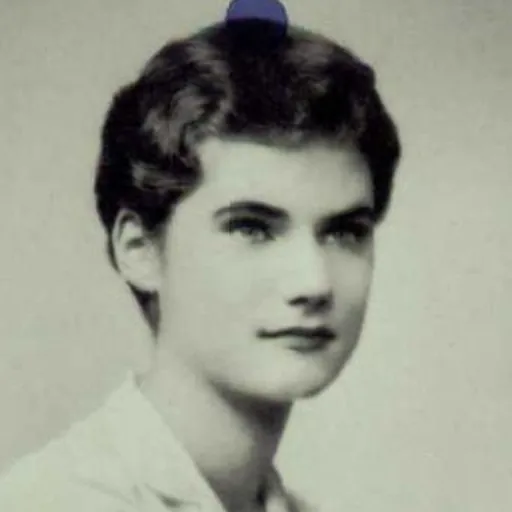
About Nancy Graves
Lived 1939 – 1995 (aged 55). Nancy Graves was an American sculptor, painter, draftsperson, conceptual artist, graphic artist and scenographer.
Nancy Graves (December 23, 1939 – October 21, 1995) was an American sculptor, painter, printmaker, and filmmaker known for her focus on natural phenomena like camels or maps of the Moon. Her works are included in many public collections, including those of the National Gallery of Art (Washington, D.C.), the Brooklyn Museum of Art, the Smithsonian American Art Museum, the National Gallery of Australia (Canberra), the Des Moines Art Center, Walker Art Center (Minneapolis), and the Museum of Fine Arts (St. Petersburg, FL). When Graves was just 29, she was given a solo exhibition at the Whitney Museum of American Art. At the time she was the youngest artist, and fifth woman to achieve this honor.
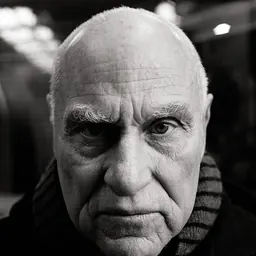
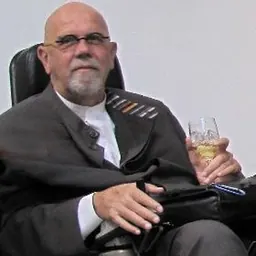
Early life and studies Graves was born in Pittsfield, Massachusetts. Her interest in art, nature, and anthropology was fostered by her father, an accountant at the Berkshire Museum. After graduating from Vassar College in English Literature, Graves attended Yale University, School of Art and Architecture, where she received her B.F.A. (1962) and M.F.A. (1964) degrees. Fellow Yale Art and Architecture alumni of the 1960s include the painters, photographers, and sculptors Brice Marden, Richard Serra, Chuck Close, Janet Fish, Gary Hudson, Rackstraw Downes, and Sylvia and Robert Mangold.
After her graduation in 1964, she received a Fulbright Scholarship and studied painting in Paris. Continuing her international travels, she then moved on to Florence. During the rest of her life, she would also travel to Morocco, Germany, Canada, India, Nepal, Kashmir, Egypt, Peru, China, Australia. She was married to Richard Serra from 1965 to 1970.
Work
A prolific artist who worked in painting, sculpture, printmaking and film, Graves first made her presence felt on the New York art scene in the late 1960s and 70's, with life-size sculptures of camels that seemed as accurate as a natural history display. Like-minded artists included Eva Hesse, Close, Bruce Nauman, Keith Sonnier, and Serra, to whom Graves was married from 1965 to 1970. Her work has strong ties to the Alexander Calder's stabiles and to the sculptures of David Smith, with their welded parts and found objects; she collected works by both artists. Also in the early 1980s, she began to produce the works for which she became most widely known: the colorfully painted, playfully disjunctive assemblages of found objects cast in bronze, including plants, mechanical parts, tools, architectural elements, food products and much more.
Some of Graves's other works include: Goulimine (film, 1970) Izy Boukir (film, 1971) VI Maskeyne Da Region of the Moon (lithograph, 1972) Fragment (painting, 1977) Wheelabout (sculpture, 1985) Hindsight (sculpture, 1986) Immovable Iconography (sculpture, 1990) Footscray (oil on canvas, paint, and sculpture) Metaphore & Melanomy, (cast bronze, 1995) Camels, VI, VII, VIII (wood, steel, burlap, polyurethane, wax, oil paint, 1969) Fossils (Plaster, dust, marble dust, acrylic and steel, 1970) Mitchell-Innes & Nash has represented the Estate of Nancy Graves since 2014. The exhibition was accompanied by a fully illustrated catalogue with an essay by Robert Storr.
Awards Skowhegan Medal for Drawing/Graphics (1980) New York Dance and Performance Bessie Award (1986) Honorary Degree, Skidmore College (1989) Elected into the National Academy of Design (1992)
In others' art Mary Beth Edelson's Some Living American Women Artists / Last Supper (1972) appropriated Leonardo da Vinci’s The Last Supper, with the heads of notable women artists collaged over the heads of Christ and his apostles. John the Baptist's head was replaced with Nancy Graves, and Christ's with Georgia O'Keeffe. This image, addressing the role of religious and art historical iconography in the subordination of women, became "one of the most iconic images of the feminist art movement."
Death Nancy Graves made her last works in April 1995 at the Walla Walla Foundry with Saff Tech Arts in Washington state.
Don’t just read it —
keep it.
Full-length biographies made to live with: read them, listen on the way to work, watch them tonight.
- E-book
- Audio
- Video
Instant download · yours to keep · every purchase keeps this site free
Important facts
People in Nancy Graves's life
Named in this biography and alive at the same time



Related people
Same field, nearest in time


Contemporaries
People whose lives overlapped Nancy Graves's





Frequently asked questions
Who was Nancy Graves?
American conceptual artist (1939–1995)
When was Nancy Graves born?
Nancy Graves was born on 23 December 1939 in Pittsfield.
When did Nancy Graves die?
Nancy Graves died on 21 October 1995 in New York City.
What was Nancy Graves's occupation?
Nancy Graves was a sculptor, painter, draftsperson, conceptual artist, graphic artist and scenographer.
What nationality was Nancy Graves?
Nancy Graves was American.
Sources & further reading
Cite this page
APA: Biography.guide. (2026). Nancy Graves. https://biography.guide/nancy-graves/
MLA: "Nancy Graves." Biography.guide, https://biography.guide/nancy-graves/.
Chicago: "Nancy Graves." Biography.guide. https://biography.guide/nancy-graves/.
Data last updated: 2026-09-21 · Spot an error? Report a correction.
Portrait: Wikimedia Commons · author & licence
Page generated 2026-09-27 05:01 UTC