
About Nancy Elizabeth Prophet
Lived 1890 – 1960 (aged 70). Nancy Elizabeth Prophet was an American artist and sculptor.
Nancy Elizabeth Prophet (born Nancy Elizabeth Profitt; March 19, 1890 – December 13, 1960) was an American artist of African-American and Native American ancestry, known for her sculpture. She was the first African-American graduate from the Rhode Island School of Design in 1918 and later studied at L'Ecole des Beaux-Arts in Paris during the early 1920s. She became noted for her work in Paris in the 1920s and 1930s. In 1934, Prophet began teaching at Spelman College, expanding the curriculum to include modeling and history of art and architecture. Prophet died in 1960 at the age of 70.
Prophet faced many struggles through her lifetime. Prophet had a difficult time financing her work and appealed to various foundations for funding and was often turned down. She also struggled with having her work exhibited and at times using the name Eli Prophet when she entered works into exhibition. Throughout her time in Paris, Prophet was constantly on the brink of starvation. Nevertheless, Prophet retained a strong work ethic passed down from her parents. Her parents were of mixed Native American and African American ancestry; her father was Narragansett.
From an early age, Prophet demonstrated a serious interest in drawing and painting. Where her interest in these fields originated from is still unknown. At the time, her parents considered her creative leanings to be impractical. Her parents were proponents of hard work; her mother was a cook and her father was a city worker. They passed their hard work ethic onto their daughter, expecting her to eventually work as a housekeeper or teacher. Despite this pressure, Prophet still found time to pursue her creative passions. When she was 15 years old, Prophet used her small earnings from a part-time housekeeping job to pay for art tutoring.
While at RISD, Prophet studied painting and free-hand drawing, especially portraiture. She graduated from the school in 1918.
Work in Paris Prophet moved to Paris in 1922 to study sculpture. Most of the evidence for the twelve years she spent in France comes from her diary, a forty-six page hand-written manuscript, in which she portrays periods of intense activity contrasting with periods of extreme depression. Although she claimed to have studied at the École des Beaux-Arts, they have no record of her, and she probably studied at one of the connected ateliers.
Prophet arrived in Paris in August of either 1921 or 1922 and obtained a studio on Avenue du Chatillon in Montparnasse. In the fall of 1922 or 1923 to the spring of 1924 or 1925, she studied with Victor Joseph Jean Ambroise Segoffin at the École des Beaux-Arts, a sculptor noted for his statues, tombs, and portrait busts. Under his mentorship, she created two different busts, one of which was exhibited at the Salon d'Automne in 1924. It is thought that because the Salon was at that time more rigid in acceptances, Prophet most likely avoided radical themes in her work, and avoided avant-garde work in order for her sculpting to be shown. She later left the École because she believed she could teach herself faster than working under a supervisor, and she bought her own sculpting tools, doing all the carving with no assistance due to her lack of funds. Prophet also studied woodcutting under Oscar Waldmann, a Swiss German sculptor, and marble cutting from Kousouski, a Polish sculptor.
In the fall of 1925, she took on a six-month sublet in a studio on the famous "Vercingetorix," where other famous painters, such as Maurice Sterne and Patrick Henry Bruce in 1904, and Per and Lucy Krohg (who worked in Gauguin's former studio in the 1910s) lived and worked. Her move into this studio was precipitated by her willingness to leave her husband, who she believed lacked ambition. In this studio, she began La Volonté, her first lifesize statue.
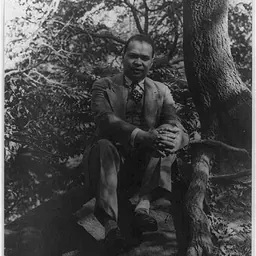
Her polychromed wood head Discontent reflected what she described as "a long emotional experience, of restlessness, of gnawing hunger for the way to attainment" during this time in her life. In November 1925, she also began her second life size figure, Le Pélerin. In English, this means The Pilgrim. It is evocative of medieval church statuary and provides nostalgia for the Middle Ages in French art. Le Pélerin, Nancy Elizabeth Prophet, (American sculptor, 1890-1960); Bernes, Marouteau& C. (Photographer); Date: c.1922-1929 Her marble bust Silence, a companion piece to Discontent, expresses “months of solitary living in her little Paris apartment, hearing the voice of no one for days on end.” Prophet exhibited at the Salon d'Automne and the Societe des Artistes Francais in Paris. W.E.B. Du Bois and Countee Cullen helped submit her work to exhibitions in the United States as well. Prophet won the Harmon Prize for Best Sculpture in 1929.
Returning to the United States in 1932, Prophet saw her work continue to gain attention. She was invited to exhibit her art in galleries located in New York and Rhode Island. She won the Best in Show prize from the Newport Art Association in 1932.
Work in Atlanta Prophet moved her studies down to Atlanta, Georgia, and began a career as a professor teaching art students enrolled at both Atlanta University and Spelman College in 1934, in hopes of encouraging the creative minds of youth, the encouragement she was not presented with during her early years. At Spelman, she developed the curriculum in fine arts and art history and welcomed students to her own home. The diaries which served as the source material for the performance, cover Prophet's twelve years in France, and are currently held by Brown University’s John Hay Library.
Later that year, Soares reprised the role of Prophet in "It is Just Defiance": A Living History of Nancy Elizabeth Prophet's Paris Diaries, which covered Prophet's time in Paris during the mid 1930s.
Don’t just read it —
keep it.
Full-length biographies made to live with: read them, listen on the way to work, watch them tonight.
- E-book
- Audio
- Video
Instant download · yours to keep · every purchase keeps this site free
Important facts
People in Nancy Elizabeth Prophet's life
Named in this biography and alive at the same time


Related people
Same field, nearest in time



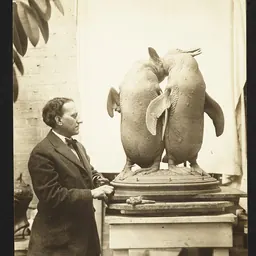
Contemporaries
People whose lives overlapped Nancy Elizabeth Prophet's
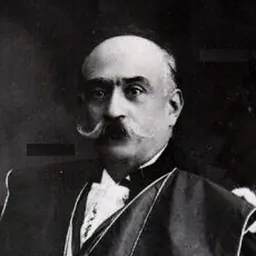
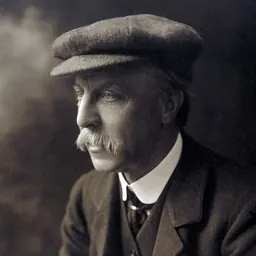


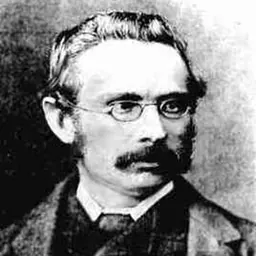
Frequently asked questions
Who was Nancy Elizabeth Prophet?
American sculptor (1890–1960)
When was Nancy Elizabeth Prophet born?
Nancy Elizabeth Prophet was born on 19 March 1890 in Warwick, Providence.
When did Nancy Elizabeth Prophet die?
Nancy Elizabeth Prophet died on 13 December 1960 in Providence.
What was Nancy Elizabeth Prophet's occupation?
Nancy Elizabeth Prophet was an artist and sculptor.
What nationality was Nancy Elizabeth Prophet?
Nancy Elizabeth Prophet was American.
Sources & further reading
· Wikipedia: Nancy Elizabeth Prophet
· DBpedia: Nancy Elizabeth Prophet
Cite this page
APA: Biography.guide. (2026). Nancy Elizabeth Prophet. https://biography.guide/nancy-elizabeth-prophet/
MLA: "Nancy Elizabeth Prophet." Biography.guide, https://biography.guide/nancy-elizabeth-prophet/.
Chicago: "Nancy Elizabeth Prophet." Biography.guide. https://biography.guide/nancy-elizabeth-prophet/.
Data last updated: 2026-09-26 · Spot an error? Report a correction.
Page generated 2026-09-27 05:14 UTC