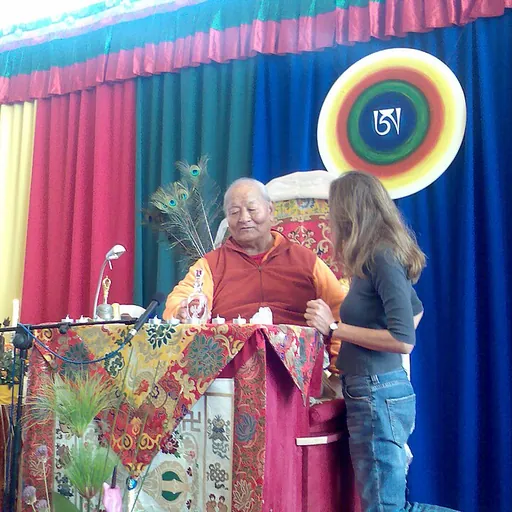
About Namkhai Norbu
Lived 1938 – 2018 (aged 79). Namkhai Norbu was an Italian anthropologist, writer, university teacher and spiritual teacher.
Namkhai Norbu (; 8 December 1938 – 27 September 2018) was a Tibetan Buddhist master of Dzogchen and a professor of Tibetan and Mongolian language and literature at Naples Eastern University. He was a leading authority on Tibetan culture, particularly in the fields of history, literature, traditional religions (Tibetan Buddhism and Bon), and Traditional Tibetan medicine, having written numerous books and scholarly articles on these subjects.
When he was two years old, Norbu was recognized as the mindstream emanation, a tulku, of the Dzogchen teacher Adzom Drugpa (1842–1924). At five, he was also recognized as a mindstream emanation of an emanation of Shabdrung Ngawang Namgyel (1594–1651). At the age of sixteen, he met master Rigdzin Changchub Dorje (1863–1963), who became his main Dzogchen teacher.
In 1960, he went to Italy at the invitation of Giuseppe Tucci and served as Professor of Tibetan and Mongolian Language and Literature from 1964 to 1992 at Naples Eastern University. In 1983, he hosted the first International Convention on Tibetan Medicine, held in Venice, Italy.
In 1976, Norbu began to give Dzogchen instruction in the West, first in Italy, then in numerous other countries. He became a respected spiritual authority among many practitioners, and created centers for the study of Dzogchen worldwide. Norbu taught Dzogchen for more than fifty years and was considered by the Tibetan government in exile as "the foremost living Dzogchen" teacher at the time of his death, in 2018. Norbu founded the Dzogchen Community, which today has centers around the world, including in the US, Mexico, Australia, Russia, and China. His name, Namkhai, means "sky", "space", and "aether", and has the possessive case ending, thus it may be rendered into English as "...of the sky". Norbu means "jewel", "crystal", "gem", "cintamani". Therefore, Namkhai Norbu may be rendered in English as "jewel of the sky".
Recognition as a reborn master At birth, two of Norbu's uncles, the Dzogchen masters Palyul Karma Yangsid and Shechen Rabjam, believed him to be the reincarnation of their master, Adzom Drugpa Rinpoche (1841–1934). When Norbu was two years old, this was confirmed by a senior tulku of the Nyingma school. Adzom Drugpa was a disciple both of Jamyang Khyentse Wangpo (1820–92) and Patrul Rinpoche (1808–81).
Furthermore, when he was five years old, the sixteenth Gyalwa Karmapa and the Situ Rinpoche together recognized Norbu as the mind emanation of the mindstream of another well-known teacher, who was in turn the emanation of Shabdrung Ngawang Namgyel, the 17th-century Tibetan-born founder and spiritual leader of Bhutan. Because of this, Namkhai Norbu also bears the honorary title 'Chögyal' , meaning 'Dharma King'.
Such recognitions conferred a great deal of attention and prestige upon him from a very young age, leading him in later life to remark: "As I grew up, I was thus given quite a few names and titles, many of which are very long and grand-sounding. But I have never used them, because I have always preferred the name my parents gave me at birth".
Tibet In his early years, Norbu studied at the Derge Gonchen monastery. At the age of nine, he entered a Sakya college, where he studied Buddhist philosophy for many years with Khyenrab Chökyi Odzer. He also received numerous tantric and Dzogchen transmissions and teachings from many masters, including his paternal uncle Togden Ugyen Tendzin, his maternal uncle Khyentse Rinpoche Chökyi Wangchug, as well as Drubwang Rinpoche Kunga Palden, Negyab Rinpoche, Drugse Gyurmed Dorje, Dzongsar Khyentse Chökyi Lodrö, Dudjom Rinpoche Yeshe Dorje, and Bo Gongkar Rinpoche. He also received teachings at Dzogchen Monastery. In 1951, he received various teachings from the female yogi Ayu Khandro Dorje Paldrön (1838–1953).
Norbu was invited to China in 1953 as a representative of the Tibetan monasteries. After visiting Chengdu and Chungching, he accepted an invitation to teach Classical Tibetan in Menyag and also had the opportunity to learn Chinese there. During this time, he met Kangkar Rinpoche, from whom he received instruction on the Six Yogas of Naropa, and other teachings.
After having had a vision in a dream, Norbu returned to Derge. It was here that he met his root teacher, Rigdzin Changchub Dorje, in 1955 (when Norbu was sixteen). Starting in 1976, Norbu began to teach Dzogchen to a small group of Italian students.
Other projects In 1983, Norbu organized the First International Congress on Tibetan Medicine, which was held at Ca' Foscari University in Venice and the Cini Foundation, Arcidosso. Norbu also convened the first three International Conferences on Tibetan Language, held at various major universities.
Apart from his spiritual activity, he founded the International Shang-Shung Institute for Tibetan Studies in 1990 to preserve the cultural traditions of Tibet (including Tibetan medicine and language). The institute has a large collection of Tibetan books and manuscripts, and it also publishes the works of Namkhai Norbu. The institute was inaugurated by the XIV Dalai Lama in 1990. In 2005, the Shang Shung Medical Institute began to offer a four-year course in traditional Tibetan medicine.
Norbu also founded the NGO A.S.I.A (Association for International Solidarity in Asia), which works in Tibet, India, Nepal, Myanmar, Mongolia, and Sri Lanka. A.S.I.A. has worked on more than 200 projects, including building twenty schools, where 3,000 Tibetan children learn Tibetan language and culture.
Recognition and legacy Chögyal Namkhai Norbu's teachings on the Dance of the Vajra and Khaita Joyful Dances (a program based on the study, singing, and dancing of traditional and modern Tibetan songs) have been recognized at UNESCO's International Dance Council (CID). The numerous cultural artifacts collected by Norbu, such as valuable Himalayan and Central Asian works of art, sacred objects, documents, and handicrafts, are now in the collection of the Museum of Asian Art and Culture in Arcidosso (2016).
In 2000, Norbu was invited to the UN's Millennium World Peace Conference of Religious and Spiritual Leaders in New York.
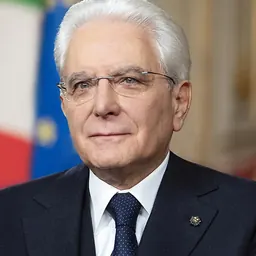
On 10 September 2018, the Italian government conferred upon him its highest award, Commander of the Order of Merit of the Italian Republic; this was presented by President Sergio Mattarella.
Works
Chögyal Namkhai Norbu wrote more than eighty works, which have been translated into numerous languages. His oeuvre includes books on Tibetan Buddhism, Tibetan history, poetry, biographies, and works on Tibetan culture and Tibetan medicine.
Books
Contributions Introduction: Beyond Words: Dzogchen Made Easy (2003) (Element Books) Introduction: Self-Liberation: Through Seeing with Naked Awareness (2000) (Station Hill Press) Introduction: The Tibetan Book of the Dead: Awakening Upon Dying (2013) Introduction: The Golden Letters (1996) (Snow Lion) Introduction: Togden Shakya Shri. The Life and Liberation of a Tibetan Yogin (2009) (Shang Shung Edizioni) Introduction: You Are the Eyes of the World (2011) (Shambhala )
Discography Chöd: Cutting Through Dualism (1995) CD (Amiata Records) ARNR-0193 Purification of the Six Lokas (2001) CD (Shang Shung) 10020 General Introduction to Dzogchen (2009) DVD Music for the Dance of the Vajra (2009) CD (Amiata Records) ARNR-0200 My Reincarnation (2012) DVD (New York)
Don’t just read it —
keep it.
Full-length biographies made to live with: read them, listen on the way to work, watch them tonight.
- E-book
- Audio
- Video
Instant download · yours to keep · every purchase keeps this site free
Important facts
People in Namkhai Norbu's life
Named in this biography and alive at the same time
Related people
Same field, nearest in time



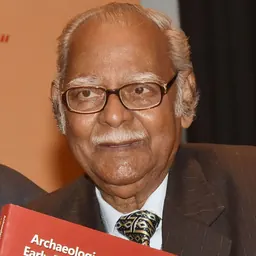

Contemporaries
People whose lives overlapped Namkhai Norbu's
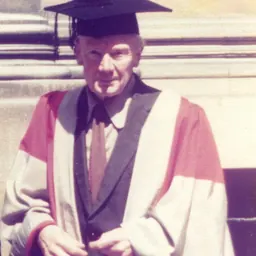


Frequently asked questions
Who was Namkhai Norbu?
Tibetan Dzogchen master (1938–2018)
When was Namkhai Norbu born?
Namkhai Norbu was born on 8 December 1938 in Gengqing Town.
When did Namkhai Norbu die?
Namkhai Norbu died on 27 September 2018 in Arcidosso.
What was Namkhai Norbu's occupation?
Namkhai Norbu was an anthropologist, writer, university teacher and spiritual teacher.
What nationality was Namkhai Norbu?
Namkhai Norbu was Italian.
Sources & further reading
Cite this page
APA: Biography.guide. (2026). Namkhai Norbu. https://biography.guide/namkhai-norbu/
MLA: "Namkhai Norbu." Biography.guide, https://biography.guide/namkhai-norbu/.
Chicago: "Namkhai Norbu." Biography.guide. https://biography.guide/namkhai-norbu/.
Data last updated: 2026-09-22 · Spot an error? Report a correction.
Portrait: Wikimedia Commons · author & licence
Page generated 2026-09-27 05:03 UTC