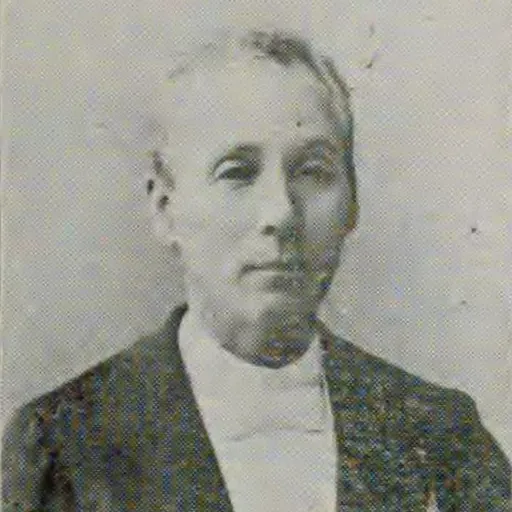
About Namikawa Yasuyuki
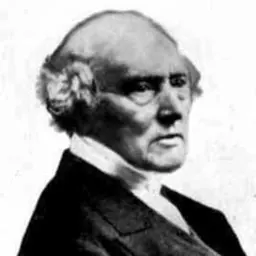
Lived 1845 – 1927 (aged 81). Namikawa Yasuyuki was a Japanese engineer, enameler and artist.
Namikawa Yasuyuki (1845–1927) — original family name Takaoka — was a Japanese cloisonné artist. His work was highly sought after in his own lifetime and is held in several collections today. He and Namikawa Sōsuke (no relation) were the most famous cloisonné artists of the 1890 to 1910 period, known as the "Golden age" of Japanese enamels. From 1875 to 1915, he won prizes at 51 exhibitions, including at world's fairs and at Japan's National Industrial Exhibition. For his work he was appointed an Imperial Household Artist in 1896. He gave tours of his workshop; one visitor was the English writer Rudyard Kipling. These artists were given a yearly stipend and were commissioned by the Imperial family to make presentation wares as gifts for foreign dignitaries. After the Meiji era, foreign demand for Japanese art tailed off. Namikawa Yasuyuki retired in 1919 He used intricate wire work and is known for attention to detail.
Judges at Japan's fourth National Industrial Exhibition in 1895 remarked on Namikawa's change of stylistic approach when awarding him first prize: "ere flowers of the four seasons, with birds of exquisite coloring, are set on to a black background color, forming a picture far beyond a mere pattern. But he seems still to adhere to the traditional methods of depiction, not attempting to imitate brushwork as do some other persons. He places great emphasis on fine wirework and on a flawless surface with no pitting or bubbles, achieved through painstaking study of glazing and firing."
At the National Industrial Exhibition of 1881, Namikawa was awarded second prize for a copper vase "of elegant shape with opaque and transparent colors and complicated wire-work, with no trace of cracks." He exhibited at the Louisiana Purchase Exhibition of 1904, winning a gold prize.
Collections Many of his works are in collections today such as the Ashmolean Museum, the Victoria and Albert Museum, the Los Angeles County Museum of Art and Khalili Collection of Japanese Art. The Namikawa Cloisonne Museum of Kyoto (ja) and Kiyomizu Sannenzaka Museum (ja) in Higashiyama-ku, Kyoto, exhibits a range of his items.
The most highly acclaimed and famous of his works is the 1899 Vase with Birds and Flowers of the Four Seasons (四季花鳥図花瓶), which is owned by the Museum of the Imperial Collections. It was exhibited at the Exposition Universelle held in Paris in 1900 and received a gold prize. In 2025, it was designated as an Important Cultural Property.
Gallery
Don’t just read it —
keep it.
Full-length biographies made to live with: read them, listen on the way to work, watch them tonight.
- E-book
- Audio
- Video
Instant download · yours to keep · every purchase keeps this site free
Important facts
People in Namikawa Yasuyuki's life
Named in this biography and alive at the same time


Related people
Same field, nearest in time


Contemporaries
People whose lives overlapped Namikawa Yasuyuki's


Frequently asked questions
Who was Namikawa Yasuyuki?
Japanese cloisonné artist
When was Namikawa Yasuyuki born?
Namikawa Yasuyuki was born on 1 October 1845.
When did Namikawa Yasuyuki die?
Namikawa Yasuyuki died on 24 May 1927.
What was Namikawa Yasuyuki's occupation?
Namikawa Yasuyuki was an engineer, enameler and artist.
What nationality was Namikawa Yasuyuki?
Namikawa Yasuyuki was Japanese.
Sources & further reading
· Wikipedia: Namikawa Yasuyuki
Cite this page
APA: Biography.guide. (2026). Namikawa Yasuyuki. https://biography.guide/namikawa-yasuyuki/
MLA: "Namikawa Yasuyuki." Biography.guide, https://biography.guide/namikawa-yasuyuki/.
Chicago: "Namikawa Yasuyuki." Biography.guide. https://biography.guide/namikawa-yasuyuki/.
Data last updated: 2026-09-20 · Spot an error? Report a correction.
Portrait: Wikimedia Commons · author & licence
Page generated 2026-09-27 04:58 UTC