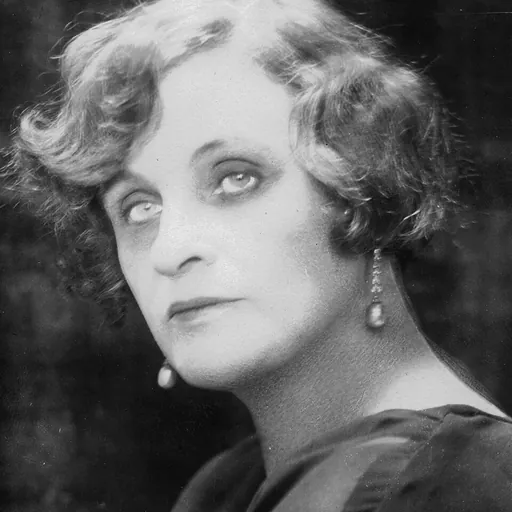
About Nadezhda Teffi
Lived 1872 – 1952 (aged 80). Nadezhda Teffi was a Russian and French writer, poet, translator, memoirist, playwright and satirist.
Nadezhda Alexandrovna Teffi (; – 6 October 1952) was a Russian humorist writer. Together with Arkady Averchenko, she was one of the prominent authors of the magazine Novyi Satirikon. Her style is distinguished by two 'faces' of writing- the serious and the satirical, which she alternated between and often fused together to create a unique output of personal and political commentaries. Teffi's gift for humour was considered anomalous for a woman of her time, particularly due to well-known thinkers such as Henri Bergson and Arthur Schopenhauer who had declared that women were not capable of a sense of humour. Teffi would prove such thinkers wrong by skyrocketing to fame throughout Russia with her satirical writings, so much so that she had candies and perfume named after her. Her year of birth is variously reported in the range 1871–1876. Her father, Alexander Vladimirovich Lokhvitsky, a lawyer and scholar, was prominent in Saint Petersburg society. Her mother, Varvara Alexandrovna Goyer, was of French descent, a lover of poetry, and familiar with Russian and European literature. Teffi was first introduced to literature when, as a young girl, she read Childhood and Boyhood by Leo Tolstoy, and the fiction of Alexander Pushkin. All of her siblings wrote poetry.
In an answer to a questionnaire given to writers in 1911, Teffi said the following about her early literary work: In 1918 she left St Petersburg, and on the pretext of a theatrical tour, travelled with a group of actors across Russia and Ukraine to Odessa, eventually reaching Istanbul. In 1920, she settled in Paris and began publishing her works in the Russian newspapers there. the first such work in any language.
Revolutionary activities Following the Russian Revolution of 1905, and with a mounting spirit of rebellion in Russia, Teffi was persuaded to put her literary talents toward a revolutionary cause. She was introduced by a friend to prominent members of the Bolshevik party, including Lev Kamenev, Alexander Bogdanov, and Alexandra Kollontai. She published her poem The Banner of Freedom in the Geneva Bolshevik Newspaper Vpered ("Forward") in March of 1905. The poem is written in the voice of “worker bees” – lower class seamstresses whose hard work provides the wealthiest of society with their luxurious clothes. In the poem, the bees symbolically describe the “bloody banner of freedom” that is crafted out of their hard work and misery as they sew red strips of silk together for their employers. Natalia Starostina argues that this phase of Teffi's writing is characterized by an overly-nostalgic and idealized depiction of pre-revolutionary tsarist Russia, the same government which she had formerly critiqued in her writing, thus contributing to the myth of the "Belle-Epoque" in Russian society. She states, "Russian émigré nostalgia became interwoven with mythmaking and helped the writers to reinvent themselves and to rewrite the history of their lives and their countries, either as a tragedy or a tragicomedy, or as a romantic tale.
English translations A Modest Talent and Diamond Dust (one-act plays), and Talent (story), from A Russian Cultural Revival, University of Tennessee Press, 1981. All About Love (story collection), Ardis Publishers, 1985. The Woman Question (one-act play) and Walled Up (story), from An Anthology of Russian Women's Writing, Oxford, 1994. Time (story), from The Portable Twentieth Century Reader, Penguin Classics, 2003. Love and A Family Journey (stories), from Russian Stories from Pushkin to Buida, Penguin Classics, 2005. When the Crayfish Whistled: A Christmas Horror, A Little Fairy Tale, Baba Yaga (text of a picture book), The Dog, and Baba Yaga (essay), from Russian Magic Tales from Pushkin to Platonov, Penguin Classics, 2012. Subtly Worded (stories), Pushkin Press, 2014; translated by Robert and Elizabeth Chandler, Anne-Marie Jackson and others. Tolstoy, Rasputin, Others, and Me: The best of Teffi (story collection), New York Review Books, 2016: published simultaneously in the UK by Pushkin Press as Rasputin and Other Ironies; translated by Robert and Elizabeth Chandler, Anne-Marie Jackson and others.. Memories: From Moscow to the Black Sea (memoir of 1918–20 journey to exile), New York Review Books, 2016: published simultaneously in the United Kingdom by Pushkin Press; translated by Robert and Elizabeth Chandler, Anne-Marie Jackson, Irina Steinberg and others. Other Worlds: Peasants, Pilgrims, Spirits, Saints (story collection), New York Review Books, 2021: published simultaneously in the UK by Pushkin Press (August 2021); translated by Robert and Elizabeth Chandler, Anne-Marie Jackson and others.
German translations Teffy alias Nadeshda Lochwizkaja: Champagner aus Teetassen : meine letzten Tage in Russland, Aus dem Russ. von Ganna-Maria Braungardt, Berlin : Aufbau, 2014,
Don’t just read it —
keep it.
Full-length biographies made to live with: read them, listen on the way to work, watch them tonight.
- E-book
- Audio
- Video
Instant download · yours to keep · every purchase keeps this site free
Important facts
People in Nadezhda Teffi's life
Named in this biography and alive at the same time
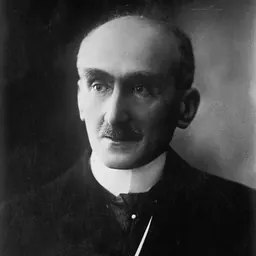
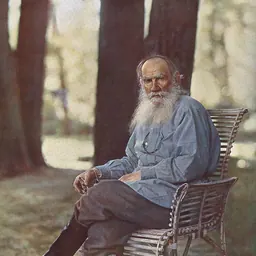

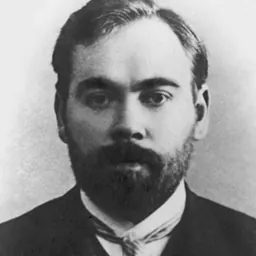
Related people
Same field, nearest in time




Contemporaries
People whose lives overlapped Nadezhda Teffi's



Frequently asked questions
Who was Nadezhda Teffi?
Russian writer (1872–1952)
When was Nadezhda Teffi born?
Nadezhda Teffi was born on 9 May 1872 in Volhynian Governorate.
When did Nadezhda Teffi die?
Nadezhda Teffi died on 6 October 1952 in Paris.
What was Nadezhda Teffi's occupation?
Nadezhda Teffi was a writer, poet, translator, memoirist, playwright and satirist.
What nationality was Nadezhda Teffi?
Nadezhda Teffi was Russian and French.
Sources & further reading
Cite this page
APA: Biography.guide. (2026). Nadezhda Teffi. https://biography.guide/nadezhda-teffi/
MLA: "Nadezhda Teffi." Biography.guide, https://biography.guide/nadezhda-teffi/.
Chicago: "Nadezhda Teffi." Biography.guide. https://biography.guide/nadezhda-teffi/.
Data last updated: 2026-09-23 · Spot an error? Report a correction.
Portrait: Wikimedia Commons · author & licence
Page generated 2026-09-27 05:07 UTC