
About Nadezhda Rimskaya-Korsakova
Lived 1848 – 1919 (aged 70). Nadezhda Rimskaya-Korsakova was a Russian composer, pianist, editor and music arranger.
Nadezhda Nikolayevna Rimskaya-Korsakova (; ; May 24, 1919) was a Russian pianist and composer. Her husband was the composer Nikolai Rimsky-Korsakov.
Life
Early years Born Nadezhda Nikolayevna Purgold in St. Petersburg, she was the youngest of three daughters and the great-granddaughter of the 18th century jurist Johann Purgold. She started playing the piano at age nine, continuing her piano studies at the St. Petersburg Conservatory with Anton Gerke. She also studied music theory at the conservatory with Nikolai Zaremba and, later, composition and orchestration with Rimsky-Korsakov but did not graduate. Mussorgsky, who was fond of both Nadezhda and her sister Alexandra and would become close to both, called Nadezhda "our darling orchestra." She also played at gatherings in her home works of Mily Balakirev and of other members of "The Five." and Boris Godunov, plus Nikolai Rimsky-Korsakov's The Maid of Pskov.
Marriage
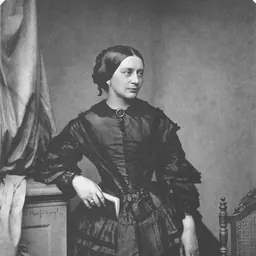
She met Rimsky-Korsakov at Dargomyzhsky's home in the spring of 1868. Not long after their first meeting he wrote a song which he dedicated to her. He also started visiting her frequently, both at the Purgold home in St. Petersburg and at the family's summer residence in Lyesnov. She found in him an abundance of warmth and gentleness. He proposed to her in December 1871, and they married in July 1872. Mussorgsky was Rimsky-Korsakov's best man. The Rimsky-Korsakovs would eventually have seven children. Nadezhda was to become a musical as well as domestic partner with her husband, much as Clara Schumann had been with her own husband Robert. Although she gradually gave up composition after her marriage, she had a considerable influence on the creation of his first three operas. She travelled with her husband, attended rehearsals and proofread and arranged compositions by him and others.
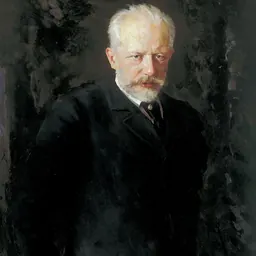
Her enthusiasm for Nikolai Gogol's work became reflected in both her husband's compositions and those of his friends. On the day of their betrothal, she and Rimsky-Korsakov read Gogol's short story "May Night" together. Afterwards, she told him that he should write an opera based on it. At one of these soirees, Pyotr Ilyich Tchaikovsky played the finale of his Little Russian Symphony. After hearing it, she begged the composer in tears to let her arrange it for piano duet.
Outspokenness
Like her husband in his later years, Nadezhda's musical tastes became less progressive; she rated her son-in-law Maximilian Steinberg a greater composer than Igor Stravinsky. She could also be noticeably tactless about such matters. Stravinsky later wrote about one such incident that occurred at Rimsky-Korsakov's funeral:
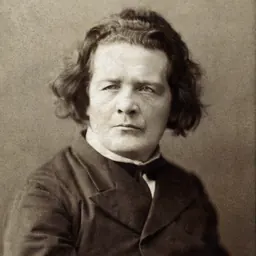
This was not the only time she was not afraid to speak her mind. In matters regarding her husband she was fiercely loyal. When Anton Rubinstein reassumed the directorship of the St. Petersburg Conservatory in 1887 and started replacing Russian professors with foreign ones, Stasov was outraged at the thought of Rimsky-Korsakov kowtowing to "the Great Ruler." Stasov told Balakirev that he had written to Rimsky-Korsakov "that their relations with the Conservatory and Rubinstein is Unitarianism (and, on the part of Cui, unadulterated apostasy)...."
When Stasov's letter arrived, Rimsky-Korsakov was hard at work completing Borodin's opera Prince Igor. Nadezhda took it upon herself to answer Stasov:
Upon Rimsky-Korsakov's death in 1908, Nadezhda became the executrix of his literary and musical estates. She died of smallpox in St. Petersburg (by then renamed Petrograd) at age 70.
Original works Autograph manuscripts survive of a symphonic tableau after Gogol, "The Bewitched Place" (Zakoldovannoye mesto), an opera Midsummer Night in piano-vocal score, piano pieces and songs. She completed "The Bewitched Place" a week or two before her marriage, orchestrating it the following year. She stopped composing after her marriage to Rimsky-Korsakov. This may have been partly from unfavorable comparison of her works to her husband's, but likely also due to family responsibilities.
Don’t just read it —
keep it.
Full-length biographies made to live with: read them, listen on the way to work, watch them tonight.
- E-book
- Audio
- Video
Instant download · yours to keep · every purchase keeps this site free
Important facts
People in Nadezhda Rimskaya-Korsakova's life
Named in this biography and alive at the same time



Related people
Same field, nearest in time



Contemporaries
People whose lives overlapped Nadezhda Rimskaya-Korsakova's



Frequently asked questions
Who was Nadezhda Rimskaya-Korsakova?
Russian musician (1848–1919)
When was Nadezhda Rimskaya-Korsakova born?
Nadezhda Rimskaya-Korsakova was born on 31 October 1848 in Saint Petersburg.
When did Nadezhda Rimskaya-Korsakova die?
Nadezhda Rimskaya-Korsakova died on 24 May 1919 in Saint Petersburg.
What was Nadezhda Rimskaya-Korsakova's occupation?
Nadezhda Rimskaya-Korsakova was a composer, pianist, editor and music arranger.
What nationality was Nadezhda Rimskaya-Korsakova?
Nadezhda Rimskaya-Korsakova was Russian.
Sources & further reading
· Wikipedia: Nadezhda Rimskaya-Korsakova
· DBpedia: Nadezhda Rimskaya-Korsakova
Cite this page
APA: Biography.guide. (2026). Nadezhda Rimskaya-Korsakova. https://biography.guide/nadezhda-rimskaya-korsakova/
MLA: "Nadezhda Rimskaya-Korsakova." Biography.guide, https://biography.guide/nadezhda-rimskaya-korsakova/.
Chicago: "Nadezhda Rimskaya-Korsakova." Biography.guide. https://biography.guide/nadezhda-rimskaya-korsakova/.
Data last updated: 2026-09-20 · Spot an error? Report a correction.
Page generated 2026-09-27 05:21 UTC