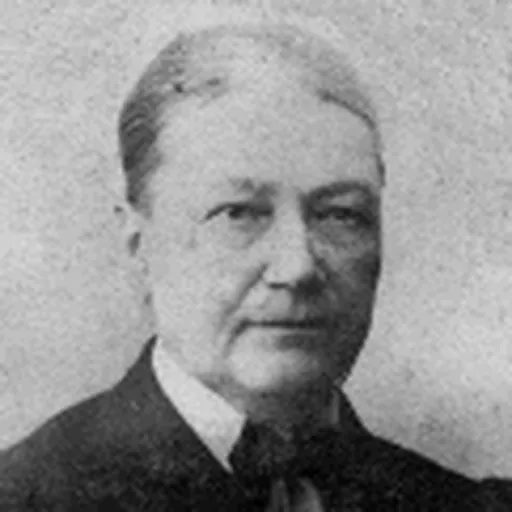
About Nadezhda Bantle
Lived 1851 – 1934 (aged 82). Nadezhda Bantle was a Russian surgeon and medical administrator.
Nadezhda Antonovna Bantle (; 1851–1934) was a Belarusian physician. After graduating from the Imperial Medical and Surgical Academy, she worked as a doctor in Novgorod and Saratov, as well as in Kherson during the Russo-Turkish War. During the late 1870s, Bantle began collaborating with the Narodniks, for which she was arrested and exiled to the Vologda province of the Russian North, where she became the region's first woman doctor. In the small village of Nikolskoye, she took over the local hospital and oversaw the establishment of a smallpox vaccine program and a maternity ward, making it the most advanced hospital in the province. For her efforts, Bantle was awarded the title of by the Soviet government. After 48 years of working in Nikolskoye, she returned to Belarus, where she died from old age.
Biography Nadezhda Antonovna Bantle was born on 10 November 1851 in the Mogilev Governorate of the Russian Empire (modern-day Belarus). She was the daughter of a pharmacist. She enrolled in the Bestuzhev Courses, graduating from the Imperial Medical and Surgical Academy in Saint Petersburg. She worked as a doctor in the provinces of Novgorod and Saratov. During the Russo-Turkish War, Bantle also worked as a combat medic. From her field hospital in Mykolaiv, she treated more than 1,000 wounded soldiers in Kherson province.
By the time she graduated, she was already collaborating with the Narodniks. On 15 August 1876, Grigori Machtet directed Bantle, as well as and Augustina Sinkevich, to remove any items that might compromise them from the flat of Yevgeny Bartoshevich. Bantle was arrested two days later and imprisoned in the Peter and Paul Fortress, but was released on 9 October 1876. She was later charged with communicating with people imprisoned in Saint Petersburg's in order to secure their release. On 2 October 1877, the case against her was dismissed. She was eventually exiled to the Russian North due to her continued collaboration with the Narodniks.
From 1885 to 1933, Bantle headed the hospital in the small village of Nikolskoye in the Vologda province. and Bantle was the first woman doctor in the history of Vologda province. In 1933, she left Nikolskoye at the age of 79, after 48 years of work at the local hospital. She returned to Belarus and settled in Minsk with her daughter. She died on 30 October 1934 and was buried in Minsk's Military Cemetery.
Legacy Bantle is remembered fondly in Nikolskoye, where a memorial stone was erected in her memory. The hospital was also renamed after her, with Mikhail Vasilyevich Pulyaev taking over its operations. She was also the subject of numerous articles in Soviet newspapers, such as the Izvestia.
Don’t just read it —
keep it.
Full-length biographies made to live with: read them, listen on the way to work, watch them tonight.
- E-book
- Audio
- Video
Instant download · yours to keep · every purchase keeps this site free
Important facts
People in Nadezhda Bantle's life
Named in this biography and alive at the same time
Related people
Same field, nearest in time

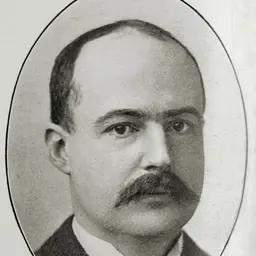
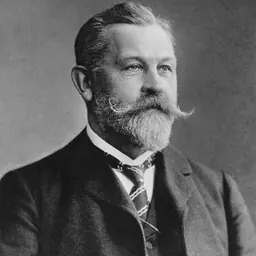
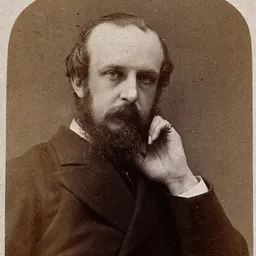
Contemporaries
People whose lives overlapped Nadezhda Bantle's


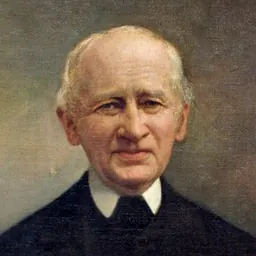

Frequently asked questions
Who was Nadezhda Bantle?
Belarusian physician (1851-1934)
When was Nadezhda Bantle born?
Nadezhda Bantle was born on 10 November 1851 in Rahachow.
When did Nadezhda Bantle die?
Nadezhda Bantle died on 30 October 1934 in Minsk.
What was Nadezhda Bantle's occupation?
Nadezhda Bantle was a surgeon and medical administrator.
What nationality was Nadezhda Bantle?
Nadezhda Bantle was Russian.
Sources & further reading
Cite this page
APA: Biography.guide. (2026). Nadezhda Bantle. https://biography.guide/nadezhda-bantle/
MLA: "Nadezhda Bantle." Biography.guide, https://biography.guide/nadezhda-bantle/.
Chicago: "Nadezhda Bantle." Biography.guide. https://biography.guide/nadezhda-bantle/.
Data last updated: 2026-09-22 · Spot an error? Report a correction.
Portrait: Wikimedia Commons · author & licence
Page generated 2026-09-27 05:03 UTC