
About Myra Juliet Farrell
Lived 1878 – 1957 (aged 79). Myra Juliet Farrell was an Australian inventor and artist.
Myra Juliet Farrell (also Myra Juliet Welsh and Myra Juliet Taylor; 25 February 1878 – 8 March 1957) was an Irish /Australian visionary, inventor and artist. Born in County Clare, Ireland, she migrated to Australia as a child, growing up in Broken Hill, travelled widely and settled in Mosman, Sydney. She held more than two dozen patents ranging from a military barricade to a press stud that could be applied without stitching. . This aided her in having so many revolutionary inventions that are still in use today.
One of her inventions was a corset without any hard stays. Many women in the 1800s and 1900s found corsets fashionable and wore them often, however, they began demanding change as they knew these corsets could cause damage to their bodies due to their tight fit and hard material . Farrell knew about these health risks and wanted to fix this issue, so in 1911, she received an Australian patent for a new form of a corset that was equally as supportive but was washable and ‘boneless’. She sold these corsets around the world. Myra Farell originally created it to support women with scoliosis, but the corset grew in popularity amongst women who wanted to wear it for fashion . While corsets have changed in design over time, she revolutionized the way women dressed forever by providing comfort and reducing the health hazards posed by corset garments.
Farell had several inventions. In 1905, Miss Myra Welsh obtained a patent for her initial creation, which was a clever mechanical tracking device. This innovative machine had the ability to replicate sewing patterns of a fixed size from books directly onto fabric, while also allowing for adjustments in size. As a result, seamstresses and tailors could now produce custom-fit garments more effectively, ensuring they remained true to the original design. Another of her inventions aided in Australia's war effort. This was her “stitch-less button”, known as the press-stud today, and her “stitch-less hook and eye.” This gave soldiers the ability to rapidly take on and off the now pull-apart fronts of their khakis. She also created a Defence Fence, which had survived the lengthy assessment process, from many culled entries, following the department's shout-out for ideas .
Myra's Background
Myra Farrell was born in Ireland on 25 February 1878 and was registered as Maria Julia, the third of six children of Marcus Frederick Welsh and Harriett Curtis (née Dove) of Scragh House, County Clare. Farrell's family were Protestant, descendants of the Reverend George, chaplain to William III of England. Many of her family were clergy, or military. They were major land-owners in County Clare, and many served as magistrates and as High Sheriff of Clare. Farrell's father travelled to New Zealand where he took part in the New Zealand Wars and married Harriett Curtis Dove, the daughter of an engineer. Marcus and Harriett established a school at the new town of Silverton and for a time had the author Mary Gilmore as their assistant. They then moved into Broken Hill and established St Peter's School, where Myra was educated. Harriett Welsh was particularly esteemed as a music teacher. Farrell's brothers remained in Broken Hill, while her sisters married and moved to Sydney and Perth.
Inventions
Method of working Farrell's earliest ideas for practical inventions came to her as a child when at the age of ten she came up with the idea of a self-locking safety pin. Her inventions included a number of practical household devices including a folding clothesline for use in flats.
Her physical aids included a boneless corset for sufferers of scoliosis, a brace for hernias and a device that effected a facelift by simple mechanical means.
Inventions for rural industry included an automated fruit picker and packer, and a device for sampling and weighing wheat. and the folding pram hood. Subsequently, the product was marketed as "Membrosus". Farrell also had great success with an ointment, known as "Myra's ointment", with which she successfully treated a woman who contacted her, suffering from a rare fungal disease of the skin.
Military aids During World War I Farrell worked on the invention of a barricade that could repel ammunition and lessen the impact of shells. After the death of her first husband in Adelaide, Farrell lived at various times in Western Australia and at Bondi in Sydney, spending her later life in Mosman.
Don’t just read it —
keep it.
Full-length biographies made to live with: read them, listen on the way to work, watch them tonight.
- E-book
- Audio
- Video
Instant download · yours to keep · every purchase keeps this site free
Important facts
People in Myra Juliet Farrell's life
Named in this biography and alive at the same time
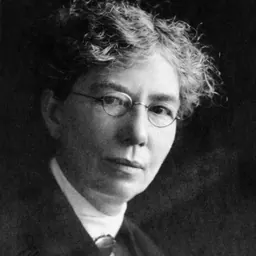
Related people
Same field, nearest in time


Contemporaries
People whose lives overlapped Myra Juliet Farrell's





Frequently asked questions
Who was Myra Juliet Farrell?
Australian visionary, inventor and artist (1878-1957)
When was Myra Juliet Farrell born?
Myra Juliet Farrell was born on 25 February 1878 in County Clare.
When did Myra Juliet Farrell die?
Myra Juliet Farrell died on 8 March 1957 in Mosman.
What was Myra Juliet Farrell's occupation?
Myra Juliet Farrell was an inventor and artist.
What nationality was Myra Juliet Farrell?
Myra Juliet Farrell was Australian.
Sources & further reading
· Wikipedia: Myra Juliet Farrell
· DBpedia: Myra Juliet Farrell
Cite this page
APA: Biography.guide. (2026). Myra Juliet Farrell. https://biography.guide/myra-juliet-farrell/
MLA: "Myra Juliet Farrell." Biography.guide, https://biography.guide/myra-juliet-farrell/.
Chicago: "Myra Juliet Farrell." Biography.guide. https://biography.guide/myra-juliet-farrell/.
Data last updated: 2026-09-22 · Spot an error? Report a correction.
Page generated 2026-09-27 05:09 UTC