
About Mustafa Shokay
Lived 1890 – 1941 (aged 51). Mustafa Shokay was a Russian and Kazakh politician and opinion journalist.
Mustafa bek Shokay (25 December 1890 – 27 December 1941) was a Kazakh social and political activist and ideologue of Turkestan nationalism. From 1921, he lived in exile in France.
Early life Mustafa Shokay was born into a Muslim Kazakh family of aristocrats in the Kazakh town of Ak-Meshit (modern Kyzylorda, Kazakhstan). During this period, the status of one's family was evaluated by the number of cattle they possessed, meaning that Mustafa's family was wealthy in their village due to the high number of cattle in their possession. Mustafa's paternal grandfather was the Datkha, which in Persian means – "a wish, request, Justice". The Datkha was equal to a Sultan and was higher in title than the Bey. Mustafa's grandfather was elected as Prime Minister – Datkha of Khiva's khan. The Datkha was subordinate only to the Khan and was often tasked with helping him manage the Khanate. The mother of Mustafa was Bakty, an intellectual in her own right and a descendant of the famous Batu Khan. Bakty was well-educated, in Kazakh, Arabic, and Persian. Mustafa and his family were from the Middle Juz (horde) of the Kypchak’s tribe, Torgai clan, Shashty popliteal, Boshay knee, Janay popliteal.
Before the October Revolution in 1917 Shokay's Family and about 30 of his relatives lived in one village, which was located 5 kilometers from the station of Sulu-Tube. They lived in nice yurts, (nomad's houses). Mustafa's father had 2 wives, with Bakty being his second one. Bakty gave birth to two sisters and three brothers in addition to him. Most of the other children in the Shokay family are undocumented, but sources do mention that Mustafa had an older brother named Nurtaza. Mustafa was the youngest child in their family and was 15 years younger than his Sadyk brothers.
Mustafa's mother taught her children to read and write in childhood, helping them learn Kazakh, Arabic, and Persian just as she did. When he was 5 years old, Mustafa learned to play on the dombra. From childhood he was musically gifted, and had a great ear for music. In their village was a local mullah, who taught him to read the Quran and assisted Mustafa in understanding the Islamic Holy Book. Mustafa set himself apart from other students by perfectly memorizing all of the sura from the Quran by heart.
At the age of 7, Mustafa's father took him to the urbanized part of Ak-Meshit, where he would study in a Russian school and slowly assimilate into Russian society. While his father was in favor of him receiving a higher education and at least partially assimilating, Mustafa's mother feared that he would forget his Muslim Kazakh roots and forever be Russianized. Moreover, the mullah of Ak-Meshit added to all of this by claiming that the Russians would crucify him should Mustafa refuse to give up Islam. Mustafa was initially hesitant to go to the Russian school, but his father was able to effectively persuade him into furthering his education there.
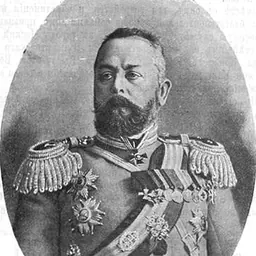
Mustafa started his education in the Russian school, but he became very sick and soon left his studies. In 1902 he was admitted to a Tashkent gymnasium and in 1910 he graduated with the school's gold medal. General Samsonov (Alexander Samsonov (1859–1914), a Russian military commander during World War I) was against Mustafa receiving the gold medal and insisted that an ethnic Russian student should win. The gold was then handed to Zeprometov, a Russian student in the program. However, the director of the Tashkent gymnasium disagreed and even Zeprometov himself said that Shokay should have gotten the gold medal. After a brief conflict, the medal was given back to Mustafa.
The intentions of Samsonov caused outrage not only within the ranks of the local youth, but also from the Russians. All of the professors and Russian intellectuals were ready to strike. That strike was provoked by the administration, as a result of the unfair treatment of students in favor of officials. Trying to smooth over the scandal, Samsonov approached Mustafa with a proposal to become an interpreter in his administration, but he refused Samsonov's request and went to St. Petersburg to enter the university's law faculty (1910–1917).
In 1912 Mustafa's father died and the local villagers asked him to return home at the request of his family to replace the post of his father – a judge. This event caused Mustafa to once again put his education on hold. He returned to complete the final stage of his education one year later in St. Petersburg. Towards the end of his education, the Stolypin agrarian reform in Kazakhstan occurred, and many Kazakhs were resettled as peasants by the Russian imperial administration. Mustafa moved back to Ak-Meshit, where his family remained as one of the few who did not suffer any dramatic effects of the Stolypin agrarian reform.
Activities in St. Petersburg Document from St. Petersburg Imperial University on the admission of Mustafa Shokay to the university's faculty of law During study in St. Petersburg, Mustafa was trying to protect not only the interest of his countryman, but the whole Kazakh nation. However, on 3 July 1907, Tsar Nikolai II issued a decree depriving the indigenous peoples of Siberia and Central Asia of their electoral rights, meaning they ended up with little representation in the State Duma of Russia. However, the Kazakh politicians and intellectuals continued to fight for the interests of the people. Working in the Duma, Shokai met with prominent Muslim political leaders of Russia and became friends with Ahmad Zeki Velidi, the future chairman of the Bashkir autonomy.
In the midst of heavy fighting during the First World War, on 25 June 1916, Tsar Nicholas II issued a decree "On the requisition of foreigners", attracting the indigenous population of Turkestan and the steppe region in age from 19 to 43 years to rear work – digging trenches, despite the fact that the Muslims were exempted from military service due to the deprivation of electoral rights. The decree came in the days of Ramadan and the height of the agricultural work, and caused widespread outrage among Kazakhs. A powerful uprising, led by Amankeldı İmanov, began in Turgay Oblast and soon spread throughout Kazakhstan.
There were protests against the decree in the State Duma. Shokay entered his commission as a secretary and translator of the Muslim faction. Subsequent performances of Kerensky in the Duma, who provided his analysis of the Turkestan uprising against the imperial government policies, brought him huge popularity throughout Russia. When he returned to Petrograd, Shokay prepared materials for his faction's speeches in the State Duma. However the State Duma was dissolved by Tsar Nicholas II, who then abdicated.
Personality Shokay was a practicing Muslim. During his education and subsequent career, he did not join a specific political party, identifying instead as a democrat. His political activities focused on the independence and future of his nation, and he was noted for his advocacy of peaceful political solutions. Shokay served as a member of the State Duma.
Shokay admired and highly valued Mustafa Kemal, a Turkish nationalist and the founder of the modern-day Republic of Turkey. Shokay considered that Turkestan needed a political reformer like Atatürk. Mustafa Shokay did not hold any hostile emotions toward bigots or to representatives of other nations. He loved to have discussions or argue with people who possessed different political opinions than him. In arguments he was calm and always respected his opponent's standpoint. He always took any inhumane acts to his heart. He was able to find the way to the heart of the people through his honesty and ability to empathize with others. Sometimes he became heated, defending his position, but always refrained from personal attacks. Mustafa opposed narrow-minded nationalism. He defended his position of establishing a union of Turkestan's people. However, despite the Russian nationalists recognition Mustafa's position, they refused to act in the interests of Turkestan's people or other non-Russian nations. These principles of Russian democracy alienated Mustafa Shokay, leading to him severing all ties with the Russian periodical press in 1923 (mass-media).
So on 11 February 1918 the Bolsheviks sent troops to Kokand. Kokand was completely destroyed, as the Bolshevik troops were armed with machine guns and cannons, which were not available in Kokand, Turkestan. Shokay fled through Fergana to Tashkent. A bounty of 1000 rubbles was placed on his head. At that time Mustafa Shokay was the youngest politician, who advocated for the Turkestan Autonomy, but he was against separatism. When he was in hiding, Mustafa met his old friend Maria Gorina, whom he married in April 1918, After this event Shokay said:” We called the Soviet power then established in Tashkent the «enemy of our people». I have not changed my view on the matter in the last ten years.” After the events in Transcaucasia Mustafa Shokay and his wife Maria Shokay emigrated to Istanbul, Turkey. Shokay in Istanbul wrote articles in English for “The Times” and for publications like “Şafak”, as well as for “Yeni Dünya”- “New World”. Then he found that Alexander Kerensky had also emigrated to Paris from Russia. Kerensky helped Shokay to get a French visa and in the summer of 1921 Mustafa and Maria moved to Paris, where he wrote articles for the newspaper of Kerensky “Days” and Milyukova's “Last News”. In 1923 Mustafa and Maria Shokay moved to Nogent-sur-Marne, where he spoke to the European public on "The policy of Russia and Turkestan National Movement".This period was a dark time for Mustafa and Maria Shokay. Mustafa Shokay was trying to write books, newspapers, magazines; held meetings and speech to make the world aware of the problems in Turkestan and Central Asia. These works were published in Istanbul, Paris, Berlin, London, Warsaw, and covered Central Asia, theoretical studies, history and politics. Mustafa Shokay created a newspaper in Istanbul: in 1927 which existed until 1931. In 1929 he settled in Berlin, where he became editor-in-chief of the local edition of the magazine "Yash (Young) Turkestan". The magazine lasted until the outbreak of World War II in 1939, releasing 117 editions. Mustafa Shokay spoke foreign languages such as English, French, Russian, German, Turkish, and Arabic.
Unsuccessful collaboration with Nazi Germany On the day of Operation Barbarossa, the attack of the Axis powers on the Soviet Union on 22 June 1941, the German occupying troops in Paris arrested all the well-known emigrants from the territories of the Soviet Union and imprisoned them in the castle of Compiègne (Château de Compiègne), including Shokay.
After three weeks, Shokay was taken to Berlin and after two weeks offered to lead the Turkestan Legion. This unit was meant to include Soviet military prisoners of Turkic descent held in German prisoner of war camps. The Nazis hoped they would benefit from Mustafa Shokay's authority. However, the Legion had been partially replenished by elite German troops which had combat experience against Soviet troops on the Eastern Front, while Shokay was required to familiarize Turkic prisoners with circumstances of their fellow countrymen in the camps. He was shocked by the inhuman conditions of Asians kept behind barbed wire.
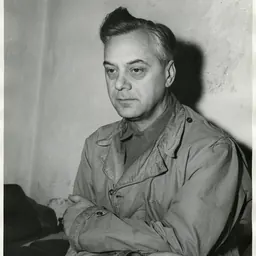
Detailing the journey of Mustafa's life, he entertained the possibility of creating a union of Muslim states with the help of Germany. To achieve this goal, it would be necessary to organize Muslim-Soviet prisoners of war in order to overthrow Soviet governments in Kazakhstan and Central Asia. Mustafa Shokay agreed to become the head of this movement. The collaboration made known to the ideological leader of the National Socialist party on matters of ideology and foreign policy, the Minister for the "Eastern Territories" General SS Alfred Rosenberg.
In order to give some relief and grasping the chance to save prisoners' lives, Mustafa Shokay compromised with the German authorities. He set his conditions: Create staff for the future of Turkestan state schools in Germany; Create military forces from fellow prisoners, which would be used only when approaching the borders of Turkestan.
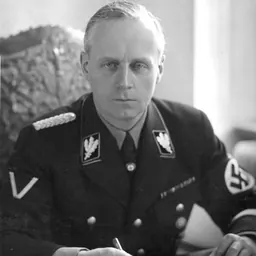
Mustafa Shokay wanted to receive some benefit from the collaboration with the Nazis. Unfortunately Adolf Hitler declined all his queries, because Hitler considered the Turkestan Legion as “cannon fodder”. Later Shokay wrote a letter to the Ministry of Foreign Affairs Gruppenführer Joachim von Ribbentrop: “Seeing how representatives of the nation, who raised such geniuses as Goethe, Feuerbach, Bach, Beethoven, Schopenhauer, treat prisoners of war ... I can not accept the offer to lead the ... Turkestan Legion and refuse further cooperation. All the consequences of my decision, I realize.” 2001 – Kazakhstan has translated and published the memoirs of Maria Shokay: "I am writing to you from Nozhan" (Memoirs, Letters, Documents, 1958), Almaty, "Kynar" 2001 – In the Nogent-sur-Marne, in the park at the La Fontaine house number 7, where he lived 18 years, Mustafa Shokai, a monument-stele 2003 – At the "Kazakhfilm" came dock. Film "Zar, or excommunication from the Motherland" (dir. – Makhmetova C. and O. Rymzhanov, the scenario B. Sadykova). 2006 – His name streets in Kzylorda and Almaty. 2007 – Magazine "Continent" (Almaty) has published an article B. Sadykova "In Memory of Turkestan Jadid (Mustafa Chokai)" 2008 – In the Paris suburb of Nogent-sur-Marne memorial plaque in memory of Shokai 2008 – Went film "Mustafa Shokai", dir. S. Narymbetov, "Kazakhfilm" in Sec. Starring Aziz Beishenaliev and Karina Abdullina 2011 – Went document. film "Дорогами Мустафы Шокая" (directed by K. Begmanov)
Don’t just read it —
keep it.
Full-length biographies made to live with: read them, listen on the way to work, watch them tonight.
- E-book
- Audio
- Video
Instant download · yours to keep · every purchase keeps this site free
Important facts
more
Moustafa TchokayPeople in Mustafa Shokay's life
Named in this biography and alive at the same time

Related people
Same field, nearest in time





Contemporaries
People whose lives overlapped Mustafa Shokay's

Frequently asked questions
Who was Mustafa Shokay?
Kazakhstani politician (1890–1941)
When was Mustafa Shokay born?
Mustafa Shokay was born on 25 December 1890 in Kyzylorda.
When did Mustafa Shokay die?
Mustafa Shokay died on 27 December 1941 in Berlin.
What was Mustafa Shokay's occupation?
Mustafa Shokay was a politician and opinion journalist.
What nationality was Mustafa Shokay?
Mustafa Shokay was Russian and Kazakh.
Sources & further reading
Cite this page
APA: Biography.guide. (2026). Mustafa Shokay. https://biography.guide/mustafa-shokay/
MLA: "Mustafa Shokay." Biography.guide, https://biography.guide/mustafa-shokay/.
Chicago: "Mustafa Shokay." Biography.guide. https://biography.guide/mustafa-shokay/.
Data last updated: 2026-09-20 · Spot an error? Report a correction.
Page generated 2026-09-27 05:19 UTC