
About Murray Sidman
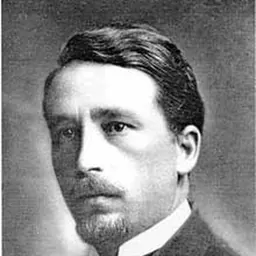
Lived 1923 – 2019 (aged 96). Murray Sidman was an American psychologist, known for Avoidant personality disorder, Behavior analysis and Stimulus Equivalence.
Murray Sidman (April 29, 1923 – May 18, 2019) was an American behavioral scientist, best known for Sidman Avoidance, also called "free-operant avoidance", in which an organism learns to avoid an aversive stimulus by engaging in a targeted response in the absence of stimuli indicating whether the aversive stimulus is forthcoming. Sidman's explanation of free-operant avoidance is an alternative to the Miller-Mowrer two-process theory of avoidance.
Methodology Methodologically, a "Sidman avoidance procedure" is an experiment in which the subject is periodically presented with an aversive stimulus, such as the introduction of carbon dioxide or an electric shock, unless they engage in a particular response, such as pulling a plunger, which delays the stimulus by a certain amount of time.
His work on methodology for behavioral psychologists is the standard textbook in its field.
Career Sidman took his PhD at Columbia in psychology from Columbia University 1952 under the advisership of William N. Schoenfeld. He worked at many research institutions, including Harvard Medical School, Johns Hopkins University Medical School, and the Walter Reed Army Institute of Research. He served as director of the Behavioral Sciences Department at the E.K. Shriver Center for Mental Retardation and Developmental Disabilities. Murray Sidman made significant contributions to the field of behavioral pharmacology through his groundbreaking research on the behavioral effects of drugs. His work focused on understanding how drugs can influence behavior and the underlying mechanisms involved. Sidman's research helped shed light on the behavioral principles that govern drug effects and addiction. Until his death in 2019, he was professor emeritus at Northeastern University. Dr. Sidman has held academic appointments at the University of São Paulo in Brasil, Keio University in Tokyo, Japan and the University of Canterbury in Christchurch, New Zealand.
Influence in the field Sidman pioneered research on stimulus equivalence, and made important contributions to the discipline of applied behavior analysis. He published three highly impactful books in the areas of applied behavior analysis and the experimental analysis of behavior.
Tactics of Scientific Research
"Tactics of Scientific Research" (1960)-Sidman's early work, focused on the methodology of scientific inquiry. This text explores the principles and practices of conducting rigorous scientific research and has been influential in shaping research approaches in various disciplines.
Coercion and Its Fallout
"Coercion and Its Fallout" (1989)-Perhaps Sidman's best-known book among scientists and thinkers outside of behavior analysis. In it, he examines the unintended consequences of using coercive tactics in attempts to control behavior. Sidman argues for a more humane and effective approach to behavior change, emphasizing positive reinforcement over punishment.
Equivalence Relations and Behavior: A Research Story
"Equivalence Relations and Behavior: A Research Story" (1994)-This book delves into Sidman's research on stimulus equivalence, a concept in behavior analysis that explores the emergence of complex behavioral relations between stimuli. "Equivalence Relations and Behavior" is a seminal work in this area, contributing to a deeper understanding of how individuals learn and generalize concepts.
Murray Sidman's work has had a lasting impact on the field of behavior analysis. His emphasis on empirical research, ethical considerations, and a scientific approach to understanding behavior has influenced generations of psychologists and behavior analysts.
Murray Sidman's books and research have left an indelible mark on the field of behavior analysis. His work continues to shape the way psychologists and behavior analysts approach the study of behavior and the development of interventions for individuals with diverse needs.
Dr. Sidman’s publications in peer-refereed journals number close to 100 and have defined much of our current understanding of stimulus control, stimulus equivalence, and avoidance behavior. His 1960 text, Tactics of Scientific Research, is considered the first primer on within- subject research methodology. It is a classic that is still used today. Other contributions have extended to important social problems. The second edition of his book Coercion and Its Fallout was published in 2000, and his treatment of “Terrorism as Behavior” was published in Behavior and Social Issues.
Sidman Avoidance Theory
Overview Developed by Murray Sidman in 1953, the Sidman Avoidance Theory is a fundamental concept in behavioral psychology. This theory provides insight into how organisms, including humans, learn to avoid negative consequences through specific behaviors. To call a relationship an equivalence relation, there are three features that must be demonstrated:
Reflexivity Reflexivity is a relationship between a stimulus and itself. Reflexivity is shown when an organism is trained A is equal to A, and subsequently emits responding indicating that A is equal to A.
Symmetry Symmetry is a relationship between two different stimuli that operates in both directions. Symmetry is shown if the organism emits behavior indicating that B is equal to A.
Transitivity Transitivity describes a relationship between two differing stimuli. An organism is taught A is equal to B, and B is equal to C. If the organism can then demonstrate that A is equal to C (an untrained relation), a transitive relation has been identified.
Don’t just read it —
keep it.
Full-length biographies made to live with: read them, listen on the way to work, watch them tonight.
- E-book
- Audio
- Video
Instant download · yours to keep · every purchase keeps this site free
Important facts
People in Murray Sidman's life
Named in this biography and alive at the same time

Related people
Same field, nearest in time





Contemporaries
People whose lives overlapped Murray Sidman's
Frequently asked questions
Who was Murray Sidman?
American psychologist
When was Murray Sidman born?
Murray Sidman was born on 29 April 1923.
When did Murray Sidman die?
Murray Sidman died on 18 May 2019.
What was Murray Sidman's occupation?
Murray Sidman was a psychologist.
What was Murray Sidman known for?
Murray Sidman was known for Avoidant personality disorder, Behavior analysis and Stimulus Equivalence.
What nationality was Murray Sidman?
Murray Sidman was American.
Sources & further reading
Cite this page
APA: Biography.guide. (2026). Murray Sidman. https://biography.guide/murray-sidman/
MLA: "Murray Sidman." Biography.guide, https://biography.guide/murray-sidman/.
Chicago: "Murray Sidman." Biography.guide. https://biography.guide/murray-sidman/.
Data last updated: 2026-09-20 · Spot an error? Report a correction.
Page generated 2026-09-27 05:15 UTC