
About Murasaki Shikibu
Lived 978 – 1014 (aged 35–36). Murasaki Shikibu was a Japanese lady-in-waiting, novelist, poet, writer, diarist and philosopher.
, The Fujiwara clan dominated court politics until the end of the 11th century through strategically marrying their daughters into the imperial family and the use of regencies. In the late 10th century and early 11th century, Fujiwara no Michinaga, the so-called Mido Kampaku, arranged his four daughters into marriages with emperors, giving him unprecedented power. The lower ranks of the nobility were typically posted away from court to undesirable positions in the provinces, exiled from the centralized power and court in Kyoto. the Collections of Thirty-six Poets and the (Tales of Yamato). Her great-grandfather and grandfather were both friendly with Ki no Tsurayuki, who became notable for popularizing Japanese-language verse. Her father, Fujiwara no Tametoki, attended the State Academy (Daigaku-ryō) and became a well-respected scholar of Chinese classics and poetry; his own verse was anthologized. He entered public service around 968 as a minor official and was given a governorship in 996, staying in service until about 1018. Murasaki's mother was descended from the same branch of northern Fujiwara as Tametoki. The couple had three children, a son and two daughters. Murasaki was unconventional because she lived in her father's household, most likely on Teramachi Street in Kyoto, with her younger brother Nobunori. Their mother died, perhaps in childbirth, when they were quite young. Murasaki had at least three half-siblings raised with their mothers; she was very close to one sister who died in her twenties.
Murasaki was born at a period when Japan was becoming more isolated, after missions to China had ended and a stronger national culture was emerging. In the 9th and 10th centuries, Japanese gradually became a written language through the development of , a syllabary based on abbreviations of Chinese characters. In Murasaki's lifetime, men continued to write formally in Chinese, but became the written language of intimacy and of noblewomen, setting the foundation for unique forms of Japanese literature.
Chinese was taught to Murasaki's brother as preparation for a career in government, and during her childhood, living in her father's household, she learned and became proficient in classical Chinese. With her brother she studied Chinese literature, and she probably also received instruction in more traditional subjects such as music, calligraphy and Japanese poetry. Murasaki was aware that others saw her as "pretentious, awkward, difficult to approach, prickly, too fond of her tales, haughty, prone to versifying, disdainful, cantankerous and scornful". Asian literature scholar Thomas Inge believes she had "a forceful personality that seldom won her friends."
In 996 when her father was posted to a four-year governorship in Echizen Province (modern Fukui prefecture), Murasaki went with him, although it was uncommon for a noblewoman of the period to travel such a distance that could take as long as five days. She returned to Kyoto, probably in 998, to marry her father's friend , a much older second cousin.
According to legend, Murasaki retreated to Ishiyama-dera at Lake Biwa, where she was inspired to write The Tale of Genji on an August night while looking at the Moon. Although scholars dismiss the factual basis of the story of her retreat, Japanese artists often depicted her at Ishiyama Temple staring at the Moon for inspiration.
In her early to mid-thirties, she became a lady-in-waiting at court, most likely because of her reputation as an author.
Court life A Tosa-school mid- to late 17th century of Heian courtiers by Tosa Mitsuoki, shows women dressed in and with floor-length hair. Heian culture and court life reached a peak early in the 11th century. Courtiers became overly refined with little to do, insulated from reality, preoccupied with the minutiae of court life, turning to artistic endeavors. Four years later Michinaga sent Shōshi, his eldest daughter, to Emperor Ichijō's harem when she was about 12. A year after placing Shōshi in the imperial harem, in an effort to undermine Teishi's influence and increase Shōshi's standing, Michinaga had her named Empress although Teishi already held the title. As historian Donald Shively explains, "Michinaga shocked even his admirers by arranging for the unprecedented appointment of Teishi (or Sadako) and Shōshi as concurrent empresses of the same emperor, Teishi holding the usual title of "Lustrous Heir-bearer" and Shōshi that of "Inner Palatine" , a toponymically derived equivalent coined for the occasion".
Women of high status lived in seclusion at court and, through strategic marriages, were used to gain political power for their families. In the case of Shōshi and other such marriages to members of the imperial clan, it enabled the woman's clan to exercise influence over the emperor—this was how Michinaga, and other Fujiwara Regents, achieved their power. Despite their seclusion, some women wielded considerable influence, often achieved through competitive salons, dependent on the quality of those attending. Ichijō's mother and Michinaga's sister, Senshi, had an influential salon, and Michinaga probably wanted Shōshi to surround herself with skilled women such as Murasaki to build a rival salon. either in 1005 or 1006. According to Arthur Waley, Shōshi was a serious-minded young lady, whose living arrangements were divided between her father's household and her court at the Imperial Palace. She gathered around her talented women writers such as Izumi Shikibu and Akazome Emon—the author of an early vernacular history, The Tale of Flowering Fortunes. The rivalry that existed among the women is evident in Murasaki's diary, where she wrote disparagingly of Izumi: "Izumi Shikibu is an amusing letter-writer; but there is something not very satisfactory about her. She has a gift for dashing off informal compositions in a careless running-hand; but in poetry she needs either an interesting subject or some classic model to imitate. Indeed it does not seem to me that in herself she is really a poet at all."
Sei Shōnagon, author of The Pillow Book, had been in service as lady-in-waiting to Teishi when Shōshi came to court; it is possible that Murasaki was invited to Shōshi's court as a rival to Shōnagon. Teishi died in 1001, before Murasaki entered service with Shōshi, so the two writers were not there concurrently, but Murasaki, who wrote about Shōnagon in her diary, certainly knew of her, and to an extent was influenced by her. Shōnagon's The Pillow Book may have been commissioned as a type of propaganda to highlight Teishi's court, known for its educated ladies-in-waiting. Japanese literature scholar Joshua Mostow believes Michinaga provided Murasaki to Shōshi as an equally or better educated woman, so as to showcase Shōshi's court in a similar manner.
The two writers had different temperaments: Shōnagon was witty, clever, and outspoken; Murasaki was withdrawn and sensitive. Entries in Murasaki's diary show that the two may not have been on good terms. Murasaki wrote, "Sei Shōnagon ... was dreadfully conceited. She thought herself so clever, littered her writing with Chinese characters, [which] left a great deal to be desired." Keene thinks that Murasaki's impression of Shōnagon could have been influenced by Shōshi and the women at her court, as Shōnagon served Shōshi's rival empress. Furthermore, he believes Murasaki was brought to court to write Genji in response to Shōnagon's popular Pillow Book. The study of Chinese was thought to be unladylike and went against the notion that only men should have access to the literature. Women were supposed to read and write only in Japanese, which separated them through language from government and the power structure. Murasaki, with her unconventional classical Chinese education, was one of the few women available to teach Shōshi classical Chinese. Bowring writes it was "almost subversive" that Murasaki knew Chinese and taught the language to Shōshi. Murasaki, who was reticent about her Chinese education, held the lessons between the two women in secret, writing in her diary, "Since last summer ... very secretly, in odd moments when there happened to be no one about, I have been reading with Her Majesty ... There has of course been no question of formal lessons ... I have thought it best to say nothing about the matter to anybody."
Murasaki probably earned an ambiguous nickname, "The Lady of the Chronicles" , for teaching Shōshi Chinese literature. Although the nickname was apparently meant to be disparaging, Mulhern believes Murasaki was flattered by it.
Murasaki seems to have been unhappy with court life and was withdrawn and somber. No surviving records show that she entered poetry competitions; she appears to have exchanged few poems or letters with other women during her service.
According to Waley, Murasaki may not have been unhappy with court life in general but bored in Shōshi's court. He speculates she would have preferred to serve with the Lady Senshi, whose household seems to have been less strict and more light-hearted. In her diary, Murasaki wrote about Shōshi's court, "[she] has gathered round her a number of very worthy young ladies ... Her Majesty is beginning to acquire more experience of life, and no longer judges others by the same rigid standards as before; but meanwhile her Court has gained a reputation for extreme dullness".
In this 13th century painting from the Murasaki Shikibu Diary Emaki, drunk, disarranged, and disordered Heian courtiers are shown joking and flirting with court ladies.
Murasaki disliked the men at court, whom she thought were drunken and stupid. However, some scholars, such as Waley, are certain she was involved romantically with Michinaga. At the least, Michinaga pursued her and pressured her strongly, and her flirtation with him is recorded in her diary as late as 1010. Yet, she wrote to him in a poem, "You have neither read my book, nor won my love." In her diary she records having to avoid advances from Michinaga—one night he sneaked into her room, stealing a newly written chapter of Genji. However, Michinaga's patronage was essential if she was to continue writing. Murasaki described her daughter's court activities: the lavish ceremonies, the complicated courtships, the "complexities of the marriage system", Inge says that she was too outspoken to make friends at court, and Mulhern thinks Murasaki's court life was comparatively quiet compared to other court poets. In her diary, she wrote of her life at court: "I realized that my branch of the family was a very humble one; but the thought seldom troubled me, and I was in those days far indeed from the painful consciousness of inferiority which makes life at Court a continual torment to me." A court position would have increased her social standing, but more importantly she gained a greater experience to write about.
Murasaki may have died in 1014. Her father made a hasty return to Kyoto from his post at Echigo Province (modern Niigata) that year, possibly because of her death. Writing in A Bridge of Dreams: A Poetics of "The Tale of Genji", Shirane mentions that 1014 is generally accepted as the date of Murasaki Shikibu's death and 973 as the date of her birth, making her 41 when she died. Waley agrees given that Murasaki may have attended ceremonies with Shōshi held for Shōshi's son, Emperor Go-Ichijō around 1025.
Works Murasaki is depicted writing at Ishiyama-dera in this late 17th century silk painting on the Harvard Genji Album frontispiece by Tosa Mitsuoki, housed at the Sackler Museum. Three works are attributed to Murasaki: The Tale of Genji, The Diary of Lady Murasaki and Poetic Memoirs, a collection of 128 poems. A revolutionary achievement was the development of , a true Japanese script, in the mid-to late 9th century. Japanese authors began to write prose in their own language, which led to genres such as tales and poetic journals . Historian Edwin Reischauer writes that genres such as the monogatari were distinctly Japanese and that Genji, written in , "was the outstanding work of the period". Typical of contemporary court diaries written to honor patrons, Murasaki devotes half to the birth of Shōshi's son Emperor Go-Ichijō, an event of enormous importance to Michinaga: he had planned for it with his daughter's marriage which made him grandfather and de facto regent to an emperor.
Poetic Memoirs is a collection of 128 poems Mulhern describes as "arranged in a biographical sequence". which is thought to have taken a decade to complete. The earliest chapters were possibly written for a private patron either during her marriage or shortly after her husband's death. She continued writing while at court and probably finished while still in service to Shōshi. She would have needed patronage to produce a work of such length. Michinaga provided her with costly paper and ink, and with calligraphers. The first handwritten volumes were probably assembled and bound by ladies-in-waiting. She drew on and blended styles from Chinese histories, narrative poetry and contemporary Japanese prose. Genji follows the traditional format of —telling a tale—particularly evident in its use of a narrator, but Keene claims Murasaki developed the genre far beyond its bounds, and by doing so created a form that is utterly modern. The story of the "shining prince" Genji is set in the late 9th to early 10th centuries, and Murasaki eliminated from it the elements of fairy tales and fantasy frequently found in earlier .
The themes in Genji are common to the period, and are defined by Shively as encapsulating "the tyranny of time and the inescapable sorrow of romantic love". The main theme is that of the fragility of life, "the sorrow of human existence" , a term used over a thousand times in Genji. Keene speculates that in her tale of the "shining prince", Murasaki may have created for herself an idealistic escape from court life, which she found less than savory. In Prince Genji she formed a gifted, comely, refined, yet human and sympathetic protagonist. Keene writes that Genji gives a view into the Heian period; for example love affairs flourished, although women typically remained unseen behind screens, curtains or . Prince Genji recognizes in each of his lovers the inner beauty of the woman and the fragility of life, which according to Keene, makes him heroic. The story was popular: Emperor Ichijō had it read to him, even though it was written in Japanese. By 1021 all the chapters were known to be complete and the work was sought after in the provinces where it was scarce.
Legacy Murasaki's reputation and influence have not diminished since her lifetime when she, with other Heian women writers, was instrumental in developing Japanese into a written language. Her writing was required reading for court poets as early as the 12th century as her work began to be studied by scholars who generated authoritative versions and criticism. Within a century of her death she was highly regarded as a classical writer.
The Tale of Genji was copied and illustrated in various forms as early as a century after Murasaki's death. The Genji Monogatari Emaki, is a late Heian era 12th century handscroll, consisting of four scrolls, 19 paintings, and 20 sheets of calligraphy. The illustrations, definitively dated to between 1110 and 1120, have been tentatively attributed to Fujiwara no Takachika and the calligraphy to various well-known contemporary calligraphers. The scroll is housed at the Gotoh Museum and the Tokugawa Art Museum.
Female virtue was tied to literary knowledge in the 17th century, leading to a demand for Murasaki or Genji inspired artifacts, known as . Dowry sets decorated with scenes from Genji or illustrations of Murasaki became particularly popular for noblewomen: in the 17th century symbolically imbued a bride with an increased level of cultural status; by the 18th century they had come to symbolize marital success. In 1628, Tokugawa Iemitsu's daughter had a set of lacquer boxes made for her wedding; Prince Toshitada received a pair of silk screens, painted by Kanō Tan'yū as a wedding gift in 1649.
Murasaki became a popular subject of paintings and illustrations highlighting her as a virtuous woman and poet. She is often shown at her desk in Ishiyama Temple, staring at the Moon for inspiration. Tosa Mitsuoki made her the subject of hanging scrolls in the 17th century. The Tale of Genji became a favorite subject of Japanese artists for centuries with artists such as Hiroshige, Kiyonaga, and Utamaro illustrating various editions of the novel. While early Genji art was considered symbolic of court culture, by the middle of the Edo period the mass-produced prints made the illustrations accessible for the samurai classes and commoners. The work and its author were popularized through its illustrations in various media: (illustrated handscrolls); (screen paintings), (woodblock prints); films, comics, and in the modern period, manga.
The Tale of the Genji is recognized as an enduring classic. McCullough writes that Murasaki "is both the quintessential representative of a unique society and a writer who speaks to universal human concerns with a timeless voice. Japan has not seen another such genius." Mulhern says of Murasaki that she is similar to Shakespeare, who represented his Elizabethan England, in that she captured the essence of the Heian court and as a novelist "succeeded perhaps even beyond her own expectations."
The design of the 2000-yen note was created in Murasaki's honour. Kyoto held a year-long celebration commemorating the 1000th anniversary of Genji in 2008, with poetry competitions, visits to the Tale of Genji Museum in Uji and Ishiyama-dera (where a life size rendition of Murasaki at her desk was displayed), and women dressing in traditional 12-layer Heian court and ankle-length wigs. The author and her work inspired museum exhibits and Genji manga spin-offs. A plant bearing purple berries has been named after her.
A Genji Album, only in the 1970s dated to 1510, is housed at Harvard University. The album is considered the earliest of its kind and consists of 54 paintings by Tosa Mitsunobu and 54 sheets of calligraphy on paper in five colors, written by master calligraphers. The leaves are housed in a case dated to the Edo period, with a silk frontispiece painted by Tosa Mitsuoki, dated to around 1690. The album contains Mitsuoki's authentication slips for his ancestor's 16th century paintings.
Gallery
Don’t just read it —
keep it.
Full-length biographies made to live with: read them, listen on the way to work, watch them tonight.
- E-book
- Audio
- Video
Instant download · yours to keep · every purchase keeps this site free
Important facts
People in Murasaki Shikibu's life
Named in this biography and alive at the same time



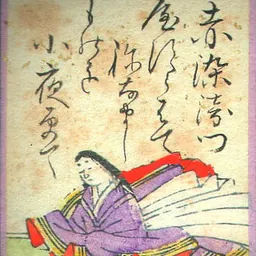
Related people
Same field, nearest in time


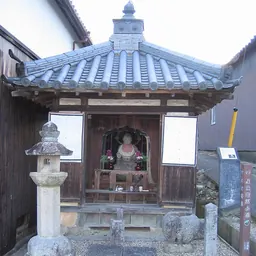


Contemporaries
People whose lives overlapped Murasaki Shikibu's



Frequently asked questions
Who was Murasaki Shikibu?
Japanese novelist and poet (c.973–c.1014)
When was Murasaki Shikibu born?
Murasaki Shikibu was born in 978 in Heian-kyō.
When did Murasaki Shikibu die?
Murasaki Shikibu died in 1014 in Heian-kyō.
What was Murasaki Shikibu's occupation?
Murasaki Shikibu was a lady-in-waiting, novelist, poet, writer, diarist and philosopher.
What nationality was Murasaki Shikibu?
Murasaki Shikibu was Japanese.
Sources & further reading
Cite this page
APA: Biography.guide. (2026). Murasaki Shikibu. https://biography.guide/murasaki-shikibu/
MLA: "Murasaki Shikibu." Biography.guide, https://biography.guide/murasaki-shikibu/.
Chicago: "Murasaki Shikibu." Biography.guide. https://biography.guide/murasaki-shikibu/.
Data last updated: 2026-09-20 · Spot an error? Report a correction.
Page generated 2026-09-27 05:32 UTC