
Muqbil ibn Hādī al-Wādiʻī
Islamic studies scholar
About Muqbil ibn Hādī al-Wādiʻī
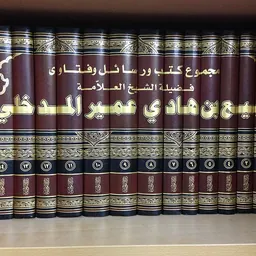
Lived 1933 – 2001 (aged 67–68). Muqbil ibn Hādī al-Wādiʻī was a Yemeni muhaddith, manuscriptologist, islamic jurist, writer, da'awah and legal scholar.
Education After finishing his primary education in Yemen, al-Wadi'i spent roughly two decades studying Islam in Saudi Arabia. In 1963 he began by studying Al-Wadi'i is said to have graduated from the Islamic University of Madinah with a master's degree in the science of hadith.
In the 1980s, al-Wadi'i accepted grants from various sources such as Ibn Baz and the Saudi government of 15,000 Saudi Riyals every two months. However, his continued critique of the Saudi monarch, due to his believed wrongful imprisonment, led him to be more independent in the financing of the institute's operations. He stated that managing the mosque and institute in Dammaj required little funding and was easily covered by local donations and zakat.
The Salafis who studied in Dammaj reportedly pursued an aggressive "policy of provocation" towards the Zaydis who inhabited the surrounding area, often accusing them of apostasy and sometimes even destroying their cemeteries.
In 2014, the Dar al-Hadith would be shut down after a long Siege of Dammaj by Houthi rebels. The manager of the institute, Yahya al-Hajuri, as well as thousands of foreign students were forced to relocate to Al-Hudaydah Governorate.
Death After a prolonged illness, and hospital treatment in Jeddah, Saudi Arabia, al-Wadi'i died on July 21, 2001, from either cirrhosis or liver cancer. His funeral prayer was performed in the Masjid al-Haram in Makkah and he was laid to rest in the al-'Adl cemetery close to the graves of Ibn Baz and Ibn Uthaymin.
Views
On terrorism Al-Wadi'i made a number of statements against terrorism and said he attempted to advise Osama bin Laden against it, whom he blamed - along with older movements like the Muslim Brotherhood - for many of the problems Muslims face today; he further commented in an interview:
I did in fact send my advice and warning (to bin Laden) but only Allah knows if it actually arrived or not. However, some of those people did come to us, offering their help and assistance in preaching and calling to Allah. Afterwards, we found them sending money, requesting that we distribute it among the leaders of various tribes; they were trying to buy rocket-launchers and machine guns. But I refused them and told them to never come to my house again. I made it clear to them that what we do is preach only and we don’t allow our students to do anything but that.
Al-Wadi'i had earlier authored a book as well, referring to bin Laden as the head of all "sectarianism," "partisanship," "division," and "religious ignorance," and accusing him putting money into weapons while ignoring his religion. Additionally he was a huge supporter of the controversial Saudi preacher Rabi' bin Hadi al-Madkhali. Feircly critiquing the Muslim Brothers, al-Wadi'i states:"They [the Muslim Brotherhood] are bankrupt as it relates to knowledge and bankrupt as it relates to Daʿwah... The founder of this group – which is Ḥasan al-Bannā – used to make Ṭawāf around the graves...They [the Muslim Brotherhood] are prepared to cooperate with the Devil against Ahl al-Sunnah.”
His Dar al-Hadith seminary and institute of Dammaj was known to oppose al-Qaeda and other Islamist organisations, as al-Wadi'i himself stated in an interview with Hassan al-Zayidi of the Yemen Times in 2000.
On Muhammad bin Saleh al-Munajjid
Al-Wadi'i was a staunch critic of the scholar Muhammad bin Saleh al-Munajjid, calling him a misguided "Sururi".
Links to Guantanamo detainees Joint Task Force Guantanamo counter-terrorism analysts prepared Summary of Evidence memos offering justifications for continuing to hold them in extrajudicial detention. Several of the captives had their detention justified, in part, through their association with al-Wadi'i.
His Fiqh In terms of Islamic jurisprudence, al-Wādi'i did not follow any madhhab in Islam and opposed the practice of taqlid (conformity to legal precedence). He even went as far as declaring that following any madhhab is a bid'a (religious innovation or hersey) within Islam. Al-Wadi'i also prohibited photography
On Yemen Al-Wadi'i believed that even the sinful and corrupt leaders must be obeyed by the Muslims while advising the leader must be done by the learned scholar in private. Additionally, the Muslims are commanded to endure hardship and be patient until God removes the burden of an oppressive ruler for that of a better one.
On Saudi Arabia While critical of the Saudi government throughout the 1980s and 1990s, al-Wadi'i never compromised by siding with the Sahwa movement and its preachers. He vocally opposed them and their methods of overtly calling to politics and labeled them with hizbiyya, or partisanship.
Works al-Ilhad al-Khumayni fi Ard al-Haramayn or the Paganism of al-Khomeini in the Land of the Two Holy Mosques (Criticism of the Iranian Revolution)
Don’t just read it —
keep it.
Full-length biographies made to live with: read them, listen on the way to work, watch them tonight.
- E-book
- Audio
- Video
Instant download · yours to keep · every purchase keeps this site free
Important facts
People in Muqbil ibn Hādī al-Wādiʻī's life
Named in this biography and alive at the same time

Related people
Same field, nearest in time



Contemporaries
People whose lives overlapped Muqbil ibn Hādī al-Wādiʻī's




Frequently asked questions
Who was Muqbil ibn Hādī al-Wādiʻī?
Islamic studies scholar (1933–2001)
When was Muqbil ibn Hādī al-Wādiʻī born?
Muqbil ibn Hādī al-Wādiʻī was born in 1933 in Dammaj.
When did Muqbil ibn Hādī al-Wādiʻī die?
Muqbil ibn Hādī al-Wādiʻī died on 21 July 2001 in Jeddah.
What was Muqbil ibn Hādī al-Wādiʻī's occupation?
Muqbil ibn Hādī al-Wādiʻī was a muhaddith, manuscriptologist, islamic jurist, writer, da'awah and legal scholar.
What nationality was Muqbil ibn Hādī al-Wādiʻī?
Muqbil ibn Hādī al-Wādiʻī was Yemeni.
Sources & further reading
· Wikipedia: Muqbil ibn Hādī al-Wādiʻī
Cite this page
APA: Biography.guide. (2026). Muqbil ibn Hādī al-Wādiʻī. https://biography.guide/muqbil-ibn-hadi-al-wadi-i/
MLA: "Muqbil ibn Hādī al-Wādiʻī." Biography.guide, https://biography.guide/muqbil-ibn-hadi-al-wadi-i/.
Chicago: "Muqbil ibn Hādī al-Wādiʻī." Biography.guide. https://biography.guide/muqbil-ibn-hadi-al-wadi-i/.
Data last updated: 2026-09-20 · Spot an error? Report a correction.
Page generated 2026-09-27 05:07 UTC