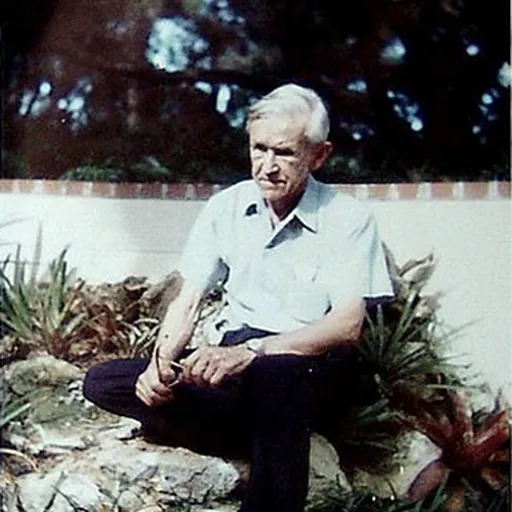
Mulford B. Foster
American botanist, naturalist and artist
About Mulford B. Foster
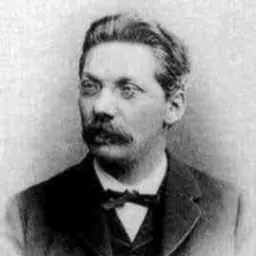
Lived 1888 – 1978 (aged 89). Mulford B. Foster was an American explorer, horticulturist, photographer, painter, writer and botanist.
Mulford Bateman Foster (December 25, 1888 – August 28, 1978 ) was an American botanist known by many as the "Father of the Bromeliad" as he was instrumental in the discovery and introduction of many new species of Bromeliad to the United States. He also devoted his life to hybridizing and contributed widely to the knowledge of the plant species. He was a man of many talents including naturalist, explorer, writer, photographer, artist, horticulturist and a well-respected landscape architect in Florida. Numerous bromeliad plants found today are named after various Foster family members and the genus Fosterella is named in honor of his work.
Early life He was born in Elmer, New Jersey to Samuel Preston Foster, Editor of the Elmer Times and Fannie Bateman a housewife with a green thumb and artistic leanings. He grew up exploring the woods around his New Jersey home under the guidance of his mother. With her inspiration, Mulford grew up making his own small gardens with the wild plants that he had gathered. He eventually started collecting snakes, lizards and other reptiles whenever he could. He attended school and graduated in 1905 as salutatorian from Elmer High School spending his free time out of doors.
Professional career
Banker/Editor Mulford's father encouraged him to become educated in business, being concerned that his love of nature would not be profitable. To satisfy this urging, he attended and graduated from a Philadelphia business school. He worked for 5 years in the top 2 Philadelphia banks during this training and in the year following graduation. In 1910 he decided to leave Philadelphia and took a job with his father's newspaper as Associate Editor back in Elmer, NJ.
Mulford also worked elsewhere for extra money. He worked as a camp Naturalist and instructor for Camp Kenebec in Maine where he would go in mid-summer. He was known to many as the "Snake Man" having specialized in the reptiles and for that matter all forms of nature for many years. He was a charismatic speaker and always pleased his audiences with his enthusiasm and accentuation of humorous and interesting facts. Newspaper articles stated that he had in his possession the largest private collection of living reptiles in the state.
While living in Cold Springs he maintained a friendship with another writer Conrad Richter. Conrad and his wife lived in Pine Grove, Pennsylvania, which was a nearby town. Letters between the two as well as pictures in possession of the family reflect a close camaraderie. Conrad once wrote "If anyone has a unique paradise of his own on earth, that one is Mulford Foster, Master of one of the prettiest and wildest valleys in Pennsylvania, he has on his immense primeval estate a limpid lake where wood creatures come down to drink, a magic winding little river for his silent canoe, a collection of almost every variety of domestic animal and bird, pet skunks, several dozen kinds of tamed snakes, wild flowers, trees and shrubs and a million wild creatures that have flocked to his place from the mountains about because they know that no harm can come to them here, and Foster attired in brown flannel and stealing noiselessly through the woods with the light foot and deftness of a Mohican, is all day long and often at evening out among them.".
In 1918 an opportunity presented itself that intrigued him with a training course offered by the Davy Tree Expert company in Kent, Ohio. Since he already had an affinity with trees it was a simple step to learn how to sell tree service to the people who had large estates in the area of Baltimore, Washington and Virginia. He remained the Davy company representative of these three states during the years 1918–1923. Stokowski was eager to see Europe through Mulford's eyes. He viewed life in a different way than Stokowski had experienced before. It was Mulford's great pleasure to explain plant life from his philosophical point of view. Stokowski was the disciplinarian for Mulford. He required a painting every day from him. It was almost by the demand of Stokowski that Mulford created over forty impressions of his experience that summer, the major portions being the French Alps in and around Haute Savoir. These paintings were compiled in a book Stokowski Sees that was privately printed but not published and the book is currently held by Michael Spencer who is still deciding on its future, He ultimately held a showing at the Art Center of Maitland in September 1975 exhibiting all his paintings including all the series from the Photographic to the Synthesis. In 1951 he received the Herbert Medal for his work and discoveries in amaryllis. In 1962 he received a citation from the American Horticultural Society Congress for contributions to the knowledge of bromeliads. He had significant influence in the world of bromeliad growers and popularized the use of the term "pups" for naming the offshoots of bromeliads. He ran the Tropical Arts Nursery in Orlando, Florida located at 718 N. Magnolia on the corner of Magnolia and Colonial Drive along with the Latch String tea room and his art studio between the years 1924-1957. He returned with Racine, his second wife in 1936 and began making frequent trips to South America over the next twenty years. Mulford had a great interest in finding both new and old species of plants that could be used as both indoor decorations and landscape material. The book was a success and its completion brought the artful teamwork that was to mark the relationship between Racine and Mulford. His keen vision, liveliness and resourcefulness balanced with her devotion and help in caring for all of the plants and helping organize his materials, keep fastidious notes of her own were replicated many times over the years with many projects. In 1939 Mulford set off to Brazil again for six months covering much better known areas than their previous trip. Mulford was again able to find new species in places that were supposedly already previously explored and declared exhausted by prior collectors over the previous one hundred and fifty years. Mulford recollected a number of "lost" species during his trips to Brazil. He introduced the brilliant yellow flowering tree, Tabebuia umbellate to North America. This tree is now famous in Orlando, Florida. In 1940 he made his second six month expedition to Brazil and Trinidad this time specializing on bromeliads, orchids and philodendrons. From this trip he introduced many new bromeliads and the now famous self-heading philodendrons. World War II put a stop to further expeditions for some years. Mulford turned his attention to cultivating and popularizing the bromeliads. He continued to work with Lyman Smith who continued to describe and identify the bromeliads that had been brought back from Brazil in the preceding years. In 1946 Mulford resumed his expeditions. From Brazil he brought back Begonia acetosa and introduced it to US gardeners. He and Racine also traveled to Columbia. This trip followed the earlier trail of the famous Édouard André to confirm and add to his discoveries 75 years before. These were considered one of the most important bromeliad areas of Latin America. In 1948 he made a plant expedition around South America collecting in Dutch Guiana, Brazil, Bolivia, Peru, Ecuador, Colombia Costa Rica, Cuba, Puerto Rico and Trinidad. Several years later in 1951 he would leave on a Venezuelan plant expedition. This was followed in 1954 to Jamaica with his final plant collecting trip made to Mexico in 1957. During these trips Mulford not only collected thousands of herbarium specimens for the Gray Herbarium of Harvard University and the Smithsonian Institution of Washington, DC where all of the scientific data is now on file but he also collected thousands of seeds and live plants to enrich the variety for Florida gardens.
The following is a list of the various South American locations that Mulford was known to have traveled for plants outside the U.S., frequently with his wife Racine at his side. The process of collecting and preserving the specimens was rigorous and well documented in existing records. As the number of new species found and collected from South America by Mulford is estimated to be between 170 and perhaps over 200 this list is currently incomplete. Other names can be found in the Institute of Botany in Brazil although few new species are in that location. It was also during this time that they began writing their collaborative books based on travels to South America including Brazil, Orchid of the Tropics, Mulford also became the founder and President of the Bromeliad Society in 1950 through 1959 and became its editor from 1951 through 1958 and with his editorship of the Bulletin his audience became worldwide. He wrote numerous pieces for the Bromeliad Journal International which can be found in their archives with an examples frequently seen in reprints even today. He maintained this responsibility for over a decade with Racine acting a copy editor for years. Both were heavily committed to this publication at the beginning, often using their own monies to help publish the journal in the early years.
List of published works The following publications by Mulford B Foster are discussed in this article. A more complete list of his publications may be found at
Personal life Mulford was married twice. His first wife was Fridel Tautenhahn whom he married Nov 1911 in Philadelphia. It was felt by some that his intense relationship with her father led to this marriage. They had 4 children, Gerda (1912), Bert (1919), Miriam (1920) and then twins with only one daughter Jeanne Eunice surviving (in 1922). although the children remained nearby with their mother. He married Racine Sarasy in 1935 becoming Racine Foster for whom the bromeliad genus Racinaea was named after. There were no children from this marriage. He had numerous grandchildren and great-grandchildren as well as a large extended family around him throughout the latter part of his life.
In 1974 Mulford experienced a devastating cerebrovascular accident leaving him paralyzed on one side and almost always using a wheelchair. Despite the paralysis, he continued to sketch with his good hand. He had a series of smaller strokes over the next four years before ultimately dying at his home in 1978. Following his death a memorial fund was established at the Marie Selby Botanical Gardens. The Mulford B. Foster Identification Center was established which remains to this day with the intent on furthering interest and study of the bromeliad.
Don’t just read it —
keep it.
Full-length biographies made to live with: read them, listen on the way to work, watch them tonight.
- E-book
- Audio
- Video
Instant download · yours to keep · every purchase keeps this site free
Important facts
People in Mulford B. Foster's life
Named in this biography and alive at the same time







Related people
Same field, nearest in time



Contemporaries
People whose lives overlapped Mulford B. Foster's



Frequently asked questions
Who was Mulford B. Foster?
American botanist, naturalist and artist (1888-1978)
When was Mulford B. Foster born?
Mulford B. Foster was born on 25 December 1888 in Elmer.
When did Mulford B. Foster die?
Mulford B. Foster died on 28 August 1978 in Orlando.
What was Mulford B. Foster's occupation?
Mulford B. Foster was an explorer, horticulturist, photographer, painter, writer and botanist.
What nationality was Mulford B. Foster?
Mulford B. Foster was American.
Sources & further reading
· Wikipedia: Mulford B. Foster
Cite this page
APA: Biography.guide. (2026). Mulford B. Foster. https://biography.guide/mulford-b-foster/
MLA: "Mulford B. Foster." Biography.guide, https://biography.guide/mulford-b-foster/.
Chicago: "Mulford B. Foster." Biography.guide. https://biography.guide/mulford-b-foster/.
Data last updated: 2026-09-23 · Spot an error? Report a correction.
Portrait: Wikimedia Commons · author & licence
Page generated 2026-09-27 05:06 UTC