
About Muhammed Akbar Khan
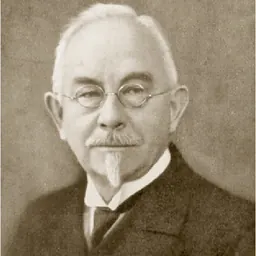
Lived 1897 – 1993 (aged 95–96). Muhammed Akbar Khan was an Indian and Pakistani writer.
Mohammad Akbar Khan (19 April 1895 — 16 January 1984) was a Pakistani former two-star rank general, also known by his pen name "Rangroot" and the nicknames, "Akbar Khothianwala" and Akbar Khaccharwala," for his role in commanding the Force K6 animal transport company in World War II. He was the first Muslim Brigadier and the highest-ranking Muslim officer in the British Indian Army. In 1947, he became the most senior officer in the Pakistan Army and was its first Major General, earning the distinguished service number, PA-1 in 1950. Additionally, Muhammad Ali Jinnah chose him as his first Honorary aide-de-camp on his personal staff.
Born in Chakwal, Khan joined the British Indian Army as a sowar in 1914. Within a year, he became a Viceroy's Commissioned Officer, which is likely still a record and was the Indian Army Wrestling Champion in 1915. He was also described as a "fine boxer." Between 1915 and 1917, Khan participated in the Siege of Kut and was awarded a King's Commission in 1918 for his valour, the only Indian to receive this honour. He was then sent to a temporary training school for Indian cadets at Daly College.
Throughout his 36-year army career, Khan was an accomplished sportsman. He played polo for his regiment for 15 years, captained the army hockey team that won a championship in 1915, and held All-India records from 1923 to 1926 in discus, javelin, hammer throw, and shot put. In 1925, he secured first place in the 16 lb shot put event with a distance of 36 feet and 1/2 inch at the Punjab Olympic Trials held in Lahore. Khan loved horses and ran a circus in France, the UK, and India, donating the proceeds to charity. He was personally invited by King George VI and Queen Elizabeth The Queen Mother to an Indian lunch near Derby after returning from Dunkirk, having walked nearly 200 miles in 1940.
As the Partition of British India approached in 1947, reports suggested that Brigadier Akbar Khan would be appointed as the Commander-in-Chief of Pakistan's Army. However, Khan denied these reports. After partition, he transferred to the Pakistan Army and became its first native and Muslim General. Shortly before the death of Governor General Muhammad Ali Jinnah, Khan asked him to remove all British officers from the Army and to ban the consumption of alcohol, which Jinnah agreed to. As General Gracey was preparing to retire in 1949, he offered Khan to succeed him as Commander-in-Chief, but Khan declined and said the position was above his competence. Therefore, General Iftikhar Khan, Akbar's younger brother, was chosen as Gracey's successor. However later that year, Iftikhar died in an airplane crash and General Gracey's service was extended. Two years later, General Ayub Khan was appointed as his successor.
Akbar Khan retired in 1950. He filed nomination papers in order to be elected to the Constituent Assembly of Pakistan in 1951, which was established to draft the 1956 Constitution of Pakistan. He later turned to writing on Islamic literature and military history, publishing his first book in 1954 under his name and then many others under the alias "Rangroot".
In 2024, the story of his military career was featured in the docuseries Erased: WW2's Heroes of Color, which aired on National Geographic, Disney+, and Hulu. He was portrayed by Jack Gill.
Early life (1895-1913) Mohammad Akbar Khan was born on 19 April 1895, although army records list his birth year as 1897, into a Shia Muslim family which belonged to the Punjabi Minhas Rajput clan of Chakwal. His father, Raja Fazal Dad Khan (1847-1943), was a Zamindar who had served as a Viceroy's Commissioned Officer with the 12th Cavalry Unit of the British Indian Army and in various roles for 43 1/2 years.
Akbar Khan's mother, Badsha (died 1955), was a Pashtun woman and the second wife of Fazaldad Khan.
In his teenage years, Akbar Khan was described as a good sportsman, standing six foot two inches tall, and "phenomenally muscular" but decent in his studies. His father wanted him to be a farmer but he was adamant about joining the army. According to Syed Hashmi, one of Akbar's grandsons, Akbar Khan "barely had a 10th-grade education."
Ancestry Mohammad Akbar Khan's paternal grandfather was a General in the Sikh Khalsa Army in 1839, while his maternal grandfather was the Aide-de-camp of Thomas Harte Franks during the Second Anglo-Sikh war and Indian Rebellion of 1857. He later raised a Muslim squadron in the 11th King Edward's Own Lancers (Probyn's Horse), which he commanded.
Personal life Mohammad Akbar Khan had 13 siblings, nine brothers and four sisters. Six brothers including him were in the army, namely Major Generals Iftikhar Khan and Muhammad Anwar Khan, Brigadiers Muhammad Afzal, Mohammad Zafar Khan, and Muhammad Yusuf Khan. His brothers Tahir Khan and Masud Khan chose civilian careers. Another brother, Baqir Khan, was killed in a motorcycle accident in 1923 while attending St Catharine's College, Cambridge.
Akbar Khan married Kudsia in 1930 and they had a son and three daughters, Razia, Amna, As of 2023, his great-grandson, Justice Jawad Akbar Sarwana, serves on the High Court of Sindh and is set to retire in 2034.
As a captain, Khan donated a set of fine old Jezails to the Indian Military Academy on its establishment.
Military career British Indian Army (1914-1947) Major Mohd. Akbar Khan, Commanding Officer of the 29 Mule Company; painted by Henry Lamb , exhibited at the Imperial War Museum Akbar Khan left his home to join the 12th Cavalry on 1 May 1914 at the age of 16. He returned all his property, including land, to his father and he lived on his army salary of Rs. 12 per month. Within a year, Sowar Akbar Khan became a Viceroy's Commissioned Officer, which is likely a record in the British Indian Army to date. He was the Indian Army Wrestling Champion in 1915 and was also described as a "fine boxer."
Between 28 November 1915 and 13 September 1918, Khan participated in World War I, most notably in the Siege of Kut. For his valour, he was awarded a King's Commission in 1918, the only Indian to receive this honour. He was then sent to a temporary training school for Indian cadets at Daly College Indore. Despite many challenges, including his initial lack of proficiency in the English language, he learned to speak and write English fluently in one year. He excelled in his training and "had made such progress that he was sent, at the special request of his brother officers," to his old regiment, where he served as adjutant, quartermaster, and squadron commander.
He joined the Probyn's Horse regiment on 6 January 1921; 1st battalion of the 14th Punjab Regiment on 11 May 1934; and the Royal Indian Army Service Corps on 16 September 1935 or 5 February 1936. He served as the assistant recruiting officer in Lahore from 1 May 1933 to 30 April 1934. He served in the Mohmand Campaigns on the North-West Frontier of India in 1935 and again served in the region in 1936-37. For his service, he was mentioned in despatches on 18 February 1938.
In the Punjab Olympic Trials held in Lahore on 7 February 1925, the results for the 16 lb shot put event: Lieutenant Akbar Khan from the 5th Probyn's Horse, Ambala, secured first place with a distance of 36 feet and 1/2 inch; Dav Raj from Medical College Lahore came in second. Fond of horses, he ran a circus in France, the United Kingdom, and British India, donating the proceeds to charity. One of his fondest memories was being personally invited by King George VI and Queen Elizabeth The Queen Mother to an Indian lunch near Derby after returning from Dunkirk, having walked nearly 200 miles in 1940.
Thereafter, throughout the Battle of Britain he regularly broadcast for BBC Radio to India, America, Australia, and New Zealand about the Indian Army’s history and traditions. He returned to British India in 1941 and, when Japan entered the war, he was stationed in Dimapur, managing over 3,000 motor vehicles transporting troops and supplies to Tamu and Tedim. He served in the Arakan in 1944 and commanded the 9 M.T. Training Centre at Meerut in 1945. He was promoted to Colonel in July 1945 and appointed Vice-President of the Briggs Committee. In February of the same year, he became Deputy Director of Resettlement.
In 1946, Brigadier Akbar Khan was appointed Commander of Headquarters Meerut Sub-Area, and stayed in this role until the Partition of British India in August 1947.
Pakistan Army (1947-1950) Brigadier Akbar Khan transferred to the Pakistan Army on 14 August 1947. He was promoted to Major General the next day and was appointed General Officer Commanding of the 8th Division in Sindh. On 25 June 1948, Khan met with Jinnah and repeatedly stressed the importance of kicking out British officers from the Pakistan Army and urged Jinnah to issue a ban on alcohol, saying: "Our officers drink alcohol during banquets in schools as it is an ancient tradition of the armed forces." Jinnah signaled him to be quiet and called his aide-de-camp and instructed, "Bring my Confederation Box." He opened it and said, "General, this is the Holy Qur'an. It says, Alcohol and drugs are forbidden." Khan then said, "This is why I am asking you to issue an order announcing to the public and the army that alcohol is forbidden." Jinnah smiled and responded, "Do you think my order will be more effective than the orders of the Holy Quran? Not at all! If they do not follow the Quran, why would they follow the Quaid?" Akbar Khan replied, "I seek refuge with Allah, my intention was not to suggest that your command is superior to the Quranic verses, but rather to draw the public's attention to them." Jinnah agreed and issued a draft announcing the ban, citing the verses of the Quran. Akbar Khan copied the draft and issued an order to stop drinking in all units under his command, which remained effective until his retirement. General Akbar also told Jinnah, "We are basically guided by your speeches. You said: We Muslims should be guided by the Qur'an in all walks of life."
As the tenure of Commander-in-Chief General Gracey was nearing its end at the close of 1949, he approached Akbar Khan to succeed him. However, Akbar declined, citing that the position was beyond his competence. The next candidate in line was Akbar's younger brother, General Iftikhar Khan. However, Iftikhar died in an air crash before he could take office, resulting in Gracey's extension and General Ayub Khan succeeding him following his retirement.
Later life In September 1951, Akbar Khan filed his nomination papers for election to the Constituent Assembly from Punjab in the quota of six seats to be filled by the Punjab Assembly. The Constituent Assembly was established to draft the 1956 Constitution of Pakistan.
In June 1952, Khan was appointed as the first Colonel Commandant of the Pakistan Army Service Corps. He was in the role until June 1958.
Illness and death Towards the end of his life, he suffered from dementia. at the age of 87 or 89, and was survived by his three children and 25 great-grandchildren.
Māz̤ī, ḥāl aur mustaqbal kā aṣlaḥ jang, 1954
Hazrat Ali as an Amir, 1966 Muhammad Mustafā Kamāl Pasha, 1966 Turkon ki jidd o jahd-i āzādi (Turks' Struggles for Freedom), 1966 K̲h̲avātīn-i Islām aur hadīs, 1966, 160 p. On war; the Islamic policy: grand strategy & diplomacy, 1967 K̲h̲avātīn-i Islām kelie mashʻal-i rāh, 1967 Timur (Tamarlane) as an Amir, 1969
Dates of rank
Awards and decorations 1914–15 Star General Service Medal (1918) Allied Victory Medal 1914-1918 Indian Distinguished Service Medal, 1918 Member of the Order of the British Empire, 1930 India General Service Medal, (Mohmand Clasp 1935) Mentioned in despatches, 1938 1939–1945 Star
Member of the Most Excellent Order of the British Empire(MBE)19301914–15 StarGeneral Service Medal (1918)Allied Victory Medal 1914-1918India General Service Medal Mohmand campaign of 19351939–1945 StarPakistan Medal (Pakistan Tamgha)1947
Don’t just read it —
keep it.
Full-length biographies made to live with: read them, listen on the way to work, watch them tonight.
- E-book
- Audio
- Video
Instant download · yours to keep · every purchase keeps this site free
Important facts
People in Muhammed Akbar Khan's life
Named in this biography and alive at the same time



Related people
Same field, nearest in time




Contemporaries
People whose lives overlapped Muhammed Akbar Khan's



Frequently asked questions
Who was Muhammed Akbar Khan?
First General of Pakistan and receiver of the OBE.
When was Muhammed Akbar Khan born?
Muhammed Akbar Khan was born on 19 April 1897 in Chakwal, Punjab.
When did Muhammed Akbar Khan die?
Muhammed Akbar Khan died in 1993 in Karachi, Pakistan.
What was Muhammed Akbar Khan's occupation?
Muhammed Akbar Khan was a writer.
What nationality was Muhammed Akbar Khan?
Muhammed Akbar Khan was Indian and Pakistani.
Sources & further reading
· Wikipedia: Muhammed Akbar Khan
· DBpedia: Mohammad Akbar Khan (general, born 1895)
Cite this page
APA: Biography.guide. (2026). Muhammed Akbar Khan. https://biography.guide/muhammed-akbar-khan/
MLA: "Muhammed Akbar Khan." Biography.guide, https://biography.guide/muhammed-akbar-khan/.
Chicago: "Muhammed Akbar Khan." Biography.guide. https://biography.guide/muhammed-akbar-khan/.
Data last updated: 2026-09-20 · Spot an error? Report a correction.
Page generated 2026-09-27 05:23 UTC