
About Muhammad Mahmood Alam
Lived 1935 – 2013 (aged 77). Muhammad Mahmood Alam was a Pakistani and Indian aircraft pilot.
Alam supported the Pakistan Movement and Muhammad Ali Jinnah. Following the Partition of British India in 1947, the family migrated to East Bengal, Pakistan. In the events leading up to partition, he said that he had killed someone in self defence at the age of 11 during the 1946 Bihar riots.
He became an aviation enthusiast after witnessing Japanese fighter planes attacking his hometown of Calcutta during World War II, forcing the Royal Air Force (RAF) to defend. He recalled seeing a celebratory banner raised by people in Calcutta in honour of RAF pilot Maurice Pring, who shot down three enemy planes. The banner read "Pring prongs 3," a phrase that Alam said "really caught my imagination". At the age of 14, he often built model airplanes out of wood.
He completed his secondary education at Government High School in Dacca, where he was a member of the Shaheen Air Training Corps (SATC) under the instruction of Polish pilot Flight Lieutenant Muchowski. As a student at the school, Alam trained with the SATC and earned his coveted glider wings during the graduation parade in Quetta.
Personal life His brothers include Professor Mohammad Shahid Alam, an economist at Northeastern University, and Dr. Mohammad Sajjad Alam, a particle physicist and former professor at the University at Albany, SUNY. The family moved from East Pakistan to Karachi after the Bangladesh Liberation War in 1971. Another person, whose father was a friend of Alam, recalled asking him why he had chosen not to marry. Alam replied: "I'm not against marriage; it's just that when you are young you think that life is in your hands, but life is bigger. Someone once said all that is desirable is not attainable — indeed, all that is desirable is often not worth attaining."
Service years Alam trained at the Joint Services Pre-Cadet Training School in Quetta, alongside Ahmad Tasnim, who would later become a Vice Admiral in the Pakistan Navy. Following six months of training, Flight Cadet Alam joined the RPAF College in 1952.
On 27 October 1964, the PAF held an air show in Peshawar in honour of Indonesian Air Marshal Omar Dhani. Among those who performed were the F-86 Sabre formation of the "Sabres Nine – 1964" team, led by Wing Commander Anwar Shamim. The team consisted of Squadron Leaders M Arshad, Sarfraz Rafiqui, Mukhtar Ali, Muniruddin Ahmad, MM Alam, and Flight Lieutenants M Masud Khalid, Yusaf A Khan, and Yunus Hussain.
1965 War
Photograph taken from the gun camera of Squadron Leader MM Alam shows an IAF Hunter aircraft plummeting to the ground in flames after its wing tanks ruptured following a brief burst of 0.5-inch Browning machine-gun fire by Sqn Ldr Alam, 1965.
Flying in a formation of three F-86 Sabres, Squadron Leader MM Alam shot down one Hawker Hunter of the Indian Air Force (IAF), flown by Squadron Leader AK Rawlley, over Halwara Air Force Station on 6 September 1965, in a dusk attack by the PAF. At 1715 hours, Squadron Leader Sarfraz Rafiqui led a formation of 3 F-86 Sabres with Yunus Hussain as his No. 2 and Cecil Chaudhry as No. 3. The formation took off from PAF Station Sargodha heading towards Halwara. On the way there, they met up with Alam's formation who was returning from an aborted raid on the Adampur Air Force Station of the IAF. Alam informed them about his encounter with four Indian Hawker Hunters over Tarn Taran. Squadron Leader Alam stated that they encountered five IAF Hawker Hunters who were part of the Strike No. 4 of that day. Alam and the PAF claimed that he had shot down all five.
The Indian pilots who were said to have been shot down by Alam were Squadron Leaders Onkar Nath Kacker and A B Devayya, Flight Lieutenant Guha, Flying Officer Brar, and Squadron Leader Bhagwat. However, this is incorrect, because all five pilots flew on separate strike missions against Sargodha at different times that day. Devayya was part of Strike No. 1 which was undertaken early in the morning; Kacker was in Strike No. 3; and Guha was part of Strike No. 6, which was later in the afternoon. Eventually, the PAF officially corrected their records and accepted that Devayya was actually shot down by Flight Lieutenant Amjad Hussain, and Guha was shot down by Flight Lieutenant A. H. Malik.
On 16 September, accompanied by his wingman Flying Officer Mohammad Shaukat-ul Islam, Squadron Leader MM Alam flew their F-86 Sabres into Indian airspace near Halwara. In response, IAF Flying Officers Prakash Sadhashivrao Pingale and Farokh Dara Bunsha immediately scrambled. Upon sighting the Sabres, the IAF pilots split their targets: Pingale pursued and shot down Shaukat, while Bunsha pursued Alam. He was able to manoeuver and out-turn Bunsha in a dogfight and shot down his Hunter aircraft. Flying Officer Bunsha was killed in action.
Disputed record Assessing the widely publicised claims of MM Alam in shooting down five Hawker Hunters in under 30 seconds on 7 September, his former colleague retired Air Commodore Sajad Haider called the claims into question. In his 2009 memoir, Haider wrote that it was "tactically and mathematically very difficult to resurrect the incident in which all 5 Hunters in a hard turn were claimed to have been shot down in a 270 degree turn in 23 seconds". He highlighted that both, "The Story of the Pakistan Air Force" (1988) and historian John Fricker, admit the difficulty of verifying the event, especially since only two wrecked aircraft were found near Sangla Hill. The aircraft belonged to Squadron Leader Sureshchandra Bhaksar Bhagwat and Flying Officer Jagdev Singh Brar, who were burnt beyond recognition. Indian aviation historian Pushpindar Singh Chopra and F-86 Sabre enthusiast Duncan Curtis agree with this account and credit Alam with these kills. Haider also referred to Alam as the "undisputed ace of PAF".
Referring to the other three claimed aircraft, Haider argued that if, in fact, five jets had been downed within 23 seconds during a tight manoeuver, they should have crashed in close proximity of each other. The suggestion that some might have flown for several more minutes before crashing is, in his view, "superfluous and unworthy of the official PAF history." Despite this, he highlighted that "MM Alam really did an excellent job of shooting down 2 Hunters," and noted that, despite having a "somewhat ineffective wing man," he managed to engage ten Hunters within just a few minutes of combat—an extraordinary feat in itself. The IAF also credits Alam with this kill.
The fact that no verifiable gun camera footage of the five Hunter kills on 6 September was ever made public by the Pakistani authorities further casts doubt on Alam's claims.
Post-war After the war, Alam was awarded the Sitara-i-Jurat by the Government of Pakistan. According to Azim Daudpota, at the award ceremony when Field Marshal President Ayub Khan was introduced to Alam, Khan had tears in his eyes. In recognition of his achievements, the Dhaka City Corporation gifted him a residence which he did not accept.
Deputation to Syria In the early 1970s, he was deputed to Syria at the request of the Syrian government, to train their pilots. After the 1971 War broke out back home, resulting in the secession of East Pakistan and the creation of Bangladesh, Alam became depressed and did not report for duty for those months according to Azim Daudpota. He refused to accept his salary, as he believed he hadn't earned it. Additionally, when some PAF officers had submitted excessive personal claims from the Syrian government, Alam had them court-martialed. Daudpota states that this was from his strict sense of ethics.
Return to Pakistan In July 1978, Air Commodore MM Alam was appointed as Assistant Chief of Air Staff (Flight Safety) and was awarded the Sitara-i-Imtiaz for his contributions. In 1980, he attended the Royal College of Defence Studies in the United Kingdom, where officials issued a report comparing him to Field Marshal William Slim, 1st Viscount Slim. When he returned to Pakistan, he had hoped he would be given command of an operational air base but was not. To hush up the matter, he was prematurely retired and honourably discharged from service. Air Marshal Ayaz Ahmed Khan, who was then Vice Chief of Air Staff (VCAS), later lamented Alam's forced retirement while remarking that the Air Force had lost a "competent officer of unblemished integrity".
In an attempt to appease him, General Zia-ul-Haq offered him the role of Pakistan Ambassador to Australia and the chairmanship of the Institute of Strategic Studies Islamabad, both of which he rejected.
Later life
In 1983, Alam wrote several articles in the Pakistan Army Journal. Shortly afterwards, he disappeared and it was discovered that he had joined the Afghan Mujahideen to fight against the Soviet's during the Soviet-Afghan War. There was little to no media coverage of his illness or hospitalisation. He died in the morning of 18 March 2013.
Since as early as 1975, a road in Lahore has been named after him. Stretching from Main Market to Gulberg, MM Alam Road runs parallel to the Main Boulevard and serves as an alternative route. Over the years, it has evolved into a commercial hub, with numerous restaurants, fashion boutiques, shopping malls, beauty salons, and décor stores.
On his first death anniversary in 2014, PAF Base Mianwali was renamed PAF Base M.M. Alam. In addition, the Pakistan Post issued a commemorative stamp in his honour designed by Adil Salahuddin.
On 14 May 2023, the daughter of former Prime Minister Nawaz Sharif, Maryam Nawaz, falsely claimed that during the May 9 riots, protesters in Mianwali had burned down a fighter jet flown by MM Alam. However, Geo News fact-checked the claim, citing an anonymous official who clarified that the aircraft was a non-functional replica of an Shenyang F-6, not the F-86 Sabre piloted by Alam in the 1965 war. The official added that his Sabre is preserved at the PAF Museum, Karachi and that the F-6 replica only sustained minor damage to its ceramic coating, which had since been repainted and "is now as good as new."
Awards and decorations Sitara-e-Jurat His Sitara-e-Jurat citation reads: "On 6 Sep 1965, during an aerial combat over enemy territory, Sqn Ldr MM Alam flying as pilot of an F-86 Sabre Jet shot down two enemies Hunter aircraft and damaged three others. For the exceptional flying skill and valour displayed by Sqn Ldr MM Alam in operations, he was awarded SJ. On 7 Sep 1965, in a number of interception missions flown by Sqn Ldr Muhammad Mahmood Alam against the enemy aircraft attacking Pakistan Air Force Station, Sargodha. Sqn Ldr Alam destroyed five more enemy's Hunter aircraft in less than a minute; this remains a record till today. Overall, he had nine kills and two damages to his credit. For the exceptional flying skill and valour shown by him in pressing home his attacks in aerial combats with the enemy, Sqn Ldr Muhammad Mahmood Alam is awarded a Bar to his SJ."
PAF GD(P) Badge RED (More than 3000 Flying Hours)Sitara-e-Jurat & Bar (Star of Courage)
1965 WarSitara-i-Imtiaz (Military)
(Star of Excellence)Tamgha-e-Diffa (Defence Medal)
1. 1965 War Clasp
2. 1971 War ClaspSitara-e-Harb 1965 War (War Star 1965)Sitara-e-Harb 1971 War (War Star 1971)Tamgha-e-Jang 1965 War (War Medal 1965)Tamgha-e-Jang 1971 War (War Medal 1971)Tamgha-e-Sad Saala Jashan-e-Wiladat-e-Quaid-e-Azam
(100th Birth Anniversary of Muhammad Ali Jinnah)
1976Tamgha-e-Qayam-e-Jamhuria (Republic Commemoration Medal)
1956Hijri Tamgha (Hijri Medal)
1979
Don’t just read it —
keep it.
Full-length biographies made to live with: read them, listen on the way to work, watch them tonight.
- E-book
- Audio
- Video
Instant download · yours to keep · every purchase keeps this site free
Important facts
People in Muhammad Mahmood Alam's life
Named in this biography and alive at the same time



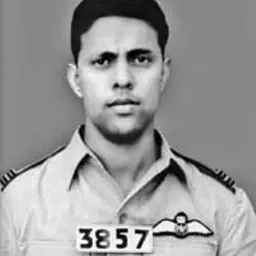
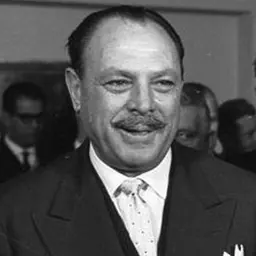



Related people
Same field, nearest in time
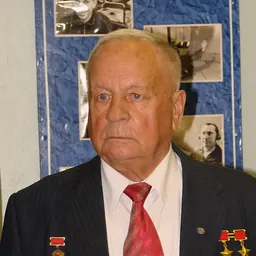

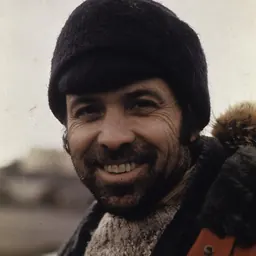

Contemporaries
People whose lives overlapped Muhammad Mahmood Alam's





Frequently asked questions
Who was Muhammad Mahmood Alam?
Pakistani military leader
When was Muhammad Mahmood Alam born?
Muhammad Mahmood Alam was born on 6 July 1935 in Kolkata.
When did Muhammad Mahmood Alam die?
Muhammad Mahmood Alam died on 18 March 2013 in Karachi.
What was Muhammad Mahmood Alam's occupation?
Muhammad Mahmood Alam was an aircraft pilot.
What nationality was Muhammad Mahmood Alam?
Muhammad Mahmood Alam was Pakistani and Indian.
Sources & further reading
· Wikipedia: Muhammad Mahmood Alam
Cite this page
APA: Biography.guide. (2026). Muhammad Mahmood Alam. https://biography.guide/muhammad-mahmood-alam/
MLA: "Muhammad Mahmood Alam." Biography.guide, https://biography.guide/muhammad-mahmood-alam/.
Chicago: "Muhammad Mahmood Alam." Biography.guide. https://biography.guide/muhammad-mahmood-alam/.
Data last updated: 2026-09-20 · Spot an error? Report a correction.
Page generated 2026-09-27 05:26 UTC