
About Muhammad Mahdi Al-Jawahiri
Lived 1899 – 1997 (aged 98). Muhammad Mahdi Al-Jawahiri was an Iraqi poet and writer.
Muhammad Mahdi al-Jawahiri ; (26 July 1899 – 27 July 1997) was an Iraqi poet. Considered by many as one of the best and greatest Arabian poets in the 20th century, he was also nicknamed The Greatest Arabian Poet, and is considered a leading classical Iraqi poet and one of the big three neo-classical poets of Iraq alongside al-Rusafi, and al-Zahawi. Notable for his Neo-classical, traditional, and political-themed way of writing, his poems can be read in his collections such as Diwan al-Jawahiri, Return Post, and To Sleeplessness, and was honored by many governments, including Saddam Hussein's government. His father, 'Abd al-Husayn was a religious scholar among the clergy in Najaf who wanted his son to be a cleric as well. So he dressed him in a cleric's 'Abaya and turban at the age of ten. The origin of “Al-Jawahiri” goes back to his Najafi, Iraqi family. Since the 11th century Hijri (15th century CE), the most famous people have inhabited Najaf, and individuals named al-Najafi have earned the title “Bejeweled” (or al-Jawahiri) for their relationship to the book of fiqh values (religious scholarship) which one of his family's ancestors Shaykh Muhammad Hasan al-Najafi had written. The books were called “the jewel of speech in explaining the laws of Islam” and were composed of 44 volumes. Afterward, he was known as the “owner of the jewels,” and his family came to be called “bejeweled” (al-Jawahiri).
Al-Jawahiri read the Qur'an and memorized it at an early age. Then his father sent him to great teachers to teach him reading, writing, grammar, rhetoric, and jurisprudence. His father and others planned for him to learn speech from Nahj al-Balagha and poetry from the works of Abbasid Poet al-Mutanabbi. From a young age, he received solid grounding in the Arabic language studies, philosophy, rhetoric, and traditional Islamic sciences, which would help him in his later academic career. Due to Najaf's historic poetic nature, it benefitted the young poet and helped develop him childhood passion for poetry. He would also be inspired by the more modern works of Hafez Ibrahim, al-Jabal, and al-Rusafi.
Poetry and career Learning was organized at an early age and even in his childhood al-Jawahiri displayed an inclination for literature. He began to read the Book of Eloquence and Demonstration by al-Jahiz and the Muqaddimah by Ibn Khaldun, and collections of poetry. It was early in his life when he first wore the clothing of a religious man and he participated in the 1920 revolution against the British authorities.
Royal Court of King Faisal I In the late 1920s, al-Jawhiri wrote of the relationship between King Faisal I and Arab Nationalists Sati' al-Husri. He recorded that Faisal I was angry with al-Husri due to him trying to inflame sectarian tensions in Iraq while Faisal I wanted to save Iraq from sectarianism, as such, there were no strong bonds between the two at the time. In 1927, while on a vacation in Iran, al-Jawahiri wrote some lines admiring Iran and its landscapes which al-Husri, who was general director at the Ministry of Education, used to frame al-Jawahiri as an Iranian loyalist and someone who impugned Iraq and Arabism by preferring Iran and its culture which became a controversial issue in Iraq. In his memoirs, al-Husri claimed that al-Jawahiri was an Iranian who had Iranian citizenship. At the time, al-Jawahiri was still working in Najaf as a school teacher and protested the unrealistic allegations but due to split opinions on the issue, as well as the fears of sectarianist tensions, al-Jawahiri decided to resign from his position respectfully. Even though the case was turning against al-Husri by this point. Due to this case, and also knowing that the poet came from an old Iraqi family that had a patriotic stance, Faisal I recruited al-Jawahiri as part of his royal court.
After a meeting with Sayyid Muhammad al-Sadr, who was a supporter against al-Husri's allegations, al-Jawahiri put on modest traditional robes and headed to King Faisal I's palace who congratulated him on his new position. The King took a liking to the poet who occupied him during his visits to various shrines, and also a trip south of the country where al-Jawahiri witnessed the King supporting various tribal sheikhs on the issue of agriculture in the region. Al-Jawahiri has also recorded that the King's office was a simple room with a table, a carpet, four chairs, a portrait of himself, and another of French writer Anatole France.
In 1929, King Faisal I opened the first girls' school in Najaf and received backlash from the conservative groups in the traditionalist city. In response during the opening occasions, al-Jawahiri, who was a Najafi himself, wrote scathing lines criticizing the conservative nature of the city's people in his poem named "The Reactionaries" which was published under a pen name in several newspapers. This would cause a large outcry in the city which reached King Faisal I's attention. Faisal I would confront al-Jawahiri reportedly saying "Are you aware of the calls and cables I have received that all say that this is the work of your "son, Muhammad," who works under your auspices and protections? And do you know how much grief this has caused me?" In response, al-Jawahiri apologized and offered to resign, but Faisal I forgave al-Jawahiri and decided to keep him in his royal court.
In 1930, he resigned from his position at court because it turned out to be incompatible with the content of some of his poems. In the following years, he was to make a living as a teacher and journalist instead.
1936 Iraqi coup In 1936, al-Jawahiri published the newspaper "al-Inqilab", following the military coup that was initiated by general Bakr Sidqi. Because of his positions against the coup, he was imprisoned for three months and the newspaper was closed. After his departure and the fall of the military coup government, he reopened the newspaper in the name of "al-Ra'i al-'Am". The articles he published were the reason for the newspaper’s closure once again, to the point that pressure prompted him to emigrate to Iran and then return after a while.
Career as a poet In 1928, al-Jawahiri published the volume "Between Feelings and Emotions," his first poetry collection which he had been preparing since 1924 to distribute under the title "The Dangers of Poetry in Love, Nation, and Ode." After he left Najaf for Baghdad, he went to work in the press, and put out a group of papers – among them was al-Furat (The Euphrates). In 1938, he published what would be known as Diwan al-Jawahiri which was a collection of the poet's social and political poems in which al-Jawahiri's revolutionary stance is shown. The next edition would be published in three volume separately in 1949, 1950, and 1953.
When Iraqi poet Hussein Mardan was arrested on accounts of writing pornography after his poem collection "Naked Poems" was leaked, al-Jawahiri was called into the trial by the court's judge as a witness. Al-Jawahiri stated that Mardan should be praised for his poems, instead of imprisoned. Al-Jawahiri's testament helped Mardan's case. Later, Mardan, along with his friends, would seek advice from al-Jawahiri to advance their works in poetry further.
Al-Jawahiri was a part of the flourishing coffeehouse culture of Baghdad in the 1940s and the 1950s. Certain coffeehouses started to be associated with various writers, artists, and poets, especially those with already established respectable reputations like al-Jawahiri. Al-Jawahiri himself was started to be associated with the Parliament Café, and the Hasan Ajami Café on al-Rashid Street, in which he would recite poems that gave crowds motivations in demonstrations. Among al-Jawahiri's favorite coffeehouses was the Hasan Ajami Café, a coffeehouse that has a respectable reputation from the circle of Baghdad's artists and writers. In this coffeehouse, al-Jawahiri would meet various younger poets, including a young Mardan, seeking his advice and encouragement. Between 1930 and 1961, he edited a total of twelve newspapers, usually short-lived, which were often closed due to the uncompromising opinions he expressed, among others, freedom of speech. In the years between 1947 and 1948, he sat in the Iraqi parliament again, which was a goal he wanted to achieve so that he can have a platform to speak from on behalf of the Iraqi people, but resigned from his seat in protest against the provisions of the 1948 Anglo-Iraqi treaty. Al-Jawahiri had also invited fellow Iraqi poet al-Sayyab to deliver a poem which also honored Ja'far.
In 1954 he decided to write a poem on the occasion of the coronation of King Faisal II, who reigned from 1953 until his murder in 1958, and his situation improved, although he was later to regret this step. After the monarchy was overthrown by the revolution of 1958, he was showered with honors by the new government, including being appointed. President of the Union of Iraqi Writers.
His poetry on Palestine Before 1948, al-Jawahiri can be regarded as the most distinguished Arab writer on the Palestinian issue who paid great attention to the ongoing situations regarding Palestine, European imperialism, and Zionism. In a 1929 poem titled "Bleeding Palestine", he wrote:
Why is it whenever a violent storm shakes us thoroughly we resort to pen and paper?Did the writers or the poets rescue Sham [Syria] or Baghdad by their writings?
In these lines, al-Jawahiri conveys to the reader that only forceful action can be useful and relied on by the people to fight against the British Empire and France. Arguing that speeches without action are useless, a common trait found in his writings.
Death and burial Al-Jawahiri died at dawn on Sunday, 27 July 1997 AD in a hospital in the Syrian capital, Damascus, and his funeral was attended by the political and military officials of the state, in addition to a large popular presence. Al-Jawahiri was buried in the al-Ghuraba'a cemetery in the Sayyida Zeinab area in Damascus next to the grave of his wife, Amna al-Jawahiri. On his grave, a map of Iraq was carved from granite with the inscription “He rests here far from the Tigris of Goodness,” about one of his poems. That same year, plans to build a statue dedicated to the poet in Baghdad near the Tigris river were discussed.
On January 2, 2024, the Iraqi government initiated a construction project to develop a new residential city named “Al-Jawahiri City” west of Baghdad with “30,000 housing units spread across more than 17.8 million m2”.
Don’t just read it —
keep it.
Full-length biographies made to live with: read them, listen on the way to work, watch them tonight.
- E-book
- Audio
- Video
Instant download · yours to keep · every purchase keeps this site free
Important facts
People in Muhammad Mahdi Al-Jawahiri's life
Named in this biography and alive at the same time


Related people
Same field, nearest in time
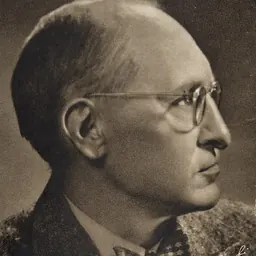
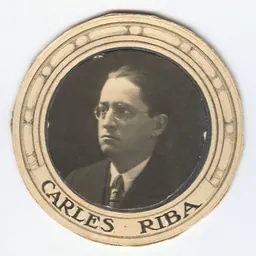
Contemporaries
People whose lives overlapped Muhammad Mahdi Al-Jawahiri's

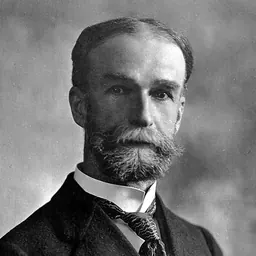
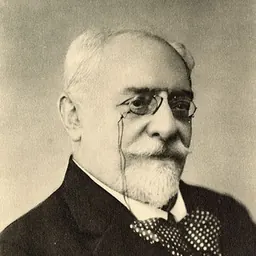

Frequently asked questions
Who was Muhammad Mahdi Al-Jawahiri?
Iraqi neo-classical poet (1899 – 1997)
When was Muhammad Mahdi Al-Jawahiri born?
Muhammad Mahdi Al-Jawahiri was born on 26 July 1899 in Najaf.
When did Muhammad Mahdi Al-Jawahiri die?
Muhammad Mahdi Al-Jawahiri died on 27 July 1997 in Damascus.
What was Muhammad Mahdi Al-Jawahiri's occupation?
Muhammad Mahdi Al-Jawahiri was a poet and writer.
What nationality was Muhammad Mahdi Al-Jawahiri?
Muhammad Mahdi Al-Jawahiri was Iraqi.
Sources & further reading
· Wikipedia: Muhammad Mahdi Al-Jawahiri
· DBpedia: Muhammad Mahdi al-Jawahiri
Cite this page
APA: Biography.guide. (2026). Muhammad Mahdi Al-Jawahiri. https://biography.guide/muhammad-mahdi-al-jawahiri/
MLA: "Muhammad Mahdi Al-Jawahiri." Biography.guide, https://biography.guide/muhammad-mahdi-al-jawahiri/.
Chicago: "Muhammad Mahdi Al-Jawahiri." Biography.guide. https://biography.guide/muhammad-mahdi-al-jawahiri/.
Data last updated: 2026-09-26 · Spot an error? Report a correction.
Page generated 2026-09-27 05:14 UTC