
Muhammad Bassiri
Sahrawi nationalist leader, executed by the Spanish Legion in 1970.
About Muhammad Bassiri
Lived 1944 – 1970 (aged 25–26). Muhammad Bassiri was a Moroccan journalist and politician, known for Sahrawi people.
Muhammad Sidi Brahim Sidi Embarek Basir (; born 1942 or 1944 – disappeared June 18, 1970) was a Sahrawi nationalist leader, disappeared and presumably executed by the Spanish Legion in June 1970.
Biography Muhammad Bassiri was born in a Sahrawi family in Tan-Tan, which was ceded to Morocco after the Treaty of Angra de Cintra in 1958, (nowadays Southern Morocco, then part of the Cape Juby in Spanish protectorate in Morocco). The Tarfaya strip, which included Bassiri's hometown, had been attributed to Morocco in a clause imposed by France in the Franco-Spanish Treaty of 1912, despite the fact that Morocco had never had either sovereignty, territorial right or actual control over it, as ruled by the International Court of Justice in 1975. Its cession to Morocco in 1958, which caused a clash between Sahrawi guerrillas and Moroccan troops in Tan-Tan, is interpreted by Sahrawi nationalists as an amputation of their historical territory.
In 1957 Bassiri left Tan-Tan for the newly independent Morocco to attend school in Marrakesh. He proceeded to Cairo, Egypt where he studied the Quran and the Arabic language. In Damascus, Syria, he studied journalism and became familiarized with Pan-Arabism. On returning to Morocco in 1966, he founded Al-Shihab (The Torch), a Sahrawi nationalist newspaper. He also worked as a journalist in Casablanca.
In March 1968 he was allowed to enter Spanish Sahara (he had tried to enter in December 1967, but he was detained and expelled), and settled in the city of Smara as a Quranic teacher. It was there he started to organize the anti-colonial movement known as the movement of liberation (In Arabic: Harakat Tahrir), calling for end of Spanish occupation of the Sahara. Bassiri stressed non-violence (influenced by the peaceful struggle of Gandhi in the colonized India), and wanted to bring about change through democratic action, although the ruthless colonial rule imposed by Francisco Franco's Spain forced the Harakat Tahrir to remain clandestine. Bassiri didn't want a precipitated independence, but to negotiate with the Spanish authorities.
Disappearance On early June 17, 1970 the organization appeared openly in a peaceful demonstration against the Spanish colonial rule, asking for autonomy (as a first step to independence) and self-determination in the Zemla neighborhood of El-Aaiun, in parallel to an official Francoist demonstration. The Spanish governor-general of the colony, General José María Pérez de Lema y Tejero, went to Zemla to talk with the organizers of the demonstration, but did not reach an agreement to make them disperse or join the official demonstration. The protest was seen by the Spanish authorities as a defiance to the official demonstration organized by the General governor, made to show the world the supposed Sahrawi support of the Spanish regime and refusal of UN involvement.
Tensions escalated between the growing mass of Sahrawi protesters and the Spanish reservist soldiers, and stones were thrown at the soldiers after they detained three of the protest's speakers. The soldiers answered by opening fire on the protestors at 17:30 PM. The disturbance continued until 19:00 PM, when troops of the Tercio "Juan de Austria" of the Spanish Legion put down what remained of the protesters. These events have been dubbed the Zemla Intifada by Sahrawis.
Bassiri, who had abandoned Zemla before violence erupted, was informed of the events. He was offered an escape to Mauritania by car, but he refused it. According to Salem Lebser, he replied: "Nobody could say I'm an adventurer who has led people to death and then disappeared. I already fled once Morocco, where I felt like a stranger. But I would not flee from my own land." Bassiri was tracked down that night, detained around 03:00 AM of June 18, and jailed at El Aaiun Territorial Police headquarters. On June 19, after being allegedly tortured, he testified before the Spanish military authorities. A photograph of him registering before the "Habs Shargui" prison authorities is the last known trace of him. Later, he was allegedly moved to "Sidi Buya", the Spanish Legion headquarters in El Aaiun. According to testimonies given by three different persons to then apostolic prefect to Spanish Sahara Félix Erviti Barcelona, Bassiri was executed by a Spanish Legion patrol in the dunes surrounding El Aaiun on the night of 29 July 1970, although Spanish authorities of the time claimed that he had been expelled from the territory to Morocco on that date, and they also claimed later that Bassiri had entered Spanish Sahara illegally from Algeria in September 1970. Spanish colonial authorities even claimed in 1971 that Bassiri had died on the Skhirat coup d'état against Hassan II.
Present-day Sahrawi nationalists such as the Polisario Front honor him as the father of the modern Sahrawi independence struggle, as well as the first of the Sahrawi "disappeared" and a national martyr for the Liberty.
Don’t just read it —
keep it.
Full-length biographies made to live with: read them, listen on the way to work, watch them tonight.
- E-book
- Audio
- Video
Instant download · yours to keep · every purchase keeps this site free
Important facts
People in Muhammad Bassiri's life
Named in this biography and alive at the same time
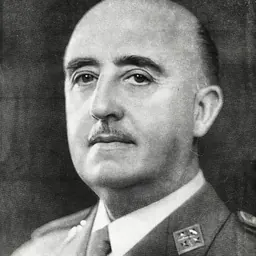


Related people
Same field, nearest in time



Contemporaries
People whose lives overlapped Muhammad Bassiri's



Frequently asked questions
Who was Muhammad Bassiri?
Sahrawi nationalist leader, executed by the Spanish Legion in 1970.
When was Muhammad Bassiri born?
Muhammad Bassiri was born in 1944 in Tan-Tan.
When did Muhammad Bassiri die?
Muhammad Bassiri died in 1970 in Laayoune.
What was Muhammad Bassiri's occupation?
Muhammad Bassiri was a journalist and politician.
What was Muhammad Bassiri known for?
Muhammad Bassiri was known for Sahrawi people.
What nationality was Muhammad Bassiri?
Muhammad Bassiri was Moroccan.
Sources & further reading
Cite this page
APA: Biography.guide. (2026). Muhammad Bassiri. https://biography.guide/muhammad-bassiri/
MLA: "Muhammad Bassiri." Biography.guide, https://biography.guide/muhammad-bassiri/.
Chicago: "Muhammad Bassiri." Biography.guide. https://biography.guide/muhammad-bassiri/.
Data last updated: 2026-09-22 · Spot an error? Report a correction.
Page generated 2026-09-27 05:24 UTC