
About Muhammad Abdullah Ghazi
Lived 1935 – 1998 (aged 63). Muhammad Abdullah Ghazi was a Pakistani and Indian academic.
Muhammad Abdullah Ghazi ( – 17 October 1998) was a Pakistani Deobandi Islamic scholar, theologian of the Hanafi school of Islamic jurisprudence, and a political figure. He held several key positions, including the Chairman of Ruet-e-Hilal Committee, the first Imam and Khatib of Lal Masjid in Islamabad, the Chancellor of Jamia Faridia and Jamia Hafsa, the Patron-in-Chief of Wifaq Al Madaris Al Arabiyah and Jamia Mohammadia, member of both the Aalmi Majlis Tahaffuz Khatm-e-Nubuwwat and Council of Islamic Ideology, the President of Markazi Jamiat Ahlus-Sunnat wal-Jama'ah and Idara Alia Tanzeem ul Madaris, member of 1981 Majlis-e-Shoora during the Presidency of Muhammad Zia-ul-Haq and as Federal Khatib under President Farooq Leghari in the 29th and 36th Cabinet of Pakistan.
Ghazi was an alumnus of Jamia Uloom-ul-Islamia and had studied under various scholars including Allama Yusuf Banuri, Mufti Mehmood, and Mufti Muhammad Shafi. He later taught notable students such as Aurangzeb Farooqi, Manzoor Mengal, and Atta-ur-Rehman and was also considered a mentor to Fazal-ur-Rehman.
He was personally appointed by President Ayub Khan to serve as the first Imam and Khatib of Central Mosque Islamabad (Lal Masjid), the first mosque established in Pakistan's new capital, Islamabad.
Ghazi was a close associate of Muhammad Zia-ul-Haq, a military dictator who became the sixth President of Pakistan, and served as one of his key advisors on religious affairs and was awarded the Sitara-i-Imtiaz in 1986. He played a significant role in the establishment of Pakistan's Zakat Councils and contributed to the drafting of the Zakat and Ushr Ordinance of 1980. a part of Baloch diaspora who migrated to Punjab from Baluchistan.
His father, a farmer, was socially active in the village. Due to his activities, he faced multiple arrests by the British Indian authorities and was eventually sentenced to eight years in prison. During his imprisonment, he became more religious and encouraged his son to attend a local madrassa.
In 1946, Ghazi began his religious education at Madrasa Khudam-ul-Qur'an in Rahim Yar Khan, where he completed the Hifz (memorization of the Quran).
In 1948, after completing his primary education, Ghazi enrolled at Jamia Qasim Ul Uloom in Multan for further education, where he studied for 5 years and was a student of Mufti Mehmood.
In 1976, as part of his six-day state visit to Pakistan, King Khalid of Saudi Arabia also visited the Lal Masjid in Islamabad, where he prayed behind Ghazi, and it was during this visit he initiated the construction of King Faisal Mosque in Islamabad and toured the nearby seminary, Jamia Faridia.
1974 Khatm-e-Nubuwwat movement In 1974, Ghazi became associated with the Aalmi Majlis Tahaffuz Khatm-e-Nubuwwat (AMTKN), a religious organization dedicated to upholding the doctrine of the finality of prophethood in Islam. He played a prominent role in mobilizing support for the Tehreek-e-Tahafuz-e-Khatm-e-Nubuwwat and during this period, Lal Masjid served as a key gathering site for rallies and meetings related to the campaign.
Idara Alia Tanzeem ul Madaris In 1970, he founded the Idara Alia Tanzeem ul Madaris , an organization dedicated to securing land for the construction of mosques and religious institutions, and served as its first chairman. His efforts focused on both rural and urban areas, including the construction of the Grand Mosque of Kalur Kot and several mosques within Islamabad.
Ruet-e-Hilal Committee In 1975, He was appointed as the first chairman of the newly established Ruet-e-Hilal Committee, a government body operating under the Ministry of Religious Affairs, responsible for announcing the sighting of the new moon, which determines the Islamic calendar and Islamic holidays.
Ghazi served in this position until his death, after which he was succeeded by Mufti Muneeb-ur-Rehman.
1977 Nizam-e-Mustafa movement In 1977, Ghazi played a prominent role in the Nizam-e-Mustafa movement, a populist Islamist campaign demanding the replacement of Zulfikar Ali Bhutto's secular socialist government with an Islamic system of governance in Pakistan.
Wifaq-ul-Madaris In 1979, Ghazi was appointed as the Patron-in-Chief of Wifaq-ul-Madaris al-Arabia, and as the regional supervisor for all madrassas registered under the educational board in Islamabad and Rawalpindi.
Ghazi played a key role in establishing Markazi Jamiat Ahle Ahlus-Sunnah wal-Jama'ah, an organization representing the Deobandi ulema. The group aimed to raise awareness and advocate for issues concerning madaris (Islamic seminaries). Ghazi served as its first president before being succeeded by his deputy and close associate, Maulana Zahoor Ahmed Alvi.
The ordinance was officially promulgated by President Zia-ul-Haq during a ceremony at Lal Masjid in June 1980.
Establishing Jamia Faridia
In 1966, He established a small seminary at Lal Masjid, in which there were about 20 to 25 students for the Hifz class. After some time a need was felt to have a bigger place for running this seminary so that a large number of students who were increasing with the passage of time could be accommodated.
Hence In 1971, a place in the meadows of the Margalla Hills in the city's Prime Sector of E-7, was acquired by Ghazi's Idara Alia Tanzeem ul Madaris with the help and cooperation of several of his close friends most notably Seth Haroon Jaffer (Jaffer Group of Companies), Haji Akhtar Hassan (OSD Kashmir Affairs & Finance Secretary of Azad Kashmir), and Admiral Mohammad. Shariff, NI(M), HJ (Rtd).
The seminary was the first ever educational institute to be registered with Wifaq-ul-Madaris.
Ghazi declined the offer, choosing instead to continue his role as the Imam and Khatib of Lal Masjid, where he had already established himself as a prominent religious leader and had a significant following.
Establishing Jamia Hafsa
In 1989, he laid the foundation for Jamia Syeda Hafsa, as the women's branch of Jamia Faridia. Located adjacent to the Lal Masjid near Aabpara, the institution was built on 7,500 square yards of land.
The seminary is the largest women's madrasa in Pakistan.
Ghazi continued to serve in this position during the Second Nawaz Sharif government.
Afghanistan Tour
In 1997, Ghazi, along with a delegation of Deobandi scholars, was invited as a state guests by Afghanistan's Supreme Leader, Mullah Omar.
Jamia Masjid Abdullah Ghazi in Sector E-7 of Islamabad is named after him.
In his honor his hometown was also renamed "Basti-Abdullah" and a new seminary named after him was also constructed there, the town gained worldwide attention in 2007 when Abdul Rashid Ghazi was buried in the courtyard of the seminary,
Abdullah Railway Station near the town is also named after him.
Investigation
Due to a lack of confidence in Pakistan's legal system, Abdul Aziz, the elder son of Ghazi, initially declined to file a First Information Report (FIR). However, his younger son, Abdul Rashid, proceeded to file the FIR, prompting a police investigation into the case. After persistent efforts, a suspect was arrested and subsequently identified by an eyewitness during an identification parade.
Despite this, the suspect was inexplicably released the following day. Abdul Rashid protested the release, warning the authorities that he would pursue legal action if the suspect was not promptly re-arrested. As pressure mounted, he reportedly faced threats, including a warning to withdraw the case or risk suffering a fate similar to that of his father. According to those close to him, this experience marked a turning point in Abdul Rashid Ghazi's life, leading to his disillusionment with the legal system.
Memoir
In 2005, a memoir was published by Maktaba Faridia detailing his life under the name Hayat Shaheed E Islam Written by Mufti Riaz Munsoor.
See more
List of Deobandis List of Hanafis
Don’t just read it —
keep it.
Full-length biographies made to live with: read them, listen on the way to work, watch them tonight.
- E-book
- Audio
- Video
Instant download · yours to keep · every purchase keeps this site free
Important facts
People in Muhammad Abdullah Ghazi's life
Named in this biography and alive at the same time
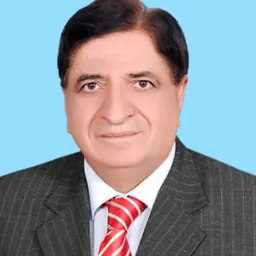


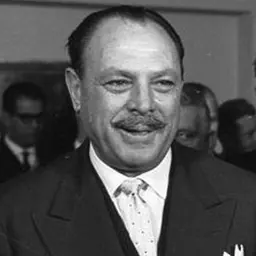
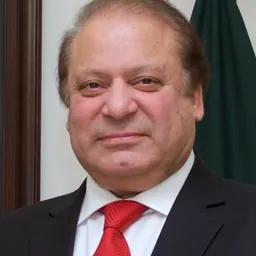

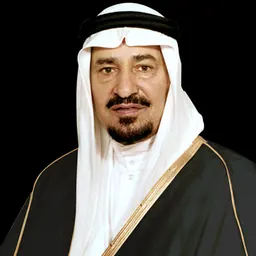
Related people
Same field, nearest in time


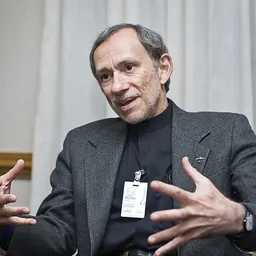


Contemporaries
People whose lives overlapped Muhammad Abdullah Ghazi's




Frequently asked questions
Who was Muhammad Abdullah Ghazi?
Pakastani religious leader and political figure
When was Muhammad Abdullah Ghazi born?
Muhammad Abdullah Ghazi was born on 1 June 1935 in Basti-Abdullah.
When did Muhammad Abdullah Ghazi die?
Muhammad Abdullah Ghazi died on 17 October 1998 in Lal Masjid.
What was Muhammad Abdullah Ghazi's occupation?
Muhammad Abdullah Ghazi was an academic.
What nationality was Muhammad Abdullah Ghazi?
Muhammad Abdullah Ghazi was Pakistani and Indian.
Sources & further reading
· Wikipedia: Muhammad Abdullah Ghazi
· DBpedia: Muhammad Abdullah Ghazi
Cite this page
APA: Biography.guide. (2026). Muhammad Abdullah Ghazi. https://biography.guide/muhammad-abdullah-ghazi/
MLA: "Muhammad Abdullah Ghazi." Biography.guide, https://biography.guide/muhammad-abdullah-ghazi/.
Chicago: "Muhammad Abdullah Ghazi." Biography.guide. https://biography.guide/muhammad-abdullah-ghazi/.
Data last updated: 2026-09-20 · Spot an error? Report a correction.
Page generated 2026-09-27 05:15 UTC