
About Mthuli ka Shezi
Lived 1947 – 1972 (aged 24–25). Mthuli ka Shezi was a South African writer.
Mthuli ka Shezi (1947–1972 ) was a South African playwright and political activist. At the University of Zululand, he was a student activist who would later be elected the first vice president of the Black People's Convention in 1972. His writing reflected the struggle of recovering African identity in colonial and post-colonial societies, a topic which shaped his involvement in Steve Biko's Black Consciousness Movement and its dramatic sub-culture.
In December 1972, Shezi died when he was pushed in front of a moving train at Germiston station after coming to the defense of African women being drenched with water by a white station cleaner.
Career
The South African Student's Organization Attending the University of Zululand at the time, Shezi was among the group of university students that started the South African Student's Organization (SASO). The students united across multiple college campuses in 1969 to address developments in the apartheid regime, including the Sharpeville Massacre, the establishment of segregated Bantu Education, and the banning of the Pan Africanist Congress (PAC) alongside the African National Congress (ANC), accompanied by the exile of their key leaders. Moving beyond the literacy campaign, SASO continued to center their work around collecting data from their communities to most accurately support their needs.
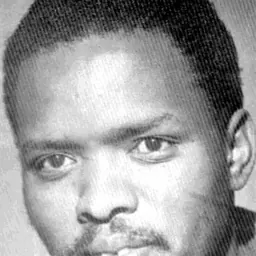
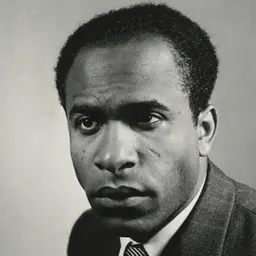
The Black Consciousness Movement The Black Consciousness Movement (BCM) was a grassroots movement that resisted apartheid by encouraging Africans to unite under a shared Black cultural identity while promoting principles of self-determination via intellectual means. It was developed by SASO and lead by Steve Biko, taking inspiration from African diasporic scholarship including Frantz Fanon's Black Skin, White Masks (1967) and W. E. B. Du Bois' theory of Double Consciousness. A critique of the BCM is that it often romanticized precolonial Africa as an organic representation of the freedoms sought by their campaigns. Retrospective evaluations of the movement have considered the limitations of viewing Africa's past as a destination to return to. Plays like Shezi's Shanti (1981) additionally shaped the aesthetics of this theatrical practice. Mthuli ka Shezi and his peers practiced a model of street theater that could be set up and taken down fast enough to outpace local apartheid authorities. For example, a longstanding trend among the beginnings of stories in African theater is a shared role of narration amongst a collective to properly orient the audience. This shared culture found the internationalism of figures like Malcolm X to be compelling amongst both African American and South African crowds, particularly following his assassination.
Quote "I am black/ Black like my mother/ Black like the sufferers/ Black like the continent" - from the play Shanti published in 1972
Don’t just read it —
keep it.
Full-length biographies made to live with: read them, listen on the way to work, watch them tonight.
- E-book
- Audio
- Video
Instant download · yours to keep · every purchase keeps this site free
Important facts
People in Mthuli ka Shezi's life
Named in this biography and alive at the same time

Related people
Same field, nearest in time



Contemporaries
People whose lives overlapped Mthuli ka Shezi's



Frequently asked questions
Who was Mthuli ka Shezi?
South African activist
When was Mthuli ka Shezi born?
Mthuli ka Shezi was born in 1947.
When did Mthuli ka Shezi die?
Mthuli ka Shezi died in 1972.
What was Mthuli ka Shezi's occupation?
Mthuli ka Shezi was a writer.
What nationality was Mthuli ka Shezi?
Mthuli ka Shezi was South African.
Sources & further reading
Cite this page
APA: Biography.guide. (2026). Mthuli ka Shezi. https://biography.guide/mthuli-ka-shezi/
MLA: "Mthuli ka Shezi." Biography.guide, https://biography.guide/mthuli-ka-shezi/.
Chicago: "Mthuli ka Shezi." Biography.guide. https://biography.guide/mthuli-ka-shezi/.
Data last updated: 2026-09-20 · Spot an error? Report a correction.
Page generated 2026-09-27 04:58 UTC