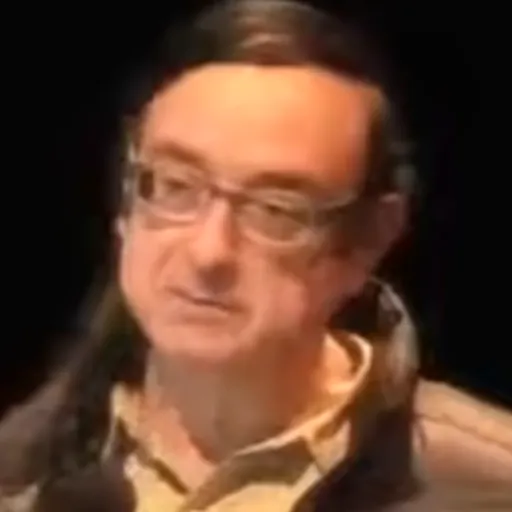
About Moti Yung
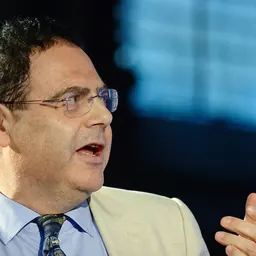
Born 1959. Moti Yung is an American and Israeli computer scientist and cryptographer.
Mordechai M. "Moti" Yung is a cryptographer and computer scientist known for his work on cryptovirology and kleptography.
Career Yung earned his PhD from Columbia University in 1988 under the supervision of Zvi Galil. In the past, he worked at the IBM Thomas J. Watson Research Center, CertCo, RSA Laboratories, and Google. In 2016, Yung moved from Google to Snap Inc. Yung is currently a research scientist at Google.
Yung is an adjunct senior research faculty member at Columbia University,
Research Yung research covers primarily the area of cryptography and its applications to information security and data privacy. He has worked on defining and implementing malicious (offensive) cryptography: cryptovirology information-theoretic security, secure multi-party computation, threshold cryptosystems, and zero-knowledge proofs,
Cryptovirology In 1996, Adam L. Young and Yung coined the term cryptovirology to denote the use of cryptography as an attack weapon via computer viruses and other malware in contrast to its traditional protective role. In particular, they described the first instances of ransomware using public-key cryptography.
Kleptography In 1996, Adam L. Young and Yung introduced the notion of kleptography to show how cryptography could be used to attack host cryptosystems where the malicious resulting system with the embedded cryptologic tool in it resists reverse-engineering and cannot be detected by interacting with the host cryptosystem, as an argument against cryptographic systems and devices given by an external body as "black boxes" as was the Clipper chip and the Capstone program.
After the 2013 Snowden affair, the NIST was believed to have mounted the first kleptographic attack against the American Federal Information Processing Standard detailing the Dual EC DRBG, essentially exploiting the repeated discrete logarithm based "kleptogram" introduced by Young and Yung.
Awards In 2010 he was the annual Distinguished Lecturer of the International Association for Cryptologic Research at Eurocrypt. In 2013 he became a fellow of the Association for Computing Machinery. In 2014 he received the ESORICS (European Symposium on Research in Computer Security) Outstanding Research Award. In 2014 he became a fellow of the International Association for Cryptologic Research. In 2014 he received the ACM's SIGSAC Outstanding Innovation Award. In 2015 he became an IEEE fellow. In 2017 Yung became a fellow of the European Association for Theoretical Computer Science. In 2018 Yung received the W. Wallace McDowell Award by the IEEE Computer Society. In 2020 Yung received the Public Key Cryptography Conference's Test of Time Award for his 1998 paper See. In 2020 Yung received the IEEE Symposium on Security and Privacy's Test of Time Award for his 1996 paper In 2021 Yung received Computer Pioneer Award honoring the Women of the ENIAC In 2023 Yung was elected a fellow of the American Academy of Arts and Sciences In 2024 Yung received the IACR Test of Time Award for his 2009 paper See In 2025 Yung received the 2026 IEEE Innovation in Societal Infrastructure Award In 2026 Yung was elected a member of the National Academy of Engineering
Selected publications 1989: Universal one-way hash functions and their cryptographic applications (with M. Naor; ACM’s STOC). 1990: Public-key cryptosystems provably secure against chosen ciphertext attacks (with M. Naor; ACM’s STOC). 1991: How to withstand mobile virus attack (with Ostrovsky; ACM’s PODC). 1992: Multi-Receiver/Multi-Sender Network Security: Efficient Authenticated Multicast/Feedback (with Desmedt and Frankel; IEEE's INFOCOM 1992) 1999: Non-Interactive CryptoComputing For NC1 (with Sander and Young; IEEE's FOCS 1999). 2000: Unforgeable Encryption and Chosen Ciphertext Secure Modes of Operation (with Katz; Fast Software Encryption (FSE)). 2004: Malicious Cryptography: Exposing Cryptovirology (with A. Young; Wiley 2004: A book). 2009: Efficient and secure authenticated key exchange using weak passwords (with Katz and Ostrovsky; JACM 57(1)). 2009: A unified framework for the analysis of side-channel key recovery attacks (with Standaert and Malkin; Eurocrypt). 2017: Generic Semantic Security against a Kleptographic Adversary (with A. Russell, Q. Tang, and H-S Zhou; ACM's CCS)
Don’t just read it —
keep it.
Full-length biographies made to live with: read them, listen on the way to work, watch them tonight.
- E-book
- Audio
- Video
Instant download · yours to keep · every purchase keeps this site free
Important facts
People in Moti Yung's life
Named in this biography and alive at the same time
Related people
Same field, nearest in time



Contemporaries
People whose lives overlapped Moti Yung's


Frequently asked questions
Who is Moti Yung?
Israeli computer scientist
When was Moti Yung born?
Moti Yung was born on 15 May 1959.
What is Moti Yung's occupation?
Moti Yung is a computer scientist and cryptographer.
What nationality is Moti Yung?
Moti Yung is American and Israeli.
Sources & further reading
Cite this page
APA: Biography.guide. (2026). Moti Yung. https://biography.guide/moti-yung/
MLA: "Moti Yung." Biography.guide, https://biography.guide/moti-yung/.
Chicago: "Moti Yung." Biography.guide. https://biography.guide/moti-yung/.
Data last updated: 2026-09-22 · Spot an error? Report a correction.
Portrait: Wikimedia Commons · author & licence
Page generated 2026-09-27 05:04 UTC