
About Mostéfa Merarda
Lived 1928 – 2007 (aged 78). Mostéfa Merarda was an Algerian and French military personnel.
Mostéfa Merarda, nicknamed Bennoui (August 21, 1928 -May 18, 2007) was a commander and acting chief of Wilayah I during the Algerian War. The second of his siblings, he was educated at a school in the town of Batna. At the age of 17, he married his cousin and became a farmer, before joining the independence movements that led to the Algerian War.
He became interim head of the Wilayah after Mohamed Tahar Abidi left for Tunisia. On November 25, 1961, he also returned to Tunisia, where he was appointed to represent the Algerian delegation in Havana. He then took part in the 1962 Tripoli congress, and was one of the witnesses to the 1962 Algerian crisis.
After the Algerian independence, he held several positions in Algeria and abroad. A few years before his death, he wrote his memoirs in Arabic, which were translated into French by Dahmane Nedjar and printed in two editions.
Biography
Childhood
Mostéfa Merarda was born on August 21, 1928 in the Ouled Chlih douar (in Victor Duruy, now Oued Chaaba) in the haouz of Aïn Touta, in the Batna Province. He was the second eldest child in his family. He got his first name from his uncle, who died of a typhus epidemic, and from his grandfather, of whom he was the favorite, being the only boy among his grandchildren.
In 1936, his grandfather brought him to Aïn Touta and sent him to boarding school with Si Makhlouf Mohammed, in a village attached to the administrator of Aïn Touta. when he joined his family in the village of Ouled Chlih, in the Oued Chaaba commune.
Adolescence In the summer of 1945, he was 17 when it was decided by his father that he would marry his cousin, the daughter of his uncle Amor. The wedding party took place in Maafa. In 1947, he moved to Aïn Touta, to continue his studies at a free school run by the Association of Algerian Muslim Ulema, attached to the town's mosque.
In 1952, he devoted himself to his family property at Kesrou, currently in the commune of Fesdis, and was interested in ways of making the soil bear fruit and improving crop yields and farm produce, but working the land didn't prevent him from keeping in touch with his many friends, most of whom were PPA militants.
During the independence war At H.Q. in Cedar Peak (from left to right Abdeldjebbar Derghal, Mostéfa Merarda, Lakhdar Gouaref). His relationship with the armed revolution dates back to the early days of its outbreak. This was when a group of early maquisards led by Belkacem Grine returned from an operation against the Seriana Mostéfa Merarda was working his land, when a man appeared with his companions, introduced himself as Grine and, acting under the direction of Mostefa Ben Boulaïd, then asked Mostéfa Merarda to summon the heads of the families, to explain to them the situation in the country, and the goals set by the revolution. He was in charge of stocking up on clothing, shoes, ammunition, weapons and repairing defective weaponry, as well as maintaining contact with notables from Hidoussa, Ouled Fatma, Ouled Menaa, all the way to the Haraktas and Batna, the latter departing from his home.
Mostéfa Merarda took part in the battle of Tinezouagh in October 1956. Then, at the end of 1956, El Hadj Lakhdar, who had become head of the Batna zone following the construction of Zone 1 by Amirouche Aït Hamouda, tasked Mostéfa Merarda, Ahmed Tayeb Maache, Tahar Bouguarn and Smail Chaabani with creating and organizing the popular committees provided for by the Soummam conference, to strengthen support for the revolution. At the time, the French authorities killed an Algerian who closely resembled Mostéfa Merarda. His name was Ahmed Zeroual. Thinking it was him, they published the information in the newspaper La Dépêche de Constantine.
In 1957, he was appointed head of region (Nahya) 4, zone 1 by Hihi Mekki, replacing Amor Hidji. In 1958, he became acting commander of Wilayah I, and in 1959, El Hadj Lakhdar entrusted him with responsibility for Zone 2 in Chelia, in addition to Wilayah I. In the same year, he became interim head of Wilayah I, after El Hadj Lakhdar left for Tunisia on March 29, 1959. His mission was to take charge of the Wilayah during El Hadj Lakhdar's absence. from the Kimmel command post. Mostéfa Merarda and his companions took the road in the direction of the Sahara (Zeribet El Oued, Chott Melrhir, the Grand Erg Oriental, Debdeb and southern Tunisia) with the help of a guide. For his trip to Cuba, he was able to use a forged Tunisian passport issued on December 21, 1961.
Évian Accords and Tripoli Conference At the Tripoli Conference: Ahmed Bencherif, Ben Bella and Mostéfa Merarda. During February 1962, the members of the CNRA were summoned by the GPRA to Tripoli, to examine the results of negotiations with French representatives. Mostéfa joined Hadj Lakhdar and Abdelhafid Boussouf He flew to Morocco via Italy and Spain, and during his stay in Morocco, a visit was organized to the western border to give the freed leaders an opportunity to learn about the realities of the ALN and its organization.
On his return to Tunisia, he received an invitation dated May 7, 1962, to attend the Tripoli Conference scheduled for May 25–31 of the same year. After the conference, he returned to Tunis, where he remained until the day of the referendum on self-determination. According to Mostéfa Merarda's memoirs, Houari Boumédiène did not want to let him return home with El Hadj Lakhdar, to keep him close to him and team up after their return to Algeria. Mostefa and El Hadj Lakhdar came to meet Mahmoud Chérif, the GPRA's Minister of Armaments and Supply, in Batna; they then made the trip to Souk Ahras, where Houari Boumédiène was staying, but Boumédiène refused to receive them. With Mostefa and El Hadj Lakhdar in one car and Yacef Saâdi in another, they all headed for Algiers, where a roadblock was set up by units of Wilayah IV to prevent them from entering the capital. On May 18, 2007, he died at the age of 79. His memoirs were the subject of a conference at which all the commander's surviving trench comrades came to give their accounts of the man.
Don’t just read it —
keep it.
Full-length biographies made to live with: read them, listen on the way to work, watch them tonight.
- E-book
- Audio
- Video
Instant download · yours to keep · every purchase keeps this site free
Important facts
People in Mostéfa Merarda's life
Named in this biography and alive at the same time

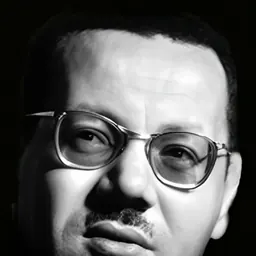

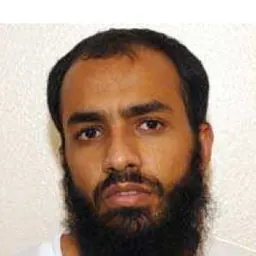
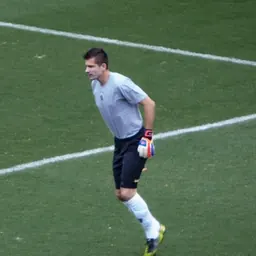
Related people
Same field, nearest in time
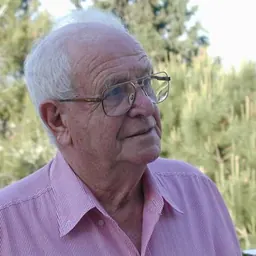


Contemporaries
People whose lives overlapped Mostéfa Merarda's


Frequently asked questions
Who was Mostéfa Merarda?
Algerian military personnel
When was Mostéfa Merarda born?
Mostéfa Merarda was born on 21 August 1928 in Oued Chaaba.
When did Mostéfa Merarda die?
Mostéfa Merarda died on 18 May 2007 in Batna.
What was Mostéfa Merarda's occupation?
Mostéfa Merarda was a military personnel.
What nationality was Mostéfa Merarda?
Mostéfa Merarda was Algerian and French.
Sources & further reading
Cite this page
APA: Biography.guide. (2026). Mostéfa Merarda. https://biography.guide/mostefa-merarda/
MLA: "Mostéfa Merarda." Biography.guide, https://biography.guide/mostefa-merarda/.
Chicago: "Mostéfa Merarda." Biography.guide. https://biography.guide/mostefa-merarda/.
Data last updated: 2026-09-20 · Spot an error? Report a correction.
Page generated 2026-09-27 05:21 UTC