
About Moshe Greenberg
Lived 1928 – 2010 (aged 81). Moshe Greenberg was an American and Israeli judaic scholar, translator, university teacher, biblical scholar, writer and bible translator.
Moshe Greenberg (; July 10, 1928 – May 15, 2010) was an American rabbi, Bible scholar, and professor emeritus of the Hebrew University of Jerusalem.
Biography Moshe Greenberg was born in Philadelphia in 1928. Raised in a Hebrew-speaking Zionist home, he studied Bible and Hebrew literature from his youth. His father, Rabbi Simon Greenberg, was the rabbi of Har Zion Temple and one of the most important leaders of the Conservative movement. Moshe Greenberg received his doctorate from the University of Pennsylvania in 1954, studying Bible and Assyriology under E. A. Speiser; simultaneously, he studied post-Biblical Judaica at the Jewish Theological Seminary of America (JTSA), where he was ordained as a rabbi. Greenberg was married to Evelyn Gelber and had three sons. He died in Jerusalem after a long illness.
Academic and literary career Greenberg taught Bible and Judaica at the University of Pennsylvania from 1964-1970. He held a chair in Jewish studies at the Hebrew University of Jerusalem, an institution at which he had taught since 1970. He also taught at Swarthmore College, the JTSA, the University of California, Berkeley and the Schechter Institute of Jewish Studies. Greenberg was editor-in-chief of the Ketuvim section of the Jewish Publication Society of America's new English translation of the Bible. He was the author of ten books and numerous articles. From 1994-1995 he held a fellowship at the Katz Center for Advanced Judaic Studies, doing research in Historiography.
Scholarship Greenberg was the first Jewish Bible scholar appointed to a position in a secular university after World War II and had an important influence on the development of Biblical scholarship. He showed that the prose prayers embedded in biblical narratives reflect the piety of commoners, and reasoned that the frequency of spontaneous prayer strengthened the egalitarian tendency of Israelite religion which led to the establishment of the synagogue. In the area of biblical law, Greenberg argued that "the law [is] the expression of underlying postulates or values of culture" and that differences between biblical and ancient Near Eastern laws were not reflections of different stages of social development but of different underlying legal and religious principles (Studies, 25-41). Analyzing economic, social, political, and religious laws in the Torah, he showed that they dispersed authority throughout society and prevented the monopolization of prestige and power by narrow elite groups (Studies, 51-61). In his commentaries on Exodus (1969) and Ezekiel (1983, 1997), Greenberg developed a "holistic" method of exegesis, redirecting attention from the text's "hypothetically reconstructed elements" to the biblical books as integral wholes and products of thoughtful and artistic design. Greenberg's studies of Jewish thought include studies of the intellectual achievements of medieval Jewish exegesis, investigations of rabbinic reflections on defying illegal orders (Studies, 395-403), and attitudes toward members of other religions (Studies, 369-393; "A Problematic Heritage"). He argued that a Scripture-based religion must avoid fundamentalism through selectivity and re-prioritizing values.
Awards In 1961, Greenberg was awarded a Guggenheim Fellowship. He was also awarded the Harrison Prize for Distinguished Teaching and Research. In 1994, he was awarded the Israel Prize in Bible. Greenberg also taught at Beyt Midrash leShalom, the Peace Study Center sponsored jointly by the Israeli Religious Peace Movement Netivot Shalom and by Tikkun Magazine.
Published works Hab Piru, 1955 Introduction to Hebrew, 1965 Understanding Exodus, 1967 Biblical Prose Prayer as a Window to the Popular Religion of Ancient Israel, 1983 Ezekiel in the Anchor Bible Series 3 volumes, 1983, 1997 (third volume was to be completed by Jacob Milgrom, who died June 5, 2010) Torah: Five Books of Moses, 2000
Don’t just read it —
keep it.
Full-length biographies made to live with: read them, listen on the way to work, watch them tonight.
- E-book
- Audio
- Video
Instant download · yours to keep · every purchase keeps this site free
Important facts
People in Moshe Greenberg's life
Named in this biography and alive at the same time


Related people
Same field, nearest in time

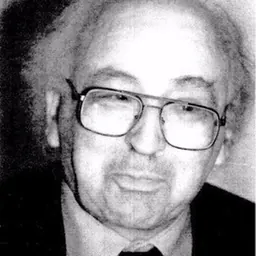




Contemporaries
People whose lives overlapped Moshe Greenberg's


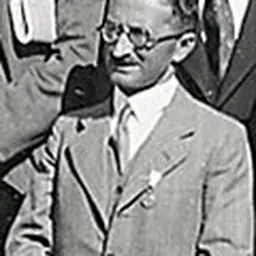


Frequently asked questions
Who was Moshe Greenberg?
American rabbi (1928–2010)
When was Moshe Greenberg born?
Moshe Greenberg was born on 10 July 1928 in Philadelphia.
When did Moshe Greenberg die?
Moshe Greenberg died on 15 May 2010 in Jerusalem.
What was Moshe Greenberg's occupation?
Moshe Greenberg was a judaic scholar, translator, university teacher, biblical scholar, writer and bible translator.
What nationality was Moshe Greenberg?
Moshe Greenberg was American and Israeli.
Sources & further reading
Cite this page
APA: Biography.guide. (2026). Moshe Greenberg. https://biography.guide/moshe-greenberg/
MLA: "Moshe Greenberg." Biography.guide, https://biography.guide/moshe-greenberg/.
Chicago: "Moshe Greenberg." Biography.guide. https://biography.guide/moshe-greenberg/.
Data last updated: 2026-09-20 · Spot an error? Report a correction.
Page generated 2026-09-27 05:04 UTC