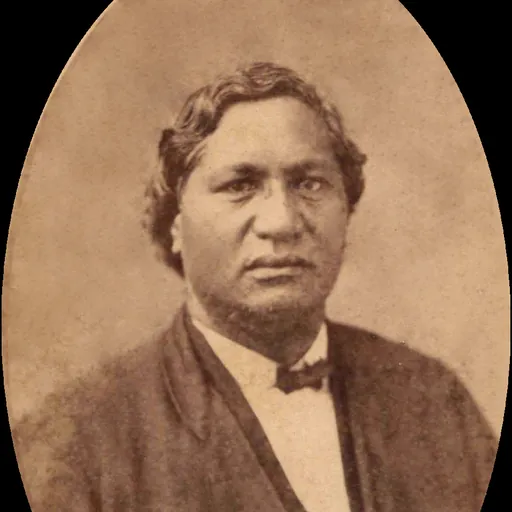
Moses Kuaea
Native Hawaiian clergyman and politician
About Moses Kuaea
Lived 1824 – 1884 (aged 59–60).
Moses Kuaea ( – May 5, 1884) was a Native Hawaiian clergyman and politician of the Hawaiian Kingdom. He was pastor of the Kaumakapili Church from 1874 to 1882 and was known as an eloquent preacher. During his time at the pulpit, he helped fundraise for the second building of the church which was completed in 1888 and later burned down in 1900. In 1874, he gave a speech lauding the new elected King Kalākaua prior to his state visit to the United States. After Kalākaua's return to Hawaii, he appointed Kuaea a member of the Privy Council of State and as his Minister of Finance from August 14 to September 27, 1880. After his brief stint in politic, Kuaea returned to preaching at Kaumakapili until his resignation in 1882 due to illness. He died in 1884.
Early life Kuaea's birthdate is not known. His obituary stated he was about sixty years old at the time of his death, which gives a birth year around 1824.
Kuaea was a member of the ʻAhahui ʻEuanelio Hawaiʻi (Hawaiian Evangelical Association), for which he wrote the article "Culture, Sale, and Use of Awa" in 1866. Scholar Jean Charlot described him as "a writer of superior Hawaiian, for example, employing an extensive and precise vocabulary to describe the production and use of ʻawa while strongly condemning the use of ‘awa and the relaxation of laws against it, he provided a rich description of its place in classical Hawaiian culture—including sayings, prayers, and religious and medical uses—and also of its syncretistic use with Christian elements." Kuaea also wrote a revision of Lorenzo Lyons' Haʻawina Mua (First Lessons), a Sunday school book published in 1878. He also served as an advisor to the Hawaiian language newspaper Ka Nupepa Kuokoa.
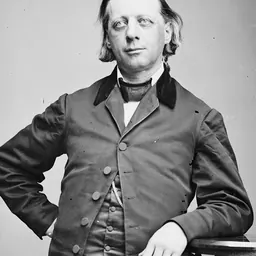
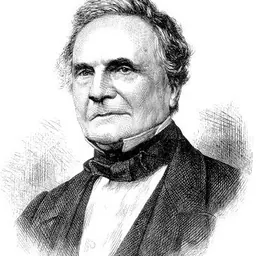
Missionary descendant and First Lady of Hawaii Mary Dillingham Frear wrote that "Kuaea is remembered by child eyes as an unusually handsome figure—a man of fine physique with beautiful white hair and a face and bearing often likened to Henry Ward Beecher".
In 1870, the American newspaper Hartford Courant described Kuaea as the "Daniel Webster of Hawaii".
Pastor of Kaumakapili Church
Kuaea served as pastor of the native church at Hauʻula, Oahu, and later at the church of American missionary John Smith Emerson at Waialua, Oahu. In 1874, Kuaea was appointed the pastor of Kaumakapili Church, the church for common people in Honolulu, succeeding George Washington Pilipō. He held this post until illness forced him to resign in 1882. He lived for months under languishing conditions until his resignation was accepted. He was succeeded by the interim pastor Henry Waterhouse from 1882 to 1883 before the appointment of Hawaiian pastor John Waiamau, who served until 1896.
During his pastorship, Kuaea was active in raising funds for the building of the second church building for Kaumakapili. He tore down the original church building. Construction on the new structure began in 1881 with the laying of the cornerstone by Princess Liliʻuokalani (the future queen) on September 2 and was completed on June 10, 1888 (after Kuaea's death). This edifice burned down in the Great Honolulu Chinatown Fire of 1900, which was started to control an outbreak of bubonic plague.
On November 16, 1874, during King Kalākaua's 38th birthday morning services at Kawaiahaʻo Church prior to his state visit to the United States, Kuaea gave a speech to the king and the assembled worshipers at the church. Considered an eloquent preacher, he offered a prayer, praised the king's efforts to save the nation's agricultural interest, and asked for the people to pray for the king's safety during his upcoming trip.
Political career On, December 5, 1876, Kuaea was appointed a member of the commission to Increase the Original Hawaiian Race. This commission was part of Kalākaua's vision of Hoʻolulu Lāhui (increasing the nation), an effort to combat the depopulation of the Native Hawaiian people. He served on the Privy Council of State from June 5, 1879, to 1882.
On August 14, 1880, Kalākaua appointed Kuaea as the Minister of Finance. The king had been at odds with his cabinet ministers for some time, and dismissed his entire cabinet on August 14. He appointed a new cabinet with Italian adventurer Celso Caesar Moreno as the Minister of Foreign Affairs, John E. Bush as the Minister of the Interior, W. Claude Jones as the Attorney General, and Kuaea as the Minister of Finance. Out of these men, only Bush had any significant political experience. The American minister to Hawaii James M. Comly described this group as "for the most part grotesque in unfitness". The foreign diplomatic corps stationed in Hawaii refused to acknowledge the new cabinet, especially Moreno. Mass meetings were held in Honolulu, including at Kaumakapili Church, and community leaders urged Kalākaua to remove Moreno. On August 18, Kalākaua accepted Moreno's resignation from the cabinet.
On September 22, William Lowthian Green was appointed foreign minister in place of Moreno with the intention of retaining Kuaea and Bush. Jones, a second-rate lawyer, was expected to resign. However, the king dismissed the entire cabinet on September 27, retaining only Green. John Smith Walker replaced Kuaea as finance minister.
Personal life On September 8, 1870, Kuaea married Tamar Makahiki (1851–1899), a student of American missionary Maria Ogden at the Kawaiahaʻo Seminary for Girls, as his second wife. They had three children. Their daughter Esther U. Kuala Kuakea (1874–1944) attended the Kawaiahaʻo Seminary for Girls, married Solomon David Koki in 1896, and had two children.
Kuaea died on May 5, 1884, at Waikahalulu, his residence in Honolulu, at the age of sixty. The cause of death was reported as "a softening of the brain", likely a stroke. He was survived by his widow and three children. His funeral, officiated by the first pastor of Kaumakapili, Lowell Smith, on May 6, was well-attended. Members of the Hawaiian legislature attended his funeral and wore an emblem of mourning out of respect for Kuaea's former association with the government.
His nephew and namesake was Moses Kuaea Nākuina (1867–1911), a politician, novelist, and traveling evangelist of the Hawaiian Evangelical Association, who married Hawaiian female judge Emma Kaʻili Metcalf Beckley Nākuina.
Don’t just read it —
keep it.
Full-length biographies made to live with: read them, listen on the way to work, watch them tonight.
- E-book
- Audio
- Video
Instant download · yours to keep · every purchase keeps this site free
Important facts
People in Moses Kuaea's life
Named in this biography and alive at the same time



Contemporaries
People whose lives overlapped Moses Kuaea's


Frequently asked questions
Who was Moses Kuaea?
Native Hawaiian clergyman and politician
When was Moses Kuaea born?
Moses Kuaea was born in 1824.
When did Moses Kuaea die?
Moses Kuaea died on 5 May 1884 in Hawaiian Kingdom, Honolulu, Oahu.
What nationality was Moses Kuaea?
Moses Kuaea's recorded nationality: Hawaiian Kingdom.
Sources & further reading
Cite this page
APA: Biography.guide. (2026). Moses Kuaea. https://biography.guide/moses-kuaea/
MLA: "Moses Kuaea." Biography.guide, https://biography.guide/moses-kuaea/.
Chicago: "Moses Kuaea." Biography.guide. https://biography.guide/moses-kuaea/.
Data last updated: 2026-09-24 · Spot an error? Report a correction.
Portrait: Wikimedia Commons · author & licence
Page generated 2026-09-27 05:08 UTC